When you click on links to various merchants on this site and make a purchase, this can result in this site earning a commission. Affiliate programs and affiliations include, but are not limited to, the eBay Partner Network.
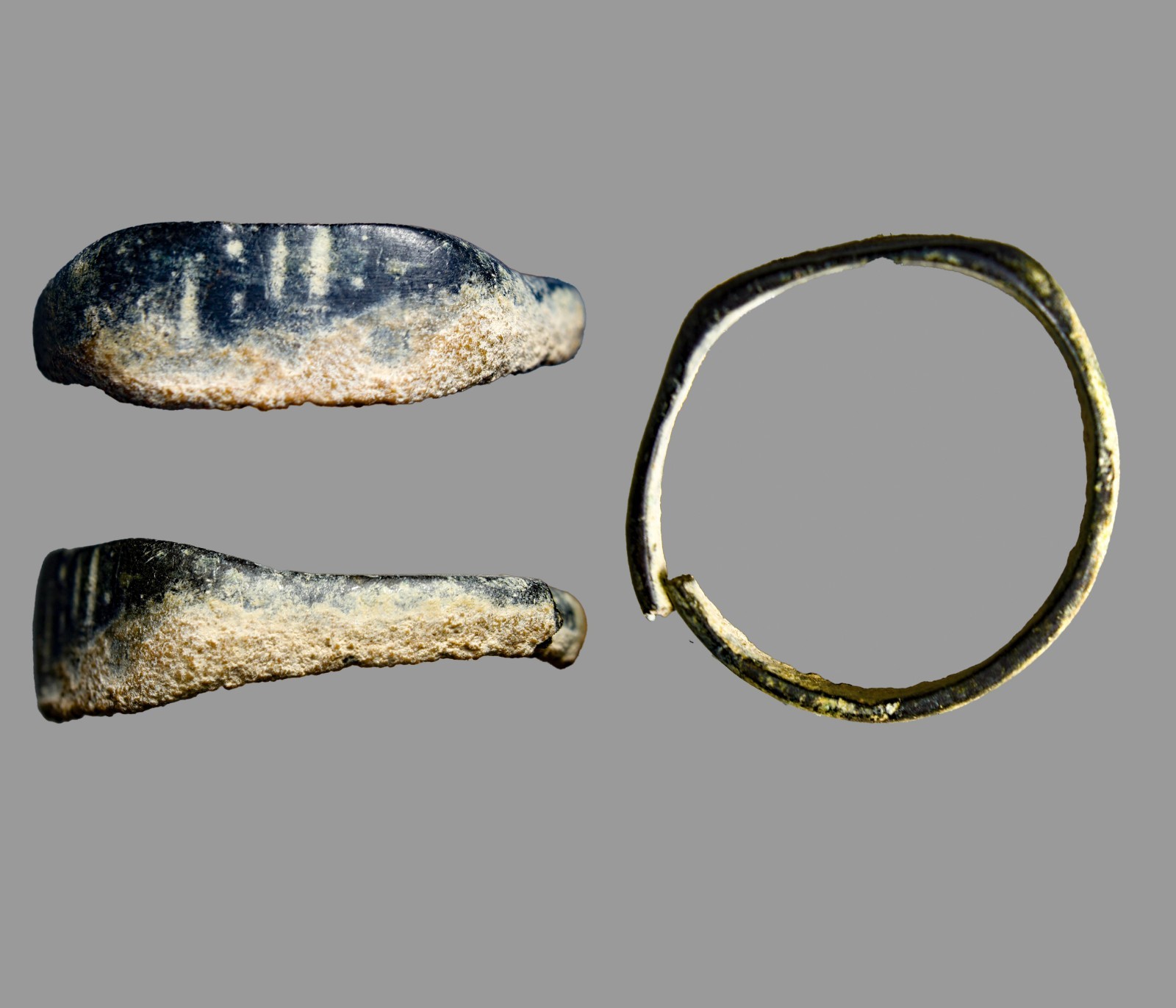
Ancient Eastern Mediterranean Bronze Cuniformic Magical Inscription Ring (US Size 8 — c. 1000 BC)
Authenticity & Guarantee
Item Specifications & Exact Dimensions
Object: Cast Bronze Amuletic Ring with Hand-Engraved Cuniformic Bezel Matrix
Culture / Period: Ancient Eastern Mediterranean / Near Eastern Sphere (Late Bronze Age to Iron Age Transition)
Date Range: Circa 1000 BC (c. 1200 BC – 800 BC)
Ring Size: US Size 8 (approx. 18.2 mm internal diameter)
Material: Cast Bronze (Copper Alloy)
Form & Architecture: Elongated, flattened rectangular bezel plate rising seamlessly from a circular bronze hoop; bezel face hand-chased with deeply incised vertical and linear cuniformic wedge-script characters forming a personal protective inscription; solid structural geometry engineered as a wearable talisman
Condition: Exceptional, complete ancient condition. Crisp, deeply incised cuniformic wedge strokes across the bezel face, intact complete hoop, preserved under an authentic dark charcoal-black bronze patina with natural pale sandy-tan earthen burial encrustations. Free of modern restoration or tooling.
HISTORICAL CONTEXT & TYPOLOGICAL LORE
Ancient Cuniformic Inscription Traditions & Protective Magic
Around 1000 BC across the Eastern Mediterranean and Near Eastern trade corridors, written script held immense mystical power. Metal ornaments inscribed with cuniformic signs transformed everyday rings into active apotropaic charms. Rings bearing incised cuniformic script were carried or worn by citizens, merchants, and priests to invoke divine protection, safeguard against illness, and ward off malevolent forces.
Cuniformic Matrix Architecture & Sealing Mechanics
The elongated flat bezel provided an ideal tablet for the artisan to hand-chase linear cuniformic wedge characters. Beyond its role as a personal protective amulet, the ring served a functional purpose in ancient daily life: pressing the cuniformic bezel into wet clay tags or sealings (bullae) created a verifiable ownership mark on trade goods, vessels, and legal correspondence.
Typological Analysis & Exact Classification
Comparable Archaeological Examples & Museum Accession Numbers
British Museum (Accession No. 1880,0510.312): Ancient Eastern Mediterranean inscribed bronze ring with cuniformic wedge characters.
Louvre Museum (Inv. No. AO 22118): Eastern Mediterranean bronze ring with incised cuniformic script matrix.
1-4