When you click on links to various merchants on this site and make a purchase, this can result in this site earning a commission. Affiliate programs and affiliations include, but are not limited to, the eBay Partner Network.
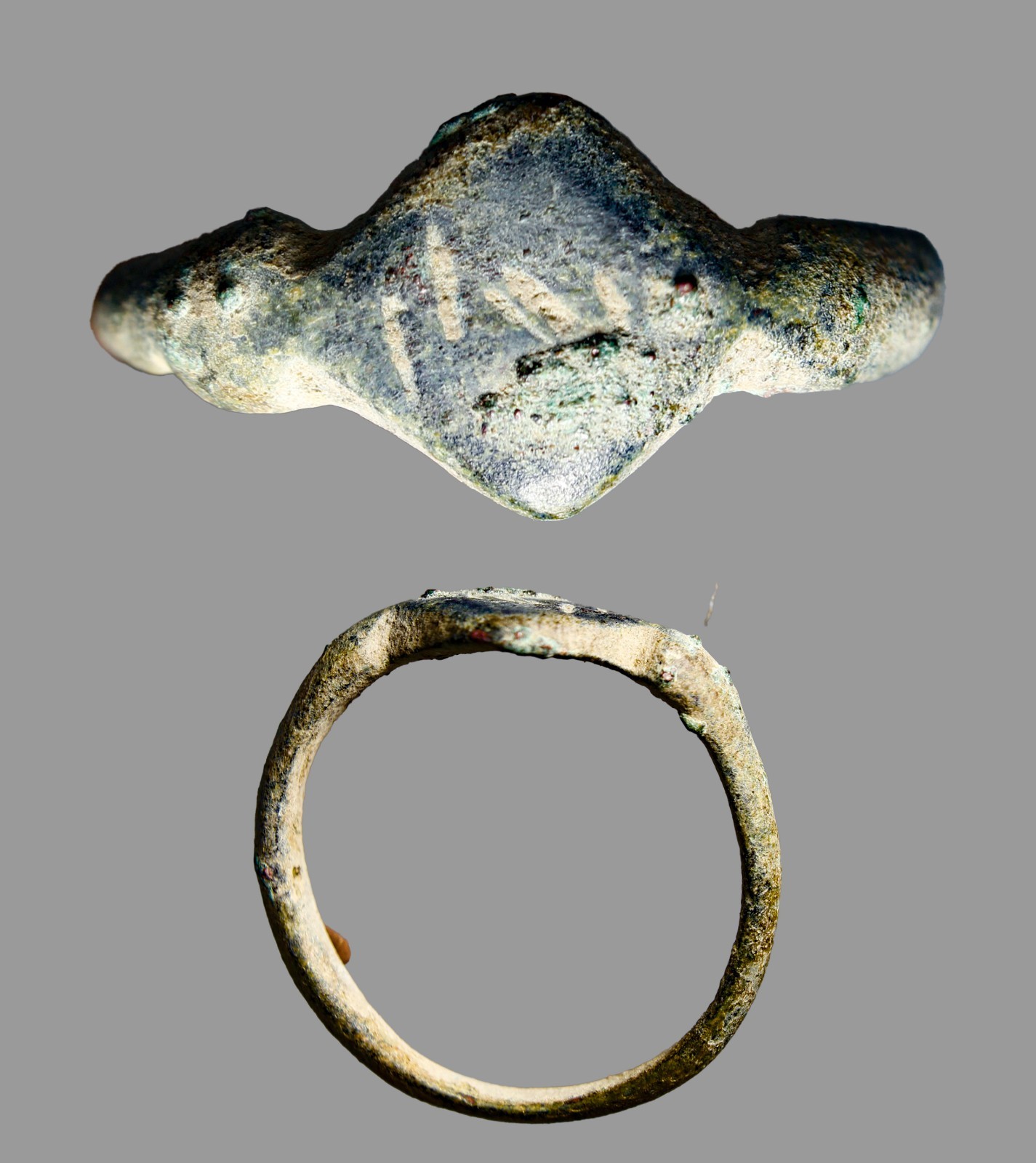
Ancient Near East Bronze Child / Youth Cuniformic Amulet Ring (US Size 2 — c. 1400 BC)
Authenticity & Guarantee
Item Specifications & Exact Dimensions
Object: Cast Bronze Child / Youth Amuletic Ring with Hand-Engraved Cuniformic Bezel Matrix
Culture / Period: Ancient Near East / Late Bronze Age Sphere (Levantine & Mesopotamian Trade Network)
Date Range: Circa 1400 BC (c. 16th – 12th Century BC)
Ring Size: US Size 2 (approx. 13.3 mm internal diameter) — engineered for a child/youth or suspended as a protective amuletic pendant
Material: Cast Bronze (Copper Alloy)
Form & Architecture: Diamond / lozenge-shaped flat bezel plate flanked by distinct molded collar-knop shoulders tapering into a slender circular hoop; bezel face hand-chased with deeply incised cuniformic wedge-script characters forming a personal apotropaic protective formula
Condition: Exceptional, complete ancient condition. Sharp incised cuniformic script strokes across the lozenge matrix, intact complete hoop, crisp shoulder knops, preserved under a rich dark charcoal-olive bronze patina with light pale sandy-cream earthen burial encrustations. Free of modern restoration or tooling.
HISTORICAL CONTEXT & TYPOLOGICAL LORE
Late Bronze Age Youth Amulets & Cuniformic Protection
During the Late Bronze Age (c. 1400 BC) across the Ancient Near East, high rates of childhood illness led families to equip infants and youths with consecrated metallic jewelry. Script held active magical authority; incised cuniformic characters invoking protective formulas or personal names transformed an everyday bronze ornament into a powerful apotropaic talisman designed to ward off malevolent spirits and illness.
Miniature Ring Engineering & Apotropaic Suspension
Small-gauge rings measuring US Size 2 were specifically manufactured for young children or designed as suspension pendants worn around the neck on a leather cord. The diamond-shaped lozenge bezel provided a dedicated surface for the artisan to hand-chase cuniformic wedge strokes. Flanked by protective collar knops on the shoulders, the ring provided both physical durability and symbolic guardianship for its young wearer.
Typological Analysis & Exact Classification
Comparable Archaeological Examples & Museum Accession Numbers
British Museum (Accession No. 1880,0510.315): Late Bronze Age Near Eastern bronze child\'s ring with incised cuniformic matrix.
Louvre Museum (Inv. No. AO 22125): Ancient Near Eastern small bronze amuletic ring with wedge-script engraving.
1-4