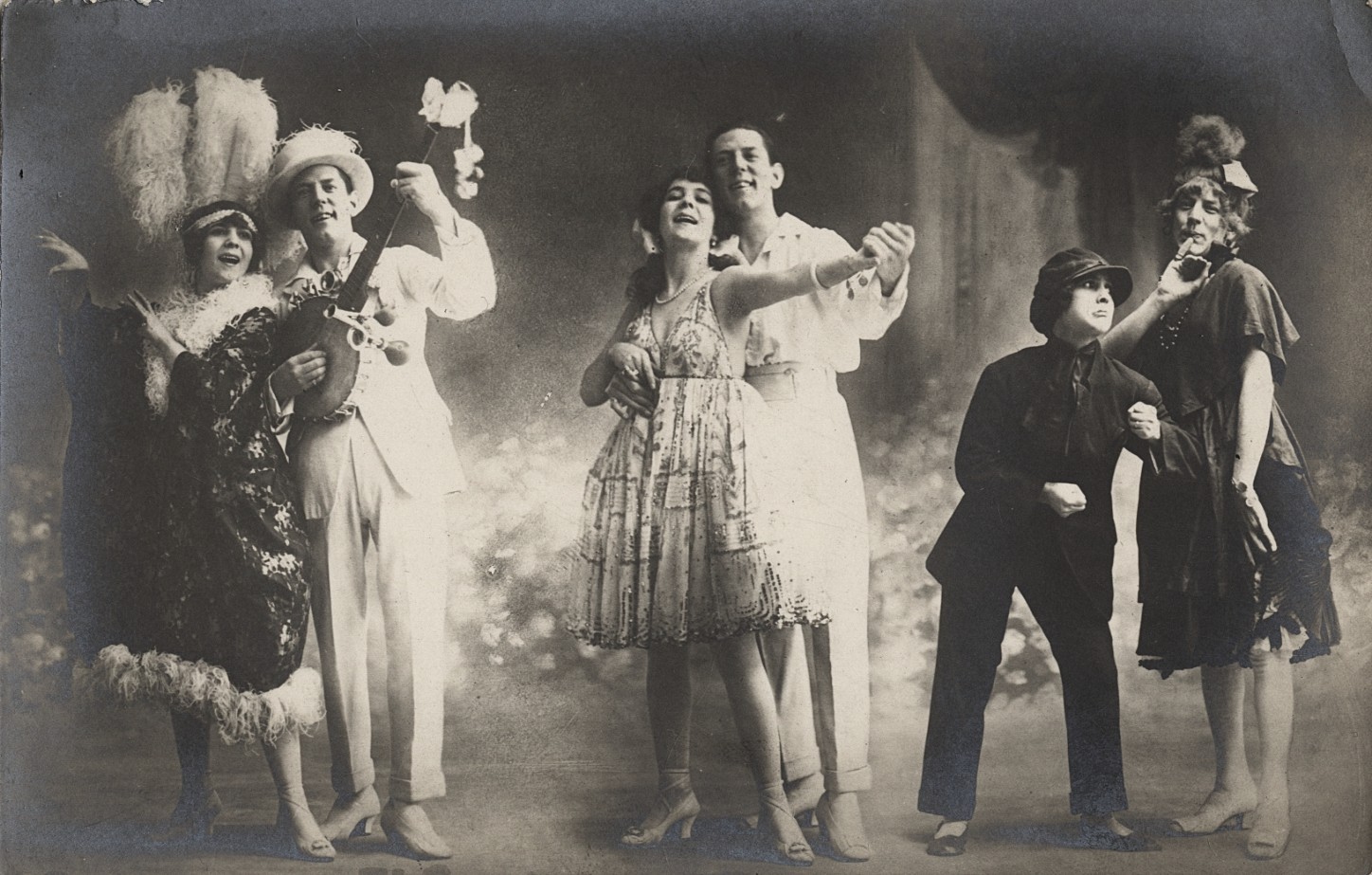
 c. 1910's Litlecas Derby Singers, Dancers and Comedians RPPC TRANSFORMISTES For Sale
When you click on links to various merchants on this site and make a purchase, this can result in this site earning a commission. Affiliate programs and affiliations include, but are not limited to, the eBay Partner Network.

c. 1910's Litlecas Derby Singers, Dancers and Comedians RPPC TRANSFORMISTES:
$80.00
DATE: c. 1910'sPHOTOGRAPHER: UnknownSUBJECT: TransformistPROCESS: Real Photo Postcard (RPPC)SIZE:5.5" x 3.5"CONDITION: See photosSHIPPING: Shipping cost is non-negotiable, please consider it when offerding/buying.COMBINED SHIPPING: Yes, I do combine shipping. Additional shipping per item is 20% of the lower shipping cost [For example, if 2 items are purchased that have a $30 and $10 shipping cost each, the combined shipping cost becomes $32 for the 2 items]. If offerding/buying more than 1 item, please wait for an invoice with combined shipping before art of the transformiste, or quick-change artist, reached its zenith during the Belle Époque, a period defined by a fascination with technical mastery and theatrical spectacle. These performers were not merely actors but "human chameleons" who mastered the physics of costume design and the psychology of characterization. The genre was essentially defined by Leopoldo Fregoli (1867–1936), an Italian virtuoso whose name became so synonymous with the craft that his imitators were often simply called "Fregolists." Fregoli’s career began during his military service when he realized he could perform entire plays solo by rapidly switching between roles. By the time he reached the height of his fame, he traveled with a staggering inventory of over 800 costumes and 1,200 wigs, performing sketches like Camaleonte where he portrayed dozens of distinct characters—male, female, young, and old—sometimes changing his entire appearance in less than two seconds. His influence was so profound that he inspired a whole generation of "French Fregolis" and specialized acts across the European vaudeville circuit.The art of the transformiste, or quick-change artist, reached its zenith during the Belle Époque, a period defined by a fascination with technical mastery and theatrical spectacle. These performers were not merely actors but "human chameleons" who mastered the physics of costume design and the psychology of characterization. The genre was essentially defined by Leopoldo Fregoli (1867–1936), an Italian virtuoso whose name became so synonymous with the craft that his imitators were often simply called "Fregolists." Fregoli’s career began during his military service when he realized he could perform entire plays solo by rapidly switching between roles. By the time he reached the height of his fame, he traveled with a staggering inventory of over 800 costumes and 1,200 wigs, performing sketches like Camaleonte where he portrayed dozens of distinct characters—male, female, young, and old—sometimes changing his entire appearance in less than two seconds. His influence was so profound that he inspired a whole generation of "French Fregolis" and specialized acts across the European vaudeville circuit.Among the most technically refined of these performers was Monsieur R. Bertin, often billed as "l'homme protée" (the Protean man). Bertin became a fixture of the Parisian music halls, most notably at the Folies-Marigny, where he elevated the quick-change act into a form of celebrity satire. Unlike some of his contemporaries who focused on generic archetypes, Bertin specialized in meticulous imitations of the era's greatest stars. He was celebrated for his ability to replicate the precise silhouettes and stage presence of figures like the Spanish dancer La Belle Otero and the chanteuse Mme Ouvrard. His act was a sophisticated blend of drag performance and traditional vaudeville, requiring not only lightning-fast mechanical changes but also a deep understanding of female mannerisms and fashion. By performing these imitations, Bertin provided a meta-commentary on the theatrical world, allowing audiences to see the "essence" of a star captured through the transformative skill of a single man.The transformiste stage also featured remarkable female artists, most notably Fatima Miris (born Maria Frassinesi), who challenged the male dominance of the genre. Miris was a powerhouse performer who produced massive three-hour shows like The Geisha, in which she performed fifteen different parts and executed 175 costume changes. Her talent was so extraordinary—she could sing in ranges from soprano to baritone—that skeptics often accused her of using a body double, a claim she famously rebutted by offering a large cash reward to anyone who could prove the presence of another actor. While performers like Fredioni and the various "Miniature Fregolis" focused on the rapid-fire spectacle of short vaudeville turns, artists like Miris and Bertin demonstrated that the quick-change act was a legitimate discipline of the theater, blending early cinematic techniques with the raw physicality of live performance. Their legacies persist today in modern stage illusions and the specialized craft of quick-change performance in drag and musical theater.
|
|
Other Related Items:
Related Items:
c1910's View Atkinson Corner Maine ME RPPC Photo Postcard COPY $4.95
c. 1910's René Frilson Imitating a "Highland Lassie" RPPC by Carles EARLY DRAG $150.00
C 1910s Rare Set of Patriotic Navy Postcards $50.00
|
