When you click on links to various merchants on this site and make a purchase, this can result in this site earning a commission. Affiliate programs and affiliations include, but are not limited to, the eBay Partner Network.
Artifacts of Faith, Art, and History
During the 17th and 18th centuries, the CatholicCounter-Reformation reshaped Europe and expanded into the Americas toevangelize native peoples. Bronze medals were a significant but common object mintedduring this period. Each medal tells a unique story because they are sourced fromCatholic convents, estate collections, and metal detector enthusiasts.
Due to their use, being touched hundreds or thousands oftimes, and often being carried and worn in harsh environments, the medals willshow the natural surface wear (patina) created by their age, use in devotion,and by exposure to the elements. They are found in modern days both aboveground in sometimes buried, as with other artifacts.
All our listed items are original Christian devotionals.Some may have been cleaned or polished before their arrival, by their lastcaretaker. Their use is for personal devotion.
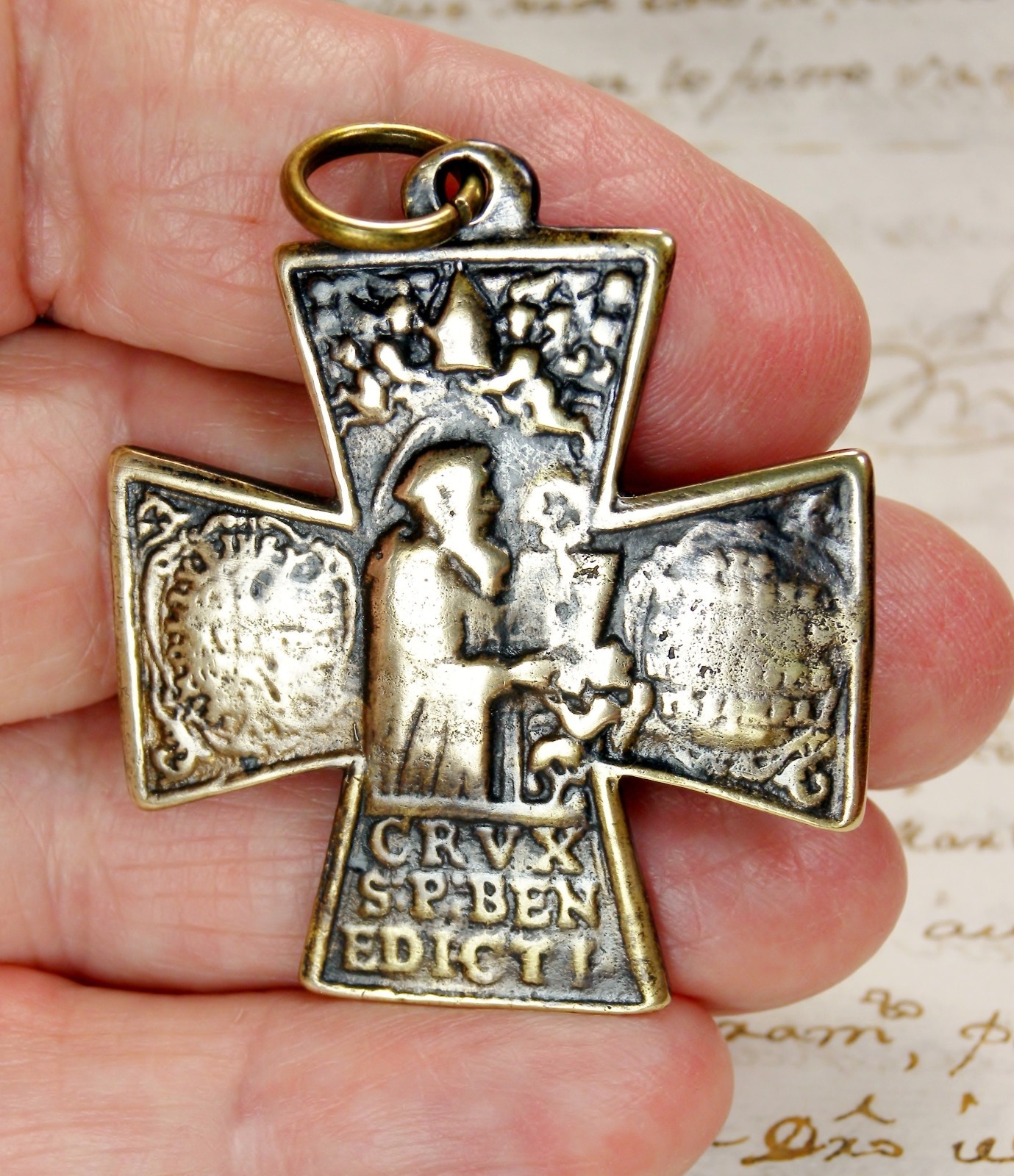
This antique cross is from my mother's estate collection(Bertha, the founder of Church Woman Antiques). It is 1.5 inches square and wascast from Bronze. It is for sale to benefit several Carmelite Convents sheselected before her death at age 97.
This is a beautiful saint Benedict cross with SaintGabriel flying over the Battle of Lechfeld in 955 A.D. Similar pieces have beenworn by soldiers involved in combat in Europe for centuries.
This is an early design from the 17th century. This crossdepicts the city of Augsburg with Saint Benedict in Prayer and meditationsurrounded by angels. It also contains the initials of the Vade retro Satana ofBenedict. Vade retro Satana (Ecclesiastical Latin for "Begone,Satan", "Step back, Satan", or "Back off, Satan";alternatively spelt vade retro Satanas, or sathanas), is a medieval WesternChristian formula for exorcism, recorded in a 1415 manuscript found in theBenedictine Metten Abbey in Bavaria; its origin is traditionally associatedwith the Benedictines. The initials of this formula are as follows (VRSNSMVSMQLIVB or VRS:NSMV:SMQL:IVB). They are depicted on the horizontal bar of thecross.
This medals dating can be confirmed on pages 2 & 3 ofthe book AN INTRODUCTION TO RELIGIOUS MEDALS, by Bob Forrest, and published byNUMISMATICA INTERNATIONAL in 2004. In addition, this book has chapters(outlined in the table of contents), describing each of the categories ofmedals, their possible place of pilgrimage (acquisition), and origin of themint where they were made. We recommend that anyone serious about collectingmedals from this period acquires a copy of this book.
Thanks for your kind support in our work!