When you click on links to various merchants on this site and make a purchase, this can result in this site earning a commission. Affiliate programs and affiliations include, but are not limited to, the eBay Partner Network.
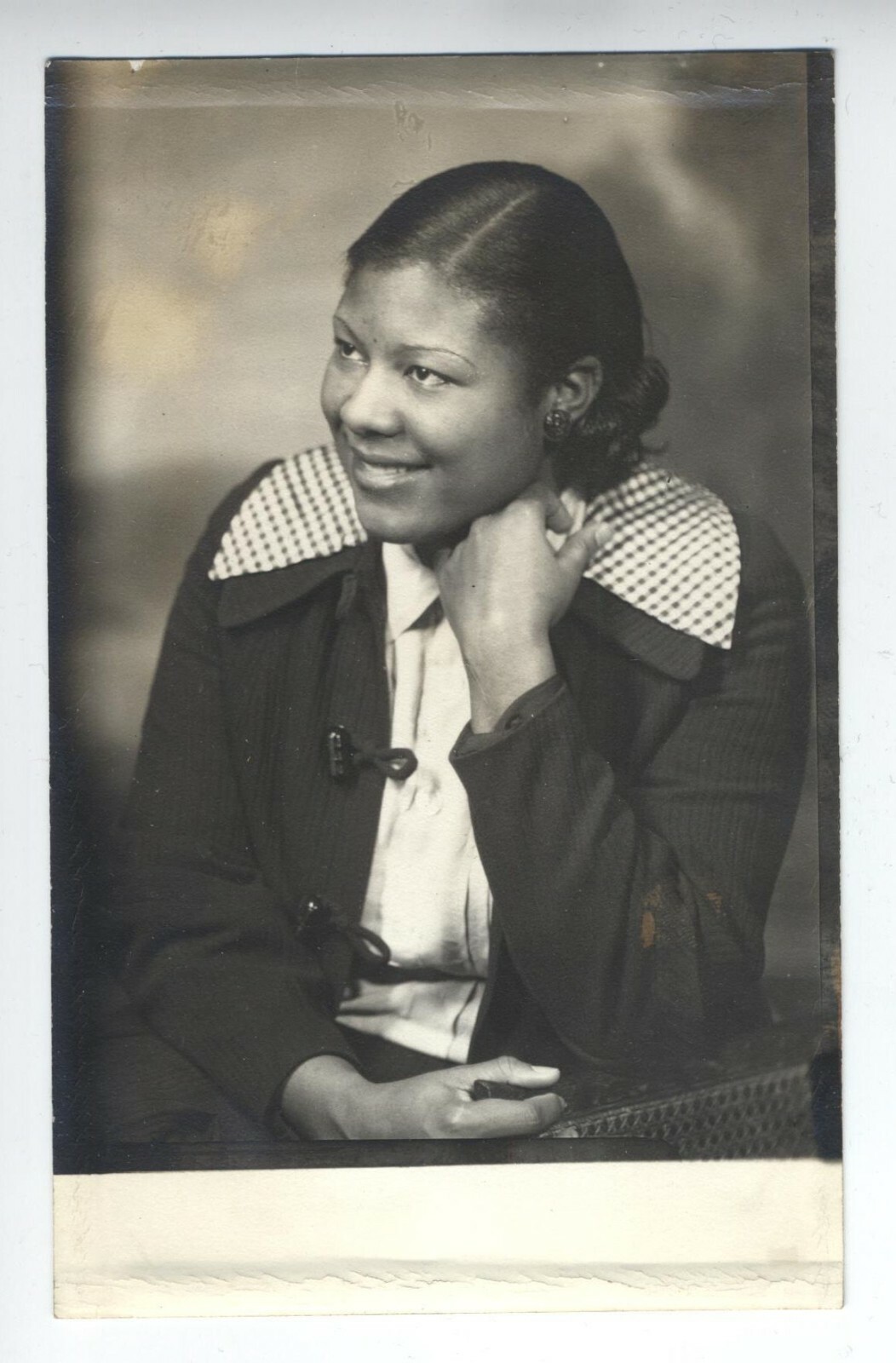
A REAL PHOTO POSTCARD OF LUCY NELL RUBERTSON (FRED WASHINGTON HUSBAND) BY HARLEM RENAISSANCE PHOTOGRAPHER JAMES VAN DER ZEE. STAMPED BY HIS STUDIO
G.G.G. PHOTO STUDIO2077-7TH AVE., N.Y.C.James Augustus Van Der Zee was an American photographer best known for his portraits of black New Yorkers. He was a leading figure in the Harlem Renaissance. Aside from the artistic merits of his work, Van Der Zee produced the most comprehensive documentation of the period.James Van Der ZeeLady with Wide-Brimmed Straw Hat, 1934
James Van Der Zee (1886-1983) was born in Lenox, Massachusetts and demonstrated an early gift for music, initially aspiring to a career as a professional violinist. His other interest was photography. At the age of fourteen he received his first camera and took hundreds of photographs of his family and the town of Lenox. As one of the first people in the town to own a camera he was able to provide a rich early documentation of community life in small town New England. Van Der Zee moved to New York City in 1906 to work with his father and brother as waiters and elevator operators. By now a skilled pianist and aspiring professional violinist, he was also the primary creator and one of the five performers in a group known as the Harlem Orchestra. In 1915 Van Der Zee moved to Newark, New Jersey where he was employed as a darkroom assistant and later as a photographer in a portrait studio. He returned to New York in 1916 and moved to Harlem just as large numbers of black migrants and immigrants were arriving in that section of the city. He set up his first portrait studio in his sister’s music conservatory and two years later, with his second wife, Gaynella Greenlee, established the Guarantee Photo Studio in Harlem. Quickly Van Der Zee became the most successful photographer in Harlem. Early 20th century black activist Marcus Garvey, black entertainer/ dancer Bill “Bojangles” Robinson and renowned black poet Countee Cullen were among his more prominent subjects.
By the early 1930s Van Der Zee’s income from his photography work declined partly because of the strained economic circumstances of many of his customers and partly because the growing popularity of personal cameras reduced the need for professional photography. Van Der Zee responded by shooting passport photos, doing photo restorations, and taking other miscellaneous photography jobs, an approach he would employ for over two decades. In 1967 James Van Der Zee’s work was rediscovered by photographers and photo-historians and he then received attention far beyond his Harlem community. Van Der Zee came out of retirement to photograph celebrities who in turn promoted his work in exhibits around the nation. His images were also the subject of books and documentaries. In 1993, the National Portrait Gallery exhibited his work as a posthumous tribute to his remarkable genius.
James Augustus Van Der Zee (June 29, 1886 – May 15, 1983) was an American photographer best known for his portraits of black New Yorkers. He was a leading figure in the Harlem Renaissance. Aside from the artistic merits of his work, Van Der Zee produced the most comprehensive documentation of the period. Among his most famous subjects during this time were Marcus Garvey, Bill \"Bojangles\" Robinson and Countee Cullen.Contents1 Biography2 Works2.1 Commission from UNIA2.2 Harlem on My Mind3 Photographic techniques and artistry4 Exhibitions4.1 Solo exhibitions[10]4.2 Selected group exhibitions[10]5 Publications6 Further reading7 References8 External linksBiographyBorn in Lenox, Massachusetts, Van Der Zee demonstrated an early gift for music, and was initially aspired to career as a professional violinist.[1] Van Der Zee\'s second interest was in photography. He bought his first camera when he was a teenager, and improvised a darkroom in his parents\' home.[2] He took hundreds of photographs of his family as well as his hometown of Lenox. Van Der Zee was one of the first people to provide an early documentation of his community life in small town New England. In 1906, he moved with his father and brother to Harlem in New York City, where he worked as a waiter and elevator operator. By now Van Der Zee was a skilled pianist and aspiring professional violinist. He would become the primary creator and one of the five performers in a group known as the Harlem Orchestra. In 1915, he moved to Newark, New Jersey, where he took a job in a portrait studio, first as a darkroom assistant and then as a portraitist. He returned to Harlem the following year, just as large numbers of Black immigrants and migrants were arriving into that part of the city. He set up a studio at the Toussaint Conservatory of Art and Music with his sister, Jennie Louise Van de Zee, also known as Madame E Toussaint, who had founded the conservatory in 1911.\"Evening Attire,\" 1922, by Van Der Zee, in the collection of the Smithsonian American Art MuseumIn 1916, he and his second wife, Gaynella Greenlee, launched the Guarantee Photo Studio on West 125th Street in Harlem. His business boomed during World War I, and the portraits he shot from this period until 1945 have demanded the majority of critical attention. In 1919, he photographed the victory parade of the returning 369th Infantry Regiment, a predominantly African American unit sometimes called the \"Harlem Hellfighters.\"
During the 1920s and 1930s, he produced hundreds of photographs recording Harlem\'s growing middle class. Its residents entrusted the visual documentation of their weddings, funerals, celebrities and sports stars, and social life to his carefully composed images.[3] Quickly Van Der Zee became the most successful photographer in Harlem. Among his many renowned subjects were poet Countee Cullen, dancer Bill (\"Bojangles\") Robinson, Charles M. \"Daddy\" Grace, Joe Louis, Florence Mills, and black nationalist leader Marcus Garvey.[2] By the early 1930s Van Der Zee found it harder to make an income from his work in photography, partly because of the strained economic circumstances of many of his customers and partly because the growing popularity of personal cameras reduced the need for professional photography.[4]
Van Der Zee worked predominantly in the studio and used a variety of props, including architectural elements, backdrops, and costumes, to achieve stylized tableaux vivant in keeping with late Victorian and Edwardian visual traditions. Sitters often copied celebrities of the 1920s and 1930s in their poses and expressions, and he retouched negatives and prints heavily to achieve an aura of glamour. He also created funeral photographs between the wars. These works were later collected in The Harlem Book of the Dead (1978), with a foreword by Toni Morrison.[5] James Van Der Zee died in Washington, D.C. on May 15, 1983. Ten years later the National Portrait Gallery exhibited his work as a posthumous tribute to his remarkable genius.[6]
WorksCommission from UNIAIn the spring and summer of 1924, Van Der Zee worked to document the members and activities of Marcus Garvey\'s Universal Negro Improvement Association (UNIA). He took thousands of photographs on this assignment, some of which were featured in a calendar issued to members in 1925.
Fulfilling Garvey\'s wishes, Van Der Zee\'s job was to project a positive image of the Association, especially to emphasize the strength and social standing of its membership, the so-called Garveyites. Nowhere in Van Der Zee\'s visual record was there any hint of the controversy surrounding Garvey in the early 1920s, a period when the leader was subject to public interrogation, quarrels with the writer and philosopher W.E.B. DuBois, and legal proceedings against him on charges of mail fraud.[7]
Harlem on My MindIn 1969, Van Der Zee gained worldwide recognition when his work was featured in the exhibition Harlem on My Mind at the Metropolitan Museum of Art in New York.[2] His inclusion in the exhibition was somewhat by accident. In December 1967, a researcher for the exhibition (and a photographer in his own right), Reginald McGhee, came across Van Der Zee\'s Harlem studio and asked if he happened to have any photographs from the 1920s and 30s.[7]
In a story recounted by photo historian Rodger C. Birt, Van Der Zee showed him the boxes and boxes of negatives he had kept from this period. These photographs would become the core of Harlem on My Mind—and the feature of the exhibit that critics routinely praised as the show\'s biggest revelation.[7] As art historian Sharon Patton observed, Van Der Zee not only documented the Harlem Renaissance, but also helped create it.[8]
Harlem on My Mind marked a controversy between the Met and a number of practicing artists then living and working and Harlem. Painters including Romare Bearden and Benny Andrews protested the show for its emphasis on social history and experience, at the expense—as they viewed it—of interest in the artistic legacy of black New York artists. On opening day, a picket line formed in front of the Met. Andrews carried a sign reading: \"Visit The Metropolitan Museum of Photography.\"[7]
Photographic techniques and artistryWorks by Van Der Zee are artistic as well as technically proficient. His work was in high demand, in part due to his experimentation and skill in double exposures and in retouching negatives of children. One theme that recurs in his photographs was the emergent black middle class, which he captured using traditional techniques in often idealistic images. Negatives were retouched to show glamor and an aura of perfection. This affected the likeness of the person photographed, but he felt each photo should transcend the subject.
His carefully posed family portraits reveal that the family unit was an important aspect of Van Der Zee\'s life. \"I tried to see that every picture was better-looking than the person ... I had one woman come to me and say \'Mr. VanDerZee my friends tell that\'s a nice picture, but it doesn\'t look like you.\' That was my style\", said VanDerZee.[9] Van Der Zee sometimes combined several photos in one image, for example by adding a ghostly child to an image of a wedding to suggest the couple\'s future, or by superimposing a funeral image upon a photograph of a dead woman to give the feeling of her eerie presence. Van Der Zee said, \"I wanted to make the camera take what I thought should be there.\"[9]
Van Der Zee was a working photographer who supported himself through portraiture, and he devoted time to his professional work before his more artistic compositions. Many famous residents of Harlem were among his subjects.[5] In addition to portraits, Van Der Zee photographed organizations, events, and other businesses.
ExhibitionsSolo exhibitions[10]1970 - Lenox Library, Massachusetts1971 - Studio Museum in Harlem, New York1974 - Lunn Gallery/Graphics International, Washington, D.C.1979 – The Legacy of James Van Der Zee: A Portrait of Black Americans, Alternative Center for International Arts, New York and Delaware Art Museum, Wilmington1983 – Camera Club of New York and Idaho State University, Pocatello1987 – Deborah Sharp Gallery, New York1994 – Retrospective, National Portrait Gallery Washington, D.C. and Howard Greenberg Gallery, New YorkSelected group exhibitions[10]1969 – Harlem on My Mind: Cultural Capital of Black America 1900–1968, Metropolitan Museum of Art, New York1978 – Lunn Gallery, Washington, D.C.1979 – San Francisco Museum of Modern Art and Fleeting Gestures: Dance Photographs, International Center of Photography, New York (traveling)1982 – Rheinisches Landesmuseum, Bonn, Germany1985 – San Francisco Museum of Modern Art1987 – Studio Museum in Harlem, New York (traveling)
f one were to ask the foremost contemporary black photographers to name their biggest influence, it is likely that they would answer with the same name: “VanDerZee.” In Through A Lens Darkly, a new documentary by filmmaker Thomas Allen Harris that traces the history of African American photography, artists Hank Willis Thomas, Lorna Simpson, Anthony Barboza and others discuss James VanDerZee’s impact on both black photography and, perhaps more importantly, identity. Known mainly for his exquisite studio portraits and unique retouching techniques, VanDerZee (1886 – 1983) not only documented, but articulated, life in Harlem during and beyond the famed Harlem Renaissance of the 1920s.
Before cameras and film became widely accessible to the average American, studios like VanDerZee’s provided the very few photographs that would be made of a person in their lifetime — and in some cases, after their death. It seemed that VanDerZee intuited early on in his photographic career that his portraits of African American men, women, husbands and wives, brides and grooms, social clubs and political figures were not just for the client who commissioned them, but for history. He took great care in positioning his subjects, in lighting them, in setting up the environments in which they were placed and in choosing which objects were placed around them. The retouching he applied to each portait served to make his subjects and their surroundings as beautiful as possible. Every aspect of the photograph was considered as he crafted a record of what would become the seed of America’s black middle class.
Another service VanDerZee provided through his studio was funerary portraits. For those with the financial means, post-mortem photographs were not uncommon at that time. In some cases, especially when it came to very young children, a funerary portrait would be the only photograph ever taken of a person, and the only photograph their families would have to remember them by. For people who had migrated to Harlem, funerary portraits could be sent back to relatives they had left behind who could not attend a loved one’s funeral. VanDerZee applied a darkroom technique he used in some of his studio portraits to his funerary photographs, using photo montage to insert poems and spiritual imagery around the subject. In certain instances, VanDerZee photographed the deceased both in life and in death, and would montage their original portrait over the funerary one. This was the case with his daughter, Rachel, who died at 15 (slide 2).
Later on in his life, in 1978, these funerary portaits were assembled into a book, The Harlem Book of the Dead, and were accompanied by original poems and text by poet Owen Dodson and artist Camille Billops, as well as an intimate interview with the then-91 year old VanDerZee. The book is an ode not only to lives past, but to a time past — and to a slice of history that might otherwise be lost. It is a meditation on death and loss, but also on beauty. In the book, and in his work, VanDerZee was not only a photographer, but a custodian of memory.
James VanDerZee was an African American photographer during the Harlem Renaissance who was best known for his pictures that captured the lives of African Americans in New York City, New York. He had a gift for capturing the most influential individuals and riveting artistic moments of the era. Early 20th century black activist Marcus Garvey, black entertainer/ dancer Bill “Bojangles” Robinson and renowned black poet Countee Cullen were among his more prominent subjects.
VanDerZee was born in Lenox, Massachusetts in 1886. He demonstrated a gift for music and initially aspired to a career as a professional violinist.
VanDerZee’s other interest was photography. At the age of fourteen he received his first camera as a result of a magazine promotion. His interest in photography led him to take hundreds of photographs of his family and the town of Lenox. As one of the first people in the town to own a camera he was able to provide a rich early documentation of community life in small town New England. As always VanDerZee’s photography incorporated his own distinctive flair.
James VanDerZee moved to New York City in 1906 to work with his father and brother as waiters and elevator operators. By now a skilled pianist and aspiring professional violinist, he was also the primary creator and one of the five performers in a group known as the Harlem Orchestra.
In 1915 VanDerZee moved to Newark, New Jersey where he was employed as a darkroom assistant and later a portraitist in a portrait studio. He returned to New York in 1916 and moved to Harlem just as large numbers of black migrants and immigrants were arriving in that section of the city. He set up his first portrait studio in his sister’s music conservatory and two years later, with his second wife, Gaynella Greenlee, established the Guarantee Photo Studio in Harlem. Soon VanDerZee would become the most successful photographer in Harlem.
By the early 1930s VanDerZee’s income from his photography work declined partly because of the strained economic circumstances of many of his customers and partly because the growing popularity of personal cameras reduced the need for professional photography. VanDerZee responded by shooting passport photos, doing photo restorations, and taking other miscellaneous photography jobs, an approach he would employ for over two decades.
In 1967 James VanDerZee’s work was rediscovered by photographers and photo-historians and he then received attention far beyond his Harlem community. VanDerZee came out of retirement to photograph celebrities who in turn promoted his work in exhibits around the nation. His images were also the subject of books and documentaries.
James VanDerZee died in Washington, D.C. on May 15, 1983. Ten years later the National Portrait Gallery exhibited his work as a posthumous tribute to his remarkable genius.
In 1923, a young African American couple dressed in their Sunday best stepped into a small photography studio on Harlem\'s 135th Street. Inside, an eager black man with wide-set eyes took a long look at them. He smiled and seemed to watch how they smiled back. As he guided them toward the back room, he asked them where they were from, where they lived, how long they\'d been married. He sat them before a fireplace painted on the wall, then went to a closet, pulled out a fur, and draped it on the woman\'s shoulders. He glanced at the man\'s arm and tucked in a fraying edge of sleeve. He circled them slowly, adjusted the lights, then went to his camera. What he saw when he looked through the lens was the Harlem he loved.
Harlem\'s Finest FaceDuring the glory days of the 1920s, hundreds of Harlem\'s finest made the trip to James Van Der Zee\'s studio for similar treatment. There, Van Der Zee took picture after picture, making sure that each one presented Harlem in the best light. In the process, he crafted a dazzling record of middle-class black life, a side of America rarely seen at the time.
Van Der Zee himself grew up in a world as privileged as the one his subjects inhabited. His parents, former servants of President Ulysses S. Grant, settled in Lenox, Massachusetts, a summer haven for New England\'s wealthy that was home to only half a dozen black families. There Van Der Zee was raised on a steady diet of music and art. In 1906, at the age of 20, he moved to Harlem and started the five-piece Harlem Orchestra. The group had some success, but to eat, he returned to another childhood talent — photography. In fifth grade, Van Der Zee had become the second person in Lenox to own a camera. He had taken hundreds of pictures of his family and others and developed them all himself. So in 1914, he signed on as a darkroom technician in a department store. At times he would fill in behind the camera, and within three years, he had the courage and the reputation to open his own studio. He called it \"Guarantee Photo.\"
First and foremost, Van Der Zee\'s operation was a business, and he shot the people who could pay his price. In addition to studio portraits, he photographed clubs and church groups, sports teams and family gatherings, barber shops and pool halls. He shot funerals and weddings, soldiers and celebrities. Heavyweight champion Jack Johnson, the Reverend Adam Clayton Powell Sr., entertainers Bill \"Bojangles\" Robinson and Sunshine Sammy, singers Florence Mills and Mamie Smith — all were subjects for Van Der Zee\'s lens. And when Marcus Garvey was looking for someone to chronicle the life of the Universal Negro Improvement Association, he chose James Van Der Zee.
Whether they were famous or unknown, Van Der Zee treated his subjects with equal respect. He used elaborate backdrops or filled his studio with scenery as though it were a stage. \"I tried to pose each person in such a way as to tell a story,\" he explained. He would often set his subjects in dramatic situations: parents listening to their kids play piano, a child speaking on the telephone, a gypsy telling an old man\'s fortune.
Filling in the Bald SpotsVan Der Zee expressed his own great pride in the Harlem community by carefully \"beautifying\" the photographs he took. He would retouch negatives to straighten teeth, add jewelry, or fill in a bald spot. \"I tried to see that every picture was better-looking than the person,\" he said. \"I had one women come to me and say, \'Mr. Van Der Zee, my friends tell that\'s a nice picture, but it doesn\'t look like you.\'That was my style.\"
The photo montage — multiple images in one picture — was another technique Van Der Zee developed. After the death of the Reverend Powell\'s daughter, he superimposed a portrait of her above the funeral scene, giving the eerie effect of her presence. In a wedding portrait, he inserted a ghostly image of a child to suggest the couple\'s future. Said Van Der Zee, \"I wanted to make the camera take what I thought should be there.\"
In 1932, as their business struggled through the Depression, Van Der Zee and his wife and partner, Gaynella, moved to a less-expensive studio. When personal cameras became more available, people had much less need for a professional photographer. Van Der Zee was forced to shoot passport pictures and do other odd photographic jobs to make ends meet.
Then in 1968, Van Der Zee was \"discovered\" at the age of 82, when a photo researcher named Reginald McGhee stumbled on his collection of 75,000 photos covering six decades of African American life. New York\'s Metropolitan Museum of Art featured his work in an exhibit called \"Harlem On My Mind,\" and almost overnight, Van Der Zee received national recognition. In the early 1980s, 60 years after the Harlem Renaissance, celebrities — this time with names like Bill Cosby, Muhammad Ali, and Lou Rawls — flocked to sit for Van Der Zee portraits.
Van Der Zee died in 1983 at the age of 96, leaving behind a legacy of images so compelling that it\'s hard to see Harlem through any other eyes. \"In these photographs,\" writes McGhee, \"you will not see the common images of black Americans — downtrodden rural or urban citizens. Instead, you will see a people of great pride and fascinating beauty\".
James Van Der Zee was a renowned, Harlem-based photographer known for his posed, storied pictures capturing African American citizenry and celebrity.Who Was James Van Der Zee?James Van Der Zee developed a passion for photography as a youth and opened up his own Harlem studio in 1916. Van Der Zee became known for his detailed imagery of African American life, and for capturing celebrities such as Florence Mills and Adam Clayton Powell Jr. Following hard financial times, Van Der Zee enjoyed a resurge in his career during his later years.
Early Life and CareerJames Augustus Van Der Zee entered the world on June 29, 1886, in Lenox, Massachusetts, the second of six siblings born to Elizabeth and John Van Der Zee. The Van Der Zee children were great students in general, and James learned how to play the piano and violin as a youth. He later developed a passion for photography and took pictures for his high school.
With his brother Walter, James Van Der Zee departed for Harlem, New York, in 1906; once there, he held jobs as a waiter and elevator operator. He married Kate Brown in 1907 and the newlyweds moved to Virginia, where Van Der Zee would do photography work for the Hampton Institute. After welcoming their first child, the couple moved back to New York in 1908 (they would eventually split in 1915).
For several years, Van Der Zee put his musicianship to use, playing with Fletcher Henderson\'s band and the John Wanamaker Orchestra while also working as a piano and violin teacher.
Van Der Zee obtained a job as a darkroom assistant in a New Jersey department store, and by 1916, he had opened his own Harlem studio, Guarantee Photo. He eventually renamed his workplace GGG Studio, after his second wife, Gaynella Greenlee (they wed in 1920).
Photographing Harlem LifeThe Harlem Renaissance was in full swing during the 1920s and \'30s, and for decades, Van Der Zee would photograph Harlemites of all backgrounds and occupations, though his work is particularly noted for its pioneering depiction of middle-class African American life. He took thousands of pictures, mostly indoor portraits, and labeled each of his photos with a signature and date, which would prove to be important for future documentation.
READ NEXT
ARTISTSGordon Parks(1912–2006)
ARTISTSHenry Ossawa Tanner(1859–1937)
WRITERSLangston Hughes(1902–1967)
Although Van Der Zee photographed many African American celebrities—including Florence Mills, Hazel Scott and Adam Clayton Powell Jr.—most of his work was of the straightforward commercial studio variety: weddings and funerals (including pictures of the dead for grieving families), family groups, teams, lodges, clubs, and people simply wanting to have a record of themselves in fine clothes. He often supplied props or costumes and took time to carefully pose his subjects, giving the picture an accessible narrative.
Van Der Zee\'s photos sometimes contained special effects from the result of darkroom manipulation. In one image, a 1920 photograph titled \"Future Expectations (Wedding Day),\" a young couple is presented in bride and groom finery, with a ghostly, transparent image of a child at their feet.
Financial Hardships and a New RenaissanceWith the advent of personal cameras in the middle of the century, the desire for Van Der Zee\'s services dwindled; he procured less and less commissions, though he maintained an alternative business in image restoration and mail order sales. He and Greenlee were of very limited means when, in 1969, the Metropolitan Museum of Art mounted an exhibition featuring Van Der Zee, Harlem on My Mind, bringing the photographer and his work renewed attention.
Nonetheless, Van Der Zee and his wife still faced financial difficulties; after they were evicted from their Harlem residence, they relocated to the Bronx. Greenlee died in 1976, and Van Der Zee was reported to be living in squalor and poor health. Art gallery director Donna Mussenden took up his cause, starting to structure his home space and organize public appearances, and the two married in 1978. Revitalized, Van Der Zee worked with a new wave of celebrity as an in-demand photographer; some of the luminaries he captured this go-around include Bill Cosby, Lou Rawls, Cicely Tyson and Jean Michael Basquiat.
In 1981, Van Der Zee filed a suit to reclaim more than 50,000 images from the Studio Museum of Harlem, the rights to which he had signed away after his eviction. The case would be settled posthumously, with half of the work being returned to the photographer\'s estate, and the remainder being retained by the museum and the James Van Der Zee Institute.
Van Der Zee received several accolades upon his return to the spotlight; among his honors, he became a permanent fellow of the Metropolitan Museum of Art and received a Living Legacy Award from President Jimmy Carter. After receiving an honorary doctorate from Howard University, Van Der Zee died of a heart attack at age 96, on May 15, 1983, in Washington, D.C. His work has continued to be celebrated for the past several years, with special exhibitions honoring his legacy.Upper Manhattan is the most northern region of the New York City borough of Manhattan. Its southern boundary has been variously defined, but some of the most common usages are 96th Street, the northern boundary of Central Park (110th Street), 125th Street, or 155th Street.[citation needed] The term Uptown can refer to Upper Manhattan, but is often used more generally for neighborhoods above 59th Street; in the broader definition, Uptown encompasses Upper Manhattan.[1]
Upper Manhattan is generally taken to include the neighborhoods of Marble Hill, Inwood, Washington Heights (including Fort George, Sherman Creek and Hudson Heights), Harlem (including Sugar Hill, Hamilton Heights and Manhattanville), East Harlem, Morningside Heights, and Manhattan Valley (in the Upper West Side).
The George Washington Bridge connects Washington Heights in Upper Manhattan across the Hudson River to Fort Lee, New Jersey, and is the world\'s busiest motor vehicle bridge.[2][3]
In the late 19th century, the IRT Ninth Avenue Line and other elevated railroads brought people to the previously rustic Upper Manhattan. Until the late 20th century it was less influenced by the gentrification that had taken place in other parts of New York over the previous 30 years.
Tourist attractionsLike other residential areas, Upper Manhattan is not a major center of tourism in New York City, although many tourist attractions lie within it, such as Grant\'s Tomb, the Apollo Theater, United Palace, and The Cloisters, Sylvia\'s Restaurant, the Hamilton Grange, the Morris–Jumel Mansion, Minton\'s Playhouse, Sugar Hill, Riverside Church, the National Jazz Museum in Harlem, and the Dyckman House, along with Fort Tryon Park, most of Riverside Park, Riverbank State Park, Sakura Park, and other parks.
GalleryCity College of New York in Hamilton HeightsCity College of New York in Hamilton Heights
The Cloisters in Fort Tryon Park houses the medieval art collection of the Metropolitan Museum of Art.The Cloisters in Fort Tryon Park houses the medieval art collection of the Metropolitan Museum of Art.
The Little Red Lighthouse under the George Washington BridgeThe Little Red Lighthouse under the George Washington Bridge
Inwood Hill Park contains the last remnant of the primeval forest which once covered Manhattan; these caves were used by native Lenape people.Inwood Hill Park contains the last remnant of the primeval forest which once covered Manhattan; these caves were used by native Lenape people.
New York, often called New York City[a] or NYC, is the most populous city in the United States. With a 2020 population of 8,804,190 distributed over 300.46 square miles (778.2 km2), New York City is the most densely populated major city in the United States. The city is more than twice as populous as Los Angeles, the nation\'s second-largest city, and has a larger population than 38 of the nation\'s 50 states. New York City is located at the southern tip of the state of New York. The city is the geographical and demographic center of both the Northeast megalopolis and the New York metropolitan area, the largest metropolitan area in the U.S. by both population and urban area. With over 20.1 million people in its metropolitan statistical area and 23.5 million in its combined statistical area as of 2020, New York City is one of the world\'s most populous megacities.[10]
New York City is a global cultural, financial, high-tech,[11] entertainment, glamor,[12] and media center with a significant influence on commerce, health care and life sciences,[13] research, technology, education, politics, tourism, dining, art, fashion, and sports. Home to the headquarters of the United Nations, New York City is an important center for international diplomacy,[14][15] and it is sometimes described as the capital of the world.[16][17]
Situated on one of the world\'s largest natural harbors, New York City comprises five boroughs, each of which is coextensive with a respective county of the state of New York. The five boroughs, which were created in 1898 when local governments were consolidated into a single municipal entity, are: Brooklyn (Kings County), Queens (Queens County), Manhattan (New York County), the Bronx (Bronx County), and Staten Island (Richmond County).[18] As of 2021, the New York metropolitan area is the second largest metropolitan economy in the world with a gross metropolitan product of over $2.4 trillion. If the New York metropolitan area were a sovereign state, it would have the eighth-largest economy in the world. New York City is an established safe haven for global investors.[19] As of 2023, New York City is the most expensive city in the world for expatriates to live.[20] New York City is home to the highest number of billionaires,[21][22] individuals of ultra-high net worth (greater than US$30 million),[23] and millionaires of any city in the world.[24]
The city and its metropolitan area are the premier gateway for legal immigration to the United States. As many as 800 languages are spoken in New York,[25] making it the most linguistically diverse city in the world. New York City is home to more than 3.2 million residents born outside the U.S., the largest foreign-born population of any city in the world as of 2016.[26] It is the most visited U.S. city by international visitors.[27]
New York City traces its origins to Fort Amsterdam and a trading post founded on the southern tip of Manhattan Island by Dutch colonists in approximately 1624. The settlement was named New Amsterdam (Dutch: Nieuw Amsterdam) in 1626 and was chartered as a city in 1653. The city came under British control in 1664 and was renamed New York after King Charles II of England granted the lands to his brother, the Duke of York.[28][29] The city was regained by the Dutch in July 1673 and was renamed New Orange for one year and three months; the city has been continuously named New York since November 1674. New York City was the capital of the United States from 1785 until 1790,[30] and has been the largest U.S. city since 1790. The Statue of Liberty greeted millions of immigrants as they came to the U.S. by ship in the late 19th and early 20th centuries, and is a symbol of the U.S. and its ideals of liberty and peace.[31] In the 21st century, New York City has emerged as a global node of creativity, entrepreneurship,[32] and as a symbol of freedom and cultural diversity.[33] The New York Times has won the most Pulitzer Prizes for journalism and remains the U.S. media\'s \"Newspaper of record\".[34]
Many districts and monuments in New York City are major landmarks, including three of the world\'s ten-most visited tourist attractions in 2023.[35] A record 66.6 million tourists visited New York City in 2019. Times Square is the brightly illuminated hub of the Broadway Theater District,[36] one of the world\'s busiest pedestrian intersections[37] and a major center of the world\'s entertainment industry.[38]
New York\'s residential and commercial real estate markets are the most expensive in the world.[39][better source needed] Providing continuous 24/7 service and contributing to the nickname The City That Never Sleeps, the New York City Subway is the largest single-operator rapid transit system in the world with 472 passenger rail stations, and Penn Station in Midtown Manhattan is the busiest transportation hub in the Western Hemisphere.[40] The city features over 120 colleges and universities, including some of the world\'s top universities.[41] Its public urban university system, the City University of New York, is the largest in the nation.[42] Anchored by Wall Street in the Financial District of Lower Manhattan, New York City has been called both the world\'s leading financial and fintech center[43][44] and the most economically powerful city in the world,[45] and is home to the world\'s two largest stock exchanges by total market capitalization, the New York Stock Exchange and Nasdaq.[46][47]
The Stonewall Inn in Greenwich Village, part of the Stonewall National Monument, is considered the historic epicenter of LGBTQ+ culture[48] and the birthplace of the modern gay rights movement.[49][50] New York City is the headquarters of the global art market, with numerous art galleries and sale houses collectively hosting half of the world\'s art sales; and the Metropolitan Museum of Art is both the largest and second-most-visited art museum in the United States and hosts the globally focused Met Gala haute couture fashion event annually.[51][52] Governors Island in New York Harbor is planned to host a US$1 billion research and education center as a leader in the climate crisis.[53]
EtymologySee also: Nicknames of New York CityIn 1664, New York was named in honor of the Duke of York, who would become King James II of England.[54] James\'s elder brother, King Charles II, appointed the Duke as proprietor of the former territory of New Netherland, including the city of New Amsterdam, when England seized it from Dutch control.[55]
HistoryMain article: History of New York CityFor a chronological guide, see Timeline of New York City.Early historyMain article: History of New York City (prehistory–1664)
Lenape sites in Lower ManhattanIn the pre-Columbian era, the area of present-day New York City was inhabited by Algonquian Native Americans, including the Lenape. Their homeland, known as Lenapehoking, included the present-day areas of Staten Island, Manhattan, the Bronx, the western portion of Long Island (including the areas that would later become the boroughs of Brooklyn and Queens), and the Lower Hudson Valley.[56]
The first documented visit into New York Harbor by a European was in 1524 by Italian Giovanni da Verrazzano, an explorer from Florence in the service of the French crown.[57] He claimed the area for France and named it Nouvelle Angoulême (New Angoulême).[58] A Spanish expedition, led by the Portuguese captain Estêvão Gomes sailing for Emperor Charles V, arrived in New York Harbor in January 1525 and charted the mouth of the Hudson River, which he named Río de San Antonio (\'Saint Anthony\'s River\'). The Padrón Real of 1527, the first scientific map to show the East Coast of North America continuously, was informed by Gomes\' expedition and labeled the northeastern United States as Tierra de Esteban Gómez in his honor.[59]
In 1609, the English explorer Henry Hudson rediscovered New York Harbor while searching for the Northwest Passage to the Orient for the Dutch East India Company.[60] He proceeded to sail up what the Dutch would name the North River (now the Hudson River), named first by Hudson as the Mauritius after Maurice, Prince of Orange. Hudson\'s first mate described the harbor as \"a very good Harbour for all windes\" and the river as \"a mile broad\" and \"full of fish\".[61] Hudson sailed roughly 150 miles (240 km) north,[62] past the site of the present-day New York State capital city of Albany, in the belief that it might be an oceanic tributary before the river became too shallow to continue.[61] He made a ten-day exploration of the area and claimed the region for the Dutch East India Company. In 1614, the area between Cape Cod and Delaware Bay was claimed by the Netherlands and called Nieuw-Nederland (\'New Netherland\').
The first non–Native American inhabitant of what would eventually become New York City was Juan Rodriguez (transliterated to the Dutch language as Jan Rodrigues), a merchant from Santo Domingo. Born in Santo Domingo of Portuguese and African descent, he arrived in Manhattan during the winter of 1613–14, trapping for pelts and trading with the local population as a representative of the Dutch. Broadway, from 159th Street to 218th Street in Upper Manhattan, is named Juan Rodriguez Way in his honor.[63][64]
Dutch ruleMain articles: New Amsterdam and Fort Amsterdam
New Amsterdam, centered in what eventually became Lower Manhattan, in 1664, the year England took control and renamed it New York
The Castello Plan, a 1660 map of New Amsterdam (the top right corner is roughly north) in Lower ManhattanA permanent European presence near New York Harbor was established in 1624, making New York the 12th-oldest continuously occupied European-established settlement in the continental United States,[65] with the founding of a Dutch fur trading settlement on Governors Island. In 1625, construction was started on a citadel and Fort Amsterdam, later called Nieuw Amsterdam (New Amsterdam), on present-day Manhattan Island.[66][67] The colony of New Amsterdam was centered on what would ultimately become Lower Manhattan. Its area extended from the southern tip of Manhattan to modern-day Wall Street, where a 12-foot (3.7 m) wooden stockade was built in 1653 to protect against Native American and British raids.[68] In 1626, the Dutch colonial Director-General Peter Minuit, acting as charged by the Dutch West India Company, purchased the island of Manhattan from the Canarsie, a small Lenape band,[69] for \"the value of 60 guilders\"[70] (about $900 in 2018).[71] A frequently told but disproved legend claims that Manhattan was purchased for $24 worth of glass beads.[72][73]
Following the purchase, New Amsterdam grew slowly.[29] To attract settlers, the Dutch instituted the patroon system in 1628, whereby wealthy Dutchmen (patroons, or patrons) who brought 50 colonists to New Netherland would be awarded swaths of land, along with local political autonomy and rights to participate in the lucrative fur trade. This program had little success.[74]
Since 1621, the Dutch West India Company had operated as a monopoly in New Netherland, on authority granted by the Dutch States General. In 1639–1640, in an effort to bolster economic growth, the Dutch West India Company relinquished its monopoly over the fur trade, leading to growth in the production and trade of food, timber, tobacco, and slaves (particularly with the Dutch West Indies).[29][75]
In 1647, Peter Stuyvesant began his tenure as the last Director-General of New Netherland. During his tenure, the population of New Netherland grew from 2,000 to 8,000.[76][77] Stuyvesant has been credited with improving law and order in the colony; however, he also earned a reputation as a despotic leader. He instituted regulations on liquor sales, attempted to assert control over the Dutch Reformed Church, and blocked other religious groups (including Quakers, Jews, and Lutherans) from establishing houses of worship.[78] The Dutch West India Company would eventually attempt to ease tensions between Stuyvesant and residents of New Amsterdam.[79]
English ruleMain article: History of New York City (1665–1783)
The Fall of New Amsterdam by Jean Leon Gerome Ferris, part of the Conquest of New NetherlandA painting of a ship firing its cannons in a harborFort George and New York with British Navy ships of the line c. 1731In 1664, unable to summon any significant resistance, Stuyvesant surrendered New Amsterdam to English troops, led by Colonel Richard Nicolls, without bloodshed.[78][79] The terms of the surrender permitted Dutch residents to remain in the colony and allowed for religious freedom.[80] In 1667, during negotiations leading to the Treaty of Breda after the Second Anglo-Dutch War, the Dutch decided to keep the nascent plantation colony of what is now Suriname (on the northern South American coast) they had gained from the English; and in return, the English kept New Amsterdam. The fledgling settlement was promptly renamed \"New York\" after the Duke of York (the future King James II and VII), who would eventually be deposed in the Glorious Revolution.[81] After the founding, the duke gave part of the colony to proprietors George Carteret and John Berkeley. Fort Orange, 150 miles (240 km) north on the Hudson River, was renamed Albany after James\'s Scottish title.[82] The transfer was confirmed in 1667 by the Treaty of Breda, which concluded the Second Anglo-Dutch War.[83]
On August 24, 1673, during the Third Anglo-Dutch War, Dutch captain Anthony Colve seized the colony of New York from the English at the behest of Cornelis Evertsen the Youngest and rechristened it \"New Orange\" after William III, the Prince of Orange.[84] The Dutch would soon return the island to England under the Treaty of Westminster of November 1674.[85][86]
Several intertribal wars among the Native Americans and some epidemics brought on by contact with the Europeans caused sizeable population losses for the Lenape between the years 1660 and 1670.[87] By 1700, the Lenape population had diminished to 200.[88] New York experienced several yellow fever epidemics in the 18th century, losing ten percent of its population to the disease in 1702 alone.[89][90]
Province of New York and slavery
Slave being burned at the stake in N.Y.C. after the 1741 slave revolt. Thirteen slaves were burned.[91]In the early 18th century, New York grew in importance as a trading port while as a part of the colony of New York.[92] It also became a center of slavery, with 42% of households enslaving Africans by 1730, the highest percentage outside Charleston, South Carolina.[93] Most cases were that of domestic slavery, as a New York household then commonly used one or more slaves as cooks and house keepers. Others were hired out to work at labor. Slavery became integrally tied to New York\'s economy through the labor of slaves throughout the port, and the banking and shipping industries trading with the American South. During construction in Foley Square in the 1990s, the African Burying Ground was discovered; the cemetery included 10,000 to 20,000 of graves of colonial-era Africans, some enslaved and some free.[94]
The 1735 trial and acquittal in Manhattan of John Peter Zenger, who had been accused of seditious libel after criticizing colonial governor William Cosby, helped to establish the freedom of the press in North America.[95] In 1754, Columbia University was founded under charter by King George II as King\'s College in Lower Manhattan.[96]
American RevolutionFurther information: American Revolution
An illustration of the Battle of Long Island, one of the largest battles of the American Revolutionary War, which took place in Brooklyn on August 27, 1776The Stamp Act Congress met in New York in October 1765, as the Sons of Liberty organization emerged in the city and skirmished over the next ten years with British troops stationed there.[97] The Battle of Long Island, the largest battle of the American Revolutionary War, was fought in August 1776 within the modern-day borough of Brooklyn.[98] After the battle, in which the Americans were defeated, the British made the city their military and political base of operations in North America. The city was a haven for Loyalist refugees and escaped slaves who joined the British lines for freedom newly promised by the Crown for all fighters. As many as 10,000 escaped slaves crowded into the city during the British occupation. When the British forces evacuated at the close of the war in 1783, they transported 3,000 freedmen for resettlement in Nova Scotia.[99] They resettled other freedmen in England and the Caribbean.
The only attempt at a peaceful solution to the war took place at the Conference House on Staten Island between American delegates, including Benjamin Franklin, and British general Lord Howe on September 11, 1776. Shortly after the British occupation began, the Great Fire of New York occurred, a large conflagration on the West Side of Lower Manhattan, which destroyed about a quarter of the buildings in the city, including Trinity Church.[100]
Post-Revolutionary WarMain article: History of New York City (1784–1854)
First inauguration of George Washington in 1789In 1785, the assembly of the Congress of the Confederation made New York City the national capital shortly after the war. New York was the last capital of the U.S. under the Articles of Confederation and the first capital under the Constitution of the United States. As the U.S. capital, New York City hosted several events of national scope in 1789—the first President of the United States, George Washington, was inaugurated; the first United States Congress and the Supreme Court of the United States each assembled for the first time; and the United States Bill of Rights was drafted, all at Federal Hall on Wall Street.[101]
In 1790, for the first time, New York City, surpassed Philadelphia as the nation\'s largest city. At the end of that year, pursuant to the Residence Act, the national capital was moved to Philadelphia.[102][103]
Late 19th centuryMain article: History of New York City (1855–1897)A painting of a snowy city street with horse-drawn sleds and a 19th-century fire truck under blue skyBroadway, which follows the Native American Wecquaesgeek Trail through Manhattan, in 1840.[104]
The Great East River Bridge To connect the cities of New York and Brooklyn, Currier & Ives, 1872Over the course of the nineteenth century, New York City\'s population grew from 60,000 to 3.43 million.[105] Under New York State\'s abolition act of 1799, children of slave mothers were to be eventually liberated but to be held in indentured servitude until their mid-to-late twenties.[106][107] Together with slaves freed by their masters after the Revolutionary War and escaped slaves, a significant free-Black population gradually developed in Manhattan. Under such influential United States founders as Alexander Hamilton and John Jay, the New York Manumission Society worked for abolition and established the African Free School to educate Black children.[108] It was not until 1827 that slavery was completely abolished in the state, and free Blacks struggled afterward with discrimination. New York interracial abolitionist activism continued; among its leaders were graduates of the African Free School. New York city\'s population jumped from 123,706 in 1820 to 312,710 by 1840, 16,000 of whom were Black.[109][110]
In the 19th century, the city was transformed by both commercial and residential development relating to its status as a national and international trading center, as well as by European immigration, respectively.[111] The city adopted the Commissioners\' Plan of 1811, which expanded the city street grid to encompass almost all of Manhattan. The 1825 completion of the Erie Canal through central New York connected the Atlantic port to the agricultural markets and commodities of the North American interior via the Hudson River and the Great Lakes.[112] Local politics became dominated by Tammany Hall, a political machine supported by Irish and German immigrants.[113]
Several prominent American literary figures lived in New York during the 1830s and 1840s, including William Cullen Bryant, Washington Irving, Herman Melville, Rufus Wilmot Griswold, John Keese, Nathaniel Parker Willis, and Edgar Allan Poe. Public-minded members of the contemporaneous business elite lobbied for the establishment of Central Park, which in 1857 became the first landscaped park in an American city.
The Great Irish Famine brought a large influx of Irish immigrants, of whom more than 200,000 were living in New York by 1860, representing upward of one-quarter of the city\'s population.[114] There was also extensive immigration from the German provinces, where revolutions had disrupted societies, and Germans comprised another 25% of New York\'s population by 1860.[115][116]
American Civil WarMain article: New York City in the American Civil War
A drawing from The Illustrated London News showing armed rioters clashing with Union Army soldiers during the New York City draft riots in 1863Democratic Party candidates were consistently elected to local office, increasing the city\'s ties to the South and its dominant party. In 1861, Mayor Fernando Wood called upon the aldermen to declare independence from Albany and the United States after the South seceded, but his proposal was not acted on.[108] Anger at new military conscription laws during the American Civil War (1861–1865), which spared wealthier men who could afford to pay a $300 (equivalent to $7,130 in 2022) commutation fee to hire a substitute,[117] led to the Draft Riots of 1863, whose most visible participants were ethnic Irish working class.[108]
The draft riots deteriorated into attacks on New York\'s elite, followed by attacks on Black New Yorkers and their property after fierce competition for a decade between Irish immigrants and Black people for work. Rioters burned the Colored Orphan Asylum to the ground, with more than 200 children escaping harm due to efforts of the New York Police Department, which was mainly made up of Irish immigrants.[115] At least 120 people were killed.[118] Eleven Black men were lynched over five days, and the riots forced hundreds of Blacks to flee the city for Williamsburg, Brooklyn, and New Jersey. The Black population in Manhattan fell below 10,000 by 1865, which it had last been in 1820. The White working class had established dominance.[115][118] Violence by longshoremen against Black men was especially fierce in the docks area.[115] It was one of the worst incidents of civil unrest in American history.[119]
In 1898, the City of New York was formed with the consolidation of Brooklyn (until then a separate city), the County of New York (which then included parts of the Bronx), the County of Richmond, and the western portion of the County of Queens.[120] The opening of the subway in 1904, first built as separate private systems, helped bind the new city together.[121] Throughout the first half of the 20th century, the city became a world center for industry, commerce, and communication.[122]
Early 20th centuryMain articles: History of New York City (1898–1945) and History of New York City (1946–1977)
Manhattan\'s Little Italy in the Lower East Side, c. 1900In 1904, the steamship General Slocum caught fire in the East River, killing 1,021 people on board.[123] In 1911, the Triangle Shirtwaist Factory fire, the city\'s worst industrial disaster, took the lives of 146 garment workers and spurred the growth of the International Ladies\' Garment Workers\' Union and major improvements in factory safety standards.[124]
New York\'s non-White population was 36,620 in 1890.[125] New York City was a prime destination in the early twentieth century for African Americans during the Great Migration from the American South, and by 1916, New York City had become home to the largest urban African diaspora in North America.[126] The Harlem Renaissance of literary and cultural life flourished during the era of Prohibition.[127] The larger economic boom generated construction of skyscrapers competing in height and creating an identifiable skyline.
A man working on a steel girder high about a city skyline.A construction worker atop the Empire State Building during its construction in 1930. The Chrysler Building is visible behind him.New York City became the most populous urbanized area in the world in the early 1920s, overtaking London. The metropolitan area surpassed the 10 million mark in the early 1930s, becoming the first megacity in human history.[128] The Great Depression saw the election of reformer Fiorello La Guardia as mayor and the fall of Tammany Hall after eighty years of political dominance.[129]
Returning World War II veterans created a post-war economic boom and the development of large housing tracts in eastern Queens and Nassau County as well as similar suburban areas in New Jersey. New York emerged from the war unscathed as the leading city of the world, with Wall Street leading America\'s place as the world\'s dominant economic power. The United Nations headquarters was completed in 1952, solidifying New York\'s global geopolitical influence, and the rise of abstract expressionism in the city precipitated New York\'s displacement of Paris as the center of the art world.[130]
A two-story building with brick on the first floor, with two arched doorways, and gray stucco on the second floor off of which hang numerous rainbow flags.Stonewall Inn in Greenwich Village, a designated U.S. National Historic Landmark and National Monument, was the site of the June 1969 Stonewall riots and the cradle of the modern LGBTQ+ rights movement.[131][132][133]The Stonewall riots were a series of spontaneous, violent protests by members of the gay community against a police raid that took place in the early morning hours of June 28, 1969, at the Stonewall Inn in the Greenwich Village neighborhood of Lower Manhattan.[134] They are widely considered to be the single most important event leading to the gay liberation movement[131][135][136][137] and the modern fight for LGBT rights.[138][139] Wayne R. Dynes, author of the Encyclopedia of Homosexuality, wrote that drag queens were the only \"transgender folks around\" during the June 1969 Stonewall riots. The transgender community in New York City played a significant role in fighting for LGBT equality during the period of the Stonewall riots and thereafter.[140]
In the 1970s, job losses due to industrial restructuring caused New York City to suffer from economic problems and rising crime rates.[141]
Late 20th century to presentMain articles: History of New York City (1978–present) and September 11 attacksWhile a resurgence in the financial industry greatly improved the city\'s economic health in the 1980s, New York\'s crime rate continued to increase through that decade and into the beginning of the 1990s.[142] By the mid 1990s, crime rates started to drop dramatically due to revised police strategies, improving economic opportunities, gentrification, and new residents, both American transplants and new immigrants from Asia and Latin America. Important new sectors, such as Silicon Alley, emerged in the city\'s economy.[143]
New York City\'s population reached all-time highs in the 2000, 2010, and 2020 US censuses.
Two tall, gray, rectangular buildings spewing black smoke and flames, particularly from the left of the two.United Airlines Flight 175 hits the South Tower of the World Trade Center on September 11, 2001, the largest terrorist attack in world history.New York City suffered the bulk of the economic damage and largest loss of human life in the aftermath of the September 11, 2001, attacks.[144] Two of the four airliners hijacked that day were flown into the twin towers of the World Trade Center, destroying the towers and killing 2,192 civilians, 343 firefighters, and 71 law enforcement officers. The North Tower became, and remains, the tallest building to ever be destroyed.[145]
The area was rebuilt with a new World Trade Center, the National September 11 Memorial and Museum, and other new buildings and infrastructure.[146] The World Trade Center PATH station, which had opened on July 19, 1909, as the Hudson Terminal, was also destroyed in the attacks. A temporary station was built and opened on November 23, 2003. An 800,000-square-foot (74,000 m2) permanent rail station designed by Santiago Calatrava, the World Trade Center Transportation Hub, the city\'s third-largest hub, was completed in 2016.[147] The new One World Trade Center is the tallest skyscraper in the Western Hemisphere[148] and the seventh-tallest building in the world by pinnacle height, with its spire reaching a symbolic 1,776 feet (541.3 m) in reference to the year of U.S. Occupy Wall Street protests in Zuccotti Park in the Financial District of Lower Manhattan began on September 17, 2011, receiving global attention and popularizing the Occupy movement against social and economic inequality worldwide.[153]Manhattan in the aftermath of the Hurricane Sandy in 2012, the worst to strike the city since 1700.[154]New York City was heavily affected by Hurricane Sandy in late October 2012. Sandy\'s impacts included the flooding of the New York City Subway system, of many suburban communities, and of all road tunnels entering Manhattan except the Lincoln Tunnel. The New York Stock Exchange closed for two consecutive days. Numerous homes and businesses were destroyed by fire, including over 100 homes in Breezy Point, Queens. Large parts of the city and surrounding areas lost electricity for several days. Several thousand people in Midtown Manhattan were evacuated for six days due to a crane collapse at Extell\'s One57. Bellevue Hospital Center and a few other large hospitals were closed and evacuated. Flooding at 140 West Street and another exchange disrupted voice and data communication in Lower Manhattan. At least 43 people lost their lives in New York City as a result of Sandy, and the economic losses in New York City were estimated to be roughly $19 billion. The disaster spawned long-term efforts towards infrastructural projects to counter climate change and rising seas.[155][156]
In March 2020, the first case of COVID-19 in the city was confirmed in Manhattan.[157] The city rapidly replaced Wuhan, China to become the global epicenter of the pandemic during the early phase, before the infection became widespread across the world and the rest of the nation. As of March 2021, New York City had recorded over 30,000 deaths from COVID-19-related complications.
GeographyMain articles: Geography of New York City and Geography of New York–New Jersey Harbor Estuary
Aerial view of the New York City metropolitan area with Manhattan at its centerDuring the Wisconsin glaciation, 75,000 to 11,000 years ago, the New York City area was situated at the edge of a large ice sheet over 2,000 feet (610 m) in depth.[158] The erosive forward movement of the ice (and its subsequent retreat) contributed to the separation of what is now Long Island and Staten Island. That action also left bedrock at a relatively shallow depth, providing a solid foundation for most of Manhattan\'s skyscrapers.[159]
New York City is situated in the northeastern United States, in southeastern New York State, approximately halfway between Washington, D.C. and Boston. The location at the mouth of the Hudson River, which feeds into a naturally sheltered harbor and then into the Atlantic Ocean, has helped the city grow in significance as a trading port. Most of New York City is built on the three islands of Long Island, Manhattan, and Staten Island.
The Hudson River flows through the Hudson Valley into New York Bay. Between New York City and Troy, New York, the river is an estuary.[160] The Hudson River separates the city from the U.S. state of New Jersey. The East River—a tidal strait—flows from Long Island Sound and separates the Bronx and Manhattan from Long Island. The Harlem River, another tidal strait between the East and Hudson rivers, separates most of Manhattan from the Bronx. The Bronx River, which flows through the Bronx and Westchester County, is the only entirely freshwater river in the city.[161]
The city\'s land has been altered substantially by human intervention, with considerable land reclamation along the waterfronts since Dutch colonial times; reclamation is most prominent in Lower Manhattan, with developments such as Battery Park City in the 1970s and 1980s.[162] Some of the natural relief in topography has been evened out, especially in Manhattan.[163]
The city\'s total area is 468.484 square miles (1,213.37 km2); 302.643 sq mi (783.84 km2) of the city is land and 165.841 sq mi (429.53 km2) of this is water.[164][165] The highest point in the city is Todt Hill on Staten Island, which, at 409.8 feet (124.9 m) above sea level, is the highest point on the eastern seaboard south of Maine.[166] The summit of the ridge is mostly covered in woodlands as part of the Staten Island Greenbelt.[167]
BoroughsMain articles: Boroughs of New York City and Neighborhoods in New York CityA map showing five boroughs in different colors. 1. Manhattan 2. Brooklyn 3. Queens 4. The Bronx 5. Staten IslandNew York City\'s five boroughsvteJurisdiction Population Land area Density of population GDP †Borough County Census(2020) squaremiles squarekm people/sq. mile people/sq. km billions(2012 US$) 2The BronxBronx1,472,654 42.2 109.3 34,920 13,482 $38.726BrooklynKings2,736,074 69.4 179.7 39,438 15,227 $92.300ManhattanNew York1,694,251 22.7 58.8 74,781 28,872 $651.619QueensQueens2,405,464 108.7 281.5 22,125 8,542 $88.578Staten IslandRichmond495,747 57.5 148.9 8,618 3,327 $14.806City of New York8,804,190 302.6 783.8 29,095 11,234 $885.958State of New York20,215,751 47,126.4 122,056.8 429 166 $1,514.779† GDP = Gross Domestic Product Sources:[168][169][170][171] and see individual borough articles.New York City is sometimes referred to collectively as the Five Boroughs.[172] Each borough is coextensive with a respective county of New York State, making New York City one of the U.S. municipalities in multiple counties. There are hundreds of distinct neighborhoods throughout the boroughs, many with a definable history and character.
If the boroughs were each independent cities, four of the boroughs (Brooklyn, Queens, Manhattan, and the Bronx) would be among the ten most populous cities in the United States (Staten Island would be ranked 37th as of 2020); these same boroughs are coterminous with the four most densely populated counties in the United States: New York (Manhattan), Kings (Brooklyn), Bronx, and Queens.
Manhattan
Lower and Midtown Manhattan photographed by a SkySat satellite in August 2017
Midtown Manhattan, the world\'s largest central business districtManhattan (New York County) is the geographically smallest and most densely populated borough. It is home to Central Park and most of the city\'s skyscrapers, and is sometimes locally known as The City.[173] Manhattan\'s population density of 72,033 people per square mile (27,812/km2) in 2015 makes it the highest of any county in the United States and higher than the density of any individual American city.[174]
Manhattan is the cultural, administrative, and financial center of New York City and contains the headquarters of many major multinational corporations, the United Nations headquarters, Wall Street, and a number of important universities. The borough of Manhattan is often described as the financial and cultural center of the world.[175][176]
Most of the borough is situated on Manhattan Island, at the mouth of the Hudson River and the East River, and its southern tip, at the confluence of the two rivers, represents the birthplace of New York City itself. Several small islands also compose part of the borough of Manhattan, including Randalls and Wards Islands, and Roosevelt Island in the East River, and Governors Island and Liberty Island to the south in New York Harbor. Manhattan Island is loosely divided into the Lower, Midtown, and Uptown regions. Uptown Manhattan is divided by Central Park into the Upper East Side and the Upper West Side, and above the park is Harlem, bordering the Bronx (Bronx County). Harlem was predominantly occupied by Jewish and Italian Americans in the 19th century until the Great Migration. It was the center of the Harlem Renaissance. The borough of Manhattan also includes a small neighborhood on the mainland, called Marble Hill, which is contiguous with the Bronx. New York City\'s remaining four boroughs are collectively referred to as the Outer Boroughs.
Brooklyn
Panorama of Gowanus Canal, as viewed from Union Street Bridge, Gowanus, BrooklynBrooklyn (Kings County), on the western tip of Long Island, is the city\'s most populous borough. Brooklyn is known for its cultural, social, and ethnic diversity, an independent art scene, distinct neighborhoods, and a distinctive architectural heritage. Downtown Brooklyn is the largest central core neighborhood in the Outer Boroughs. The borough has a long beachfront shoreline including Coney Island, established in the 1870s as one of the earliest amusement grounds in the U.S.[177] Marine Park and Prospect Park are the two largest parks in Brooklyn.[178] Since 2010, Brooklyn has evolved into a thriving hub of entrepreneurship and high technology startup firms,[179][180] and of postmodern art and design.[180][181]
Queens
The growing skyline of Long Island City in Queens,[182] facing the East RiverQueens (Queens County), on Long Island north and east of Brooklyn, is geographically the largest borough, the most ethnically diverse county in the United States,[183] and the most ethnically diverse urban area in the world.[184][185] Historically a collection of small towns and villages founded by the Dutch, the borough has since developed both commercial and residential prominence. Downtown Flushing has become one of the busiest central core neighborhoods in the outer boroughs. Queens is the site of the Citi Field baseball stadium, home of the New York Mets, and hosts the annual U.S. Open tennis tournament at Flushing Meadows–Corona Park. Additionally, two of the three busiest airports serving the New York metropolitan area, John F. Kennedy International Airport and LaGuardia Airport, are in Queens. The third is Newark Liberty International Airport in Newark, New Jersey.
The Bronx
The Yankee Stadium in the BronxThe Bronx (Bronx County) is both New York City\'s northernmost borough, and the only one that is mostly on the mainland. It is the location of Yankee Stadium, the baseball park of the New York Yankees, and home to the largest cooperatively-owned housing complex in the United States, Co-op City.[186] It is also home to the Bronx Zoo, the world\'s largest metropolitan zoo,[187] which spans 265 acres (1.07 km2) and houses more than 6,000 animals.[188] The Bronx is also the birthplace of hip hop music and its associated culture.[189] Pelham Bay Park is the largest park in New York City, at 2,772 acres (1,122 ha).[190]
Staten Island
St. George, Staten IslandStaten Island (Richmond County) is the most suburban in character of the five boroughs. Staten Island is connected to Brooklyn by the Verrazzano-Narrows Bridge, and to Manhattan by way of the free Staten Island Ferry, a daily commuter ferry that provides unobstructed views of the Statue of Liberty, Ellis Island, and Lower Manhattan. In central Staten Island, the Staten Island Greenbelt spans approximately 2,500 acres (10 km2), including 28 miles (45 km) of walking trails and one of the last undisturbed forests in the city.[191] Designated in 1984 to protect the island\'s natural lands, the Greenbelt comprises seven city parks.
ArchitectureFurther information: Architecture of New York City; List of buildings, sites, and monuments in New York City; List of tallest buildings in New York City; and List of hotels in New York City
The Empire State Building has setbacks, Art Deco details, and a spire. It was the world\'s tallest building from 1931 to 1970.
The Chrysler Building, built in 1930, is in the Art Deco style, with ornamental hubcaps and a spire.
Landmark 19th-century rowhouses, including brownstones, on tree-lined Kent Street in the Greenpoint Historic District, Brooklyn
Modernist and Gothic Revival architecture in Midtown ManhattanNew York has architecturally noteworthy buildings in a wide range of styles and from distinct time periods, from the Dutch Colonial Pieter Claesen Wyckoff House in Brooklyn, the oldest section of which dates to 1656, to the modern One World Trade Center, the skyscraper at Ground Zero in Lower Manhattan and the most expensive office tower in the world by construction cost.[192]
Manhattan\'s skyline, with its many skyscrapers, is universally recognized, and the city has been home to several of the tallest buildings in the world. As of 2019, New York City had 6,455 high-rise buildings, the third most in the world after Hong Kong and Seoul.[193] Of these, as of 2011, 550 completed structures were at least 330 feet (100 m) high, with more than fifty completed skyscrapers taller than 656 feet (200 m). These include the Woolworth Building, an early example of Gothic Revival architecture in skyscraper design, built with massively scaled Gothic detailing; completed in 1913, for 17 years it was the world\'s tallest building.[194]
The 1916 Zoning Resolution required setbacks in new buildings and restricted towers to a percentage of the lot size, to allow sunlight to reach the streets below.[195] The Art Deco style of the Chrysler Building (1930) and Empire State Building (1931), with their tapered tops and steel spires, reflected the zoning requirements. The buildings have distinctive ornamentation, such as the eagles at the corners of the 61st floor on the Chrysler Building, and are considered some of the finest examples of the Art Deco style.[196] A highly influential example of the International Style in the United States is the Seagram Building (1957), distinctive for its façade using visible bronze-toned I-beams to evoke the building\'s structure. The Condé Nast Building (2000) is a prominent example of green design in American skyscrapers[197] and has received an award from the American Institute of Architects and AIA New York State for its design.
The character of New York\'s large residential districts is often defined by the elegant brownstone rowhouses and townhouses and shabby tenements that were built during a period of rapid expansion from 1870 to 1930.[198] In contrast, New York City also has neighborhoods that are less densely populated and feature free-standing dwellings. In neighborhoods such as Riverdale (in the Bronx), Ditmas Park (in Brooklyn), and Douglaston (in Queens), large single-family homes are common in various architectural styles such as Tudor Revival and Victorian.[199][200][201]
Stone and brick became the city\'s building materials of choice after the construction of wood-frame houses was limited in the aftermath of the Great Fire of 1835.[202] A distinctive feature of many of the city\'s buildings is the roof-mounted wooden water tower. In the 1800s, the city required their installation on buildings higher than six stories to prevent the need for excessively high water pressures at lower elevations, which could break municipal water pipes.[203] Garden apartments became popular during the 1920s in outlying areas, such as Jackson Heights.[204]
According to the United States Geological Survey, an updated analysis of seismic hazard in July 2014 revealed a \"slightly lower hazard for tall buildings\" in New York City than previously assessed. Scientists estimated this lessened risk based upon a lower likelihood than previously thought of slow shaking near the city, which would be more likely to cause damage to taller structures from an earthquake in the vicinity of the city.[205] Manhattan contained over 500 million square feet of office space as of 2022; the COVID-19 pandemic and hybrid work model have prompted consideration of commercial-to-residential conversion within Midtown Manhattan.[206]Ten mile (16km) Manhattan skyline panorama from 120th Street to the Battery, taken in February 2018 from across the Hudson River in Weehawken, New JerseyRiverside ChurchDeutsche Bank Center220 Central Park SouthCentral Park TowerOne57432 Park Avenue53W53Chrysler BuildingBank of America Tower4 Times SquareThe New York Times BuildingEmpire State BuildingManhattan Westa: 55 Hudson Yards, 14b: 35 Hudson Yards, 14c: 10 Hudson Yards, 14d: 15 Hudson Yards56 Leonard Street8 Spruce StreetWoolworth Building70 Pine StreetFour Seasons Downtown40 Wall Street3 World Trade Center4 World Trade CenterOne World Trade CenterClimateMain article: Climate of New York CityNew York CityClimate chart (explanation)JFMAMJJASOND 3.6 4028 3.2 4230 4.3 5036 4.1 6246 4 7155 4.5 8064 4.6 8570 4.6 8369 4.3 7662 4.4 6551 3.6 5442 4.4 4434█ Average max. and min. temperatures in °F█ Precipitation totals in inchesMetric conversion
Deep snow in Brooklyn during the Blizzard of 2006 Nor\'easterUnder the Köppen climate classification, using the 0 °C (32 °F) isotherm, New York City features a humid subtropical climate (Cfa), and is thus the northernmost major city on the North American continent with this categorization. The suburbs to the immediate north and west lie in the transitional zone between humid subtropical and humid continental climates (Dfa).[207][208] By the Trewartha classification, the city is defined as having an oceanic climate (Do).[209][210] Annually, the city averages 234 days with at least some sunshine.[211] The city lies in the USDA 7b plant hardiness zone.[212]
Winters are chilly and damp, and prevailing wind patterns that blow sea breezes offshore temper the moderating effects of the Atlantic Ocean; yet the Atlantic and the partial shielding from colder air by the Appalachian Mountains keep the city warmer in the winter than inland North American cities at similar or lesser latitudes such as Pittsburgh, Cincinnati, and Indianapolis. The daily mean temperature in January, the area\'s coldest month, is 33.3 °F (0.7 °C).[213] Temperatures usually drop to 10 °F (−12 °C) several times per winter,[214] yet can also reach 60 °F (16 °C) for several days even in the coldest winter month. Spring and autumn are unpredictable and can range from cool to warm, although they are usually mild with low humidity. Summers are typically hot and humid, with a daily mean temperature of 77.5 °F (25.3 °C) in July.[213]
Nighttime temperatures are often enhanced due to the urban heat island effect. Daytime temperatures exceed 90 °F (32 °C) on average of 17 days each summer and in some years exceed 100 °F (38 °C), although this is a rare achievement, last occurring on July 18, 2012.[215] Similarly, readings of 0 °F (−18 °C) are also extremely rare, last occurring on February 14, 2016.[216] Extreme temperatures have ranged from −15 °F (−26 °C), recorded on February 9, 1934, up to 106 °F (41 °C) on July 9, 1936;[213] the coldest recorded wind chill was −37 °F (−38 °C) on the same day as the all-time record low.[217] The record cold daily maximum was 2 °F (−17 °C) on December 30, 1917, while, conversely, the record warm daily minimum was 87 °F (31 °C), on July 2, 1903.[215] The average water temperature of the nearby Atlantic Ocean ranges from 39.7 °F (4.3 °C) in February to 74.1 °F (23.4 °C) in August.[218]
The city receives 49.5 inches (1,260 mm) of precipitation annually, which is relatively evenly spread throughout the year. Average winter snowfall between 1991 and 2020 has been 29.8 inches (76 cm); this varies considerably between years. Hurricanes and tropical storms are rare in the New York area.[219] Hurricane Sandy brought a destructive storm surge to New York City on the evening of October 29, 2012, flooding numerous streets, tunnels, and subway lines in Lower Manhattan and other areas of the city and cutting off electricity in many parts of the city and its suburbs.[220] The storm and its profound impacts have prompted the discussion of constructing seawalls and other coastal barriers around the shorelines of the city and the metropolitan area to minimize the risk of destructive consequences from another such event in the future.[155][156]
The coldest month on record is January 1857, with a mean temperature of 19.6 °F (−6.9 °C) whereas the warmest months on record are July 1825 and July 1999, both with a mean temperature of 81.4 °F (27.4 °C).[221] The warmest years on record are 2012 and 2020, both with mean temperatures of 57.1 °F (13.9 °C). The coldest year is 1836, with a mean temperature of 47.3 °F (8.5 °C).[221][222] The driest month on record is June 1949, with 0.02 inches (0.51 mm) of rainfall. The wettest month was August 2011, with 18.95 inches (481 mm) of rainfall. The driest year on record is 1965, with 26.09 inches (663 mm) of rainfall. The wettest year was 1983, with 80.56 inches (2,046 mm) of rainfall.[223] The snowiest month on record is February 2010, with 36.9 inches (94 cm) of snowfall. The snowiest season (Jul–Jun) on record is 1995–1996, with 75.6 inches (192 cm) of snowfall. The least snowy season was 2022–2023, with 2.3 inches (5.8 cm) of snowfall.[224] The earliest seasonal trace of snowfall occurred on October 10, in both 1979 and 1925. The latest seasonal trace of snowfall occurred on May 9, in both 2020 and 1977.[225]
vteClimate data for New York (Belvedere Castle, Central Park), 1991–2020 normals,[b] extremes 1869–present[c]Month Jan Feb Mar Apr May Jun Jul Aug Sep Oct Nov Dec YearRecord high °F (°C) 72(22) 78(26) 86(30) 96(36) 99(37) 101(38) 106(41) 104(40) 102(39) 94(34) 84(29) 75(24) 106(41)Mean maximum °F (°C) 60.4(15.8) 60.7(15.9) 70.3(21.3) 82.9(28.3) 88.5(31.4) 92.1(33.4) 95.7(35.4) 93.4(34.1) 89.0(31.7) 79.7(26.5) 70.7(21.5) 62.9(17.2) 97.0(36.1)Average high °F (°C) 39.5(4.2) 42.2(5.7) 49.9(9.9) 61.8(16.6) 71.4(21.9) 79.7(26.5) 84.9(29.4) 83.3(28.5) 76.2(24.6) 64.5(18.1) 54.0(12.2) 44.3(6.8) 62.6(17.0)Daily mean °F (°C) 33.7(0.9) 35.9(2.2) 42.8(6.0) 53.7(12.1) 63.2(17.3) 72.0(22.2) 77.5(25.3) 76.1(24.5) 69.2(20.7) 57.9(14.4) 48.0(8.9) 39.1(3.9) 55.8(13.2)Average low °F (°C) 27.9(−2.3) 29.5(−1.4) 35.8(2.1) 45.5(7.5) 55.0(12.8) 64.4(18.0) 70.1(21.2) 68.9(20.5) 62.3(16.8) 51.4(10.8) 42.0(5.6) 33.8(1.0) 48.9(9.4)Mean minimum °F (°C) 9.8(−12.3) 12.7(−10.7) 19.7(−6.8) 32.8(0.4) 43.9(6.6) 52.7(11.5) 61.8(16.6) 60.3(15.7) 50.2(10.1) 38.4(3.6) 27.7(−2.4) 18.0(−7.8) 7.7(−13.5)Record low °F (°C) −6(−21) −15(−26) 3(−16) 12(−11) 32(0) 44(7) 52(11) 50(10) 39(4) 28(−2) 5(−15) −13(−25) −15(−26)Average precipitation inches (mm) 3.64(92) 3.19(81) 4.29(109) 4.09(104) 3.96(101) 4.54(115) 4.60(117) 4.56(116) 4.31(109) 4.38(111) 3.58(91) 4.38(111) 49.52(1,258)Average snowfall inches (cm) 8.8(22) 10.1(26) 5.0(13) 0.4(1.0) 0.0(0.0) 0.0(0.0) 0.0(0.0) 0.0(0.0) 0.0(0.0) 0.1(0.25) 0.5(1.3) 4.9(12) 29.8(76)Average precipitation days (≥ 0.01 in) 10.8 10.0 11.1 11.4 11.5 11.2 10.5 10.0 8.8 9.5 9.2 11.4 125.4Average snowy days (≥ 0.1 in) 3.7 3.2 2.0 0.2 0.0 0.0 0.0 0.0 0.0 0.0 0.2 2.1 11.4Average relative humidity (%) 61.5 60.2 58.5 55.3 62.7 65.2 64.2 66.0 67.8 65.6 64.6 64.1 63.0Average dew point °F (°C) 18.0(−7.8) 19.0(−7.2) 25.9(−3.4) 34.0(1.1) 47.3(8.5) 57.4(14.1) 61.9(16.6) 62.1(16.7) 55.6(13.1) 44.1(6.7) 34.0(1.1) 24.6(−4.1) 40.3(4.6)Mean monthly sunshine hours 162.7 163.1 212.5 225.6 256.6 257.3 268.2 268.2 219.3 211.2 151.0 139.0 2,534.7Percent possible sunshine 54 55 57 57 57 57 59 63 59 61 51 48 57Average ultraviolet index 2 3 4 6 7 8 8 8 6 4 2 1 5Source 1: NOAA (relative humidity and sun 1961–1990; dew point 1965–1984)[215][227][211][228]Source 2: Weather Atlas[229]See Climate of New York City for additional climate information from the outer boroughs.
Sea temperature data for New YorkMonth Jan Feb Mar Apr May Jun Jul Aug Sep Oct Nov Dec YearAverage sea temperature °F (°C) 41.7(5.4) 39.7(4.3) 40.2(4.5) 45.1(7.3) 52.5(11.4) 64.5(18.1) 72.1(22.3) 74.1(23.4) 70.1(21.2) 63.0(17.2) 54.3(12.4) 47.2(8.4) 55.4(13.0)Source: Weather Atlas[229]
Graphs are temporarily unavailable due to technical issues.See or edit raw graph data.
ParksMain article: List of New York City parksA spherical sculpture and several attractions line a park during a World\'s Fair.Flushing Meadows–Corona Park was used in both the 1939 and 1964 New York World\'s Fair.The city of New York has a complex park system, with various lands operated by the National Park Service, the New York State Office of Parks, Recreation and Historic Preservation, and the New York City Department of Parks and Recreation. In its 2018 ParkScore ranking, the Trust for Public Land reported that the park system in New York City was the ninth-best park system among the fifty most populous U.S. cities.[230] ParkScore ranks urban park systems by a formula that analyzes median park size, park acres as percent of city area, the percent of city residents within a half-mile of a park, spending of park services per resident, and the number of playgrounds per 10,000 residents. In 2021, the New York City Council banned the use of synthetic pesticides by city agencies and instead required organic lawn management. The effort was started by teacher Paula Rogovin\'s kindergarten class at P.S. 290.[231]
National parksMain article: National Park Service
The Statue of Liberty on Liberty Island in New York Harbor, a global symbol of the United States and its ideals of liberty, freedom, and opportunity[31]Gateway National Recreation Area contains over 26,000 acres (110 km2), most of it in New York City.[232] In Brooklyn and Queens, the park contains over 9,000 acres (36 km2) of salt marsh, wetlands, islands, and water, including most of Jamaica Bay and the Jamaica Bay Wildlife Refuge. Also in Queens, the park includes a significant portion of the western Rockaway Peninsula, most notably Jacob Riis Park and Fort Tilden. In Staten Island, it includes Fort Wadsworth, with historic pre-Civil War era Battery Weed and Fort Tompkins, and Great Kills Park, with beaches, trails, and a marina.
The Statue of Liberty National Monument and Ellis Island Immigration Museum are managed by the National Park Service and are in both New York and New Jersey. They are joined in the harbor by Governors Island National Monument. Historic sites under federal management on Manhattan Island include Stonewall National Monument; Castle Clinton National Monument; Federal Hall National Memorial; Theodore Roosevelt Birthplace National Historic Site; General Grant National Memorial (Grant\'s Tomb); African Burial Ground National Monument; and Hamilton Grange National Memorial. Hundreds of properties are listed on the National Register of Historic Places or as a National Historic Landmark.
State parksMain article: New York state parksThere are seven state parks within the confines of New York City. Some of them include:
The Clay Pit Ponds State Park Preserve is a natural area that includes extensive riding trails.Riverbank State Park is a 28-acre (11 ha) facility that rises 69 feet (21 m) over the Hudson River.[233]Marsha P. Johnson State Park is a state park in Brooklyn and Manhattan that borders the East River that was renamed in honor of Marsha P. Johnson.[234]City parksSee also: New York City Department of Parks and Recreation
The Pond and Midtown Manhattan as seen from Gapstow Bridge in Central Park
The Boathouse on the Lullwater in Prospect Park, Brooklyn, almost demolished in 1964New York City has over 28,000 acres (110 km2) of municipal parkland and 14 miles (23 km) of public beaches.[235] The largest municipal park in the city is Pelham Bay Park in the Bronx, with 2,772 acres (1,122 ha).[190][236]
Central Park, an 843-acre (3.41 km2)[190] park in middle-upper Manhattan, is the most visited urban park in the United States and one of the most filmed and visited locations in the world, with 40 million visitors in 2013.[237] The park has a wide range of attractions; there are several lakes and ponds, two ice-skating rinks, the Central Park Zoo, the Central Park Conservatory Garden, and the 106-acre (0.43 km2) Jackie Onassis Reservoir.[238] Indoor attractions include Belvedere Castle with its nature center, the Swedish Cottage Marionette Theater, and the historic Carousel. On October 23, 2012, hedge fund manager John A. Paulson announced a $100 million gift to the Central Park Conservancy, the largest ever monetary donation to New York City\'s park system.[239]Washington Square Park is a prominent landmark in the Greenwich Village neighborhood of Lower Manhattan. The Washington Square Arch at the northern gateway to the park is an iconic symbol of both New York University and Greenwich Village.Prospect Park in Brooklyn has a 90-acre (36 ha) meadow, a lake, and extensive woodlands. Within the park is the historic Battle Pass, prominent in the Battle of Long Island.[240]Flushing Meadows–Corona Park in Queens, with its 897 acres (363 ha) making it the city\'s fourth largest park,[241] was the setting for the 1939 World\'s Fair and the 1964 World\'s Fair[242] and is host to the USTA Billie Jean King National Tennis Center and the annual U.S. Open Tennis Championships tournament.[243]Over a fifth of the Bronx\'s area, 7,000 acres (28 km2), is dedicated to open space and parks, including Pelham Bay Park, Van Cortlandt Park, the Bronx Zoo, and the New York Botanical Gardens.[244]In Staten Island, the Conference House Park contains the historic Conference House, site of the only attempt of a peaceful resolution to the American Revolution which was conducted in September 1775, attended by Benjamin Franklin representing the Americans and Lord Howe representing the British Crown.[245] The historic Burial Ridge, the largest Native American burial ground within New York City, is within the park.[246]Military installationsBrooklyn is home to Fort Hamilton, the U.S. military\'s only active duty installation within New York City,[247] aside from Coast Guard operations. The facility was established in 1825 on the site of a small battery used during the American Revolution, and it is one of America\'s longest serving military forts.[248] Today, Fort Hamilton serves as the headquarters of the North Atlantic Division of the United States Army Corps of Engineers and for the New York City Recruiting Battalion. It also houses the 1179th Transportation Brigade, the 722nd Aeromedical Staging Squadron, and a military entrance processing station. Other formerly active military reservations still used for National Guard and military training or reserve operations in the city include Fort Wadsworth in Staten Island and Fort Totten in Queens.
DemographicsHistorical populationYear Pop. ±%1698 4,937 — 1712 5,840 +18.3%1723 7,248 +24.1%1737 10,664 +47.1%1746 11,717 +9.9%1756 13,046 +11.3%1771 21,863 +67.6%1790 49,401 +126.0%1800 79,216 +60.4%1810 119,734 +51.1%1820 152,056 +27.0%1830 242,278 +59.3%1840 391,114 +61.4%1850 696,115 +78.0%1860 1,174,779 +68.8%1870 1,478,103 +25.8%1880 1,911,698 +29.3%1890 2,507,414 +31.2%1900 3,437,202 +37.1%1910 4,766,883 +38.7%1920 5,620,048 +17.9%1930 6,930,446 +23.3%1940 7,454,995 +7.6%1950 7,891,957 +5.9%1960 7,781,984 −1.4%1970 7,894,862 +1.5%1980 7,071,639 −10.4%1990 7,322,564 +3.5%2000 8,008,278 +9.4%2010 8,175,133 +2.1%2020 8,804,190 +7.7%Note: Census figures (1790–2010) cover the present area of all five boroughs, before and after the 1898 consolidation. For New York City itself before annexing part of the Bronx in 1874, see Manhattan#Demographics.[249]Source: U.S. Decennial Census;[250]1698–1771[251] 1790–1890[249][252]1900–1990[253] articles: Demographics of New York City, New York City ethnic enclaves, and Demographic history of New York CityHistorical demographics 2020[258] 2010[259] 1990[260] 1970[260] 1940[260]New York City is the most populous city in the United States,[261] with 8,804,190 residents incorporating more immigration into the city than outmigration since the 2010 United States census.[257][262][263] More than twice as many people live in New York City as compared to Los Angeles, the second-most populous U.S. city;[261] and New York has more than three times the population of Chicago, the third-most populous U.S. city. New York City gained more residents between 2010 and 2020 (629,000) than any other U.S. city, and a greater amount than the total sum of the gains over the same decade of the next four largest U.S. cities, Los Angeles, Chicago, Houston, and Phoenix, Arizona combined.[264][265] New York City\'s population is about 44% of New York State\'s population,[266] and about 39% of the population of the New York metropolitan area.[267] The majority of New York City residents in 2020 (5,141,538, or 58.4%) were living on Long Island, in Brooklyn, or in Queens.[268] The New York City metropolitan statistical area, has the largest foreign-born population of any metropolitan region in the world. The New York region continues to be by far the leading metropolitan gateway for legal immigrants admitted into the United States, substantially exceeding the combined totals of Los Angeles and Miami.[269]
Population densityIn 2020, the city had an estimated population density of 29,302.37 inhabitants per square mile (11,313.71/km2), rendering it the nation\'s most densely populated of all larger municipalities (those with more than 100,000 residents), with several small cities (of fewer than 100,000) in adjacent Hudson County, New Jersey having greater density, as per the 2010 census.[270] Geographically co-extensive with New York County, the borough of Manhattan\'s 2017 population density of 72,918 inhabitants per square mile (28,154/km2) makes it the highest of any county in the United States and higher than the density of any individual American city.[271][272][273] The next three densest counties in the United States, placing second through fourth, are also New York boroughs: Brooklyn, the Bronx, and Queens respectively.[274]
Race and ethnicityFurther information: African Americans in New York City, Bangladeshis in New York City, Caribbeans in New York City, Chinese in New York City, Dominican Americans in New York City, Filipinos in New York City, Fuzhounese in New York City, Indians in New York City, Irish in New York City, Italians in New York City, Japanese in New York City, Koreans in New York City, Pakistanis in New York City, Puerto Ricans in New York City, Russians in New York City, and Ukrainians in New York CityThe city\'s population in 2020 was 30.9% White (non-Hispanic), 28.7% Hispanic or Latino, 20.2% Black or African American (non-Hispanic), 15.6% Asian, and 0.2% Native American (non-Hispanic).[275] A total of 3.4% of the non-Hispanic population identified with more than one race. Throughout its history, New York has been a major port of entry for immigrants into the United States. More than 12 million European immigrants were received at Ellis Island between 1892 and 1954.[276] The term \"melting pot\" was first coined to describe densely populated immigrant neighborhoods on the Lower East Side. By 1900, Germans were the largest immigrant group, followed by the Irish, Jews, and Italians.[277] In 1940, Whites represented 92% of the city\'s population.[260]
Approximately 37% of the city\'s population is foreign born, and more than half of all children are born to mothers who are immigrants as of 2013.[278][279] In New York, no single country or region of origin dominates.[278] The ten largest sources of foreign-born individuals in the city as of 2011 were the Dominican Republic, China, Mexico, Guyana, Jamaica, Ecuador, Haiti, India, Russia, and Trinidad and Tobago,[280] while the Bangladeshi-born immigrant population has become one of the fastest growing in the city, counting over 74,000 by 2011.[26][281]
Asian Americans in New York City, according to the 2010 census, number more than one million, greater than the combined totals of San Francisco and Los Angeles.[282] New York contains the highest total Asian population of any U.S. city proper.[283] The New York City borough of Queens is home to the state\'s largest Asian American population and the largest Andean (Colombian, Ecuadorian, Peruvian, and Bolivian) populations in the United States, and is also the most ethnically and linguistically diverse urban area in the world.[284][185] Tens of thousands of asylum seekers from Venezuela have arrived in New York City since 2022.[285]Chinatown, Manhattan
Lower Manhattan\'s Little Italy
Koreatown, Midtown Manhattan
Upper Manhattan\'s Spanish Harlem
Little Russia, Brooklyn
Little India, Queens
Little Brazil, Manhattan
Little Manila, QueensThe Chinese population is the fastest-growing nationality in New York State. Multiple satellites of the original Manhattan\'s Chinatown—home to the highest concentration of Chinese people in the Western Hemisphere,[286] as well as in Brooklyn, and around Flushing, Queens, are thriving as traditionally urban enclaves—while also expanding rapidly eastward into suburban Nassau County[287] on Long Island,[288] as the New York metropolitan region and New York State have become the top destinations for new Chinese immigrants, respectively, and large-scale Chinese immigration continues into New York City and surrounding areas,[269][289][290][291][292][293] with the largest metropolitan Chinese diaspora outside Asia,[26][294] including an estimated 812,410 individuals in 2015.[295]
In 2012, 6.3% of New York City was of Chinese ethnicity, with nearly three-fourths living in either Queens or Brooklyn, geographically on Long Island.[296] A community numbering 20,000 Korean-Chinese (Chaoxianzu or Joseonjok) is centered in Flushing, Queens, while New York City is also home to the largest Tibetan population outside China, India, and Nepal, also centered in Queens.[297] Koreans made up 1.2% of the city\'s population, and Japanese 0.3%. Filipinos were the largest Southeast Asian ethnic group at 0.8%, followed by Vietnamese, who made up 0.2% of New York City\'s population in 2010. Indians are the largest South Asian group, comprising 2.4% of the city\'s population, with Bangladeshis and Pakistanis at 0.7% and 0.5%, respectively.[298] Queens is the preferred borough of settlement for Asian Indians, Koreans, Filipinos, and Malaysians,[299][269] and other Southeast Asians;[300] while Brooklyn is receiving large numbers of both West Indian and Asian Indian immigrants, and Manhattan is the favored destination for Japanese.
New York City has the largest European and non-Hispanic white population of any American city. At 2.7 million in 2012, New York\'s non-Hispanic White population is larger than the non-Hispanic White populations of Los Angeles (1.1 million), Chicago (865,000), and Houston (550,000) combined.[301] The non-Hispanic White population was 6.6 million in 1940.[302] The non-Hispanic White population has begun to increase since 2010.[303]
The European diaspora residing in the city is very diverse. According to 2012 census estimates, there were roughly 560,000 Italian Americans, 385,000 Irish Americans, 253,000 German Americans, 223,000 Russian Americans, 201,000 Polish Americans, and 137,000 English Americans. Additionally, Greek and French Americans numbered 65,000 each, with those of Hungarian descent estimated at 60,000 people. Ukrainian and Scottish Americans numbered 55,000 and 35,000, respectively. People identifying ancestry from Spain numbered 30,838 total in 2010.[304]
People of Norwegian and Swedish descent both stood at about 20,000 each, while people of Czech, Lithuanian, Portuguese, Scotch-Irish, and Welsh descent all numbered between 12,000 and 14,000.[305] Arab Americans number over 160,000 in New York City,[306] with the highest concentration in Brooklyn. Central Asians, primarily Uzbek Americans, are a rapidly growing segment of the city\'s non-Hispanic White population, enumerating over 30,000, and including more than half of all Central Asian immigrants to the United States,[307] most settling in Queens or Brooklyn. Albanian Americans are most highly concentrated in the Bronx,[308] while Astoria, Queens is the epicenter of American Greek culture as well as the Cypriot community.
New York is also home to the highest Jewish population of any city in the world, numbering 1.6 million in 2022, more than Tel Aviv and Jerusalem combined.[309] In the borough of Brooklyn, an estimated 1 in 4 residents is Jewish.[310] The city\'s Jewish communities are derived from many diverse sects, predominantly from around the Middle East and Eastern Europe, and including a rapidly growing Orthodox Jewish population, also the largest outside Israel.[297]
The metropolitan area is also home to 20% of the nation\'s Indian Americans and at least 20 Little India enclaves, and 15% of all Korean Americans and four Koreatowns;[255] the largest Asian Indian population in the Western Hemisphere; the largest Russian American,[289] Italian American, and African American populations; the largest Dominican American, Puerto Rican American, and South American[289] and second-largest overall Hispanic population in the United States, numbering 4.8 million;[304] and includes multiple established Chinatowns within New York City alone.[311]
Ecuador, Colombia, Guyana, Peru, Brazil, and Venezuela are the top source countries from South America for immigrants to the New York City region; the Dominican Republic, Jamaica, Haiti, and Trinidad and Tobago in the Caribbean; Nigeria, Egypt, Ghana, Tanzania, Kenya, and South Africa from Africa; and El Salvador, Honduras, and Guatemala in Central America.[312] Amidst a resurgence of Puerto Rican migration to New York City, this population had increased to approximately 1.3 million in the metropolitan area as of 2013.
Since 2010, Little Australia has emerged and is growing rapidly, representing the Australasian presence in Nolita, Manhattan.[313][314][315][316] In 2011, there were an estimated 20,000 Australian residents of New York City, nearly quadruple the 5,537 in 2005.[317][318] Qantas Airways of Australia and Air New Zealand have been planning for long-haul flights from New York to Sydney and Auckland, which would both rank among the longest non-stop flights in the world.[319] A Little Sri Lanka has developed in the Tompkinsville neighborhood of Staten Island.[320] Le Petit Sénégal, or Little Senegal, is based in Harlem. Richmond Hill, Queens is often thought of as \"Little Guyana\" for its large Guyanese community,[321] as well as Punjab Avenue (ਪੰਜਾਬ ਐਵੇਨਿਊ), or Little Punjab, for its high concentration of Punjabi people. Little Poland is expanding rapidly in Greenpoint, Brooklyn.
Sexual orientation and gender identityMain articles: LGBT culture in New York City, Stonewall riots, NYC Pride March, List of largest LGBT events, and List of LGBT people from New York CityFurther information: New York City Drag March, Queens Liberation Front, Queens Pride Parade, Greenwich Village Halloween Parade, and Same-sex marriage in New York
Philippine-born Geena Rocero introducing International Transgender Day of Visibility
Caribbean NYC-LGBTQ Equality Project
The NYC Dyke March, the world\'s largest celebration of lesbian pride and culture[322]
Spectators at a BDSM street fair in Lower Manhattan
NYC Pride March in Manhattan, the world\'s largest[323][324]
The Multicultural Festival at the 2018 Queens Pride ParadeNew York City has been described as the gay capital of the world and the central node of the LGBTQ+ sociopolitical ecosystem, and is home to one of the world\'s largest LGBTQ populations and the most prominent.[48] The New York metropolitan area is home to about 570,000 self-identifying gay and bisexual people, the largest in the United States.[325][326] Same-sex sexual activity between consenting adults has been legal in New York since the New York v. Onofre case in 1980 which invalidated the state\'s sodomy law.[327] Same-sex marriages in New York were legalized on June 24, 2011, and were authorized to take place on July 23, 2011.[328] Brian Silverman, the author of Frommer\'s New York City from $90 a Day, wrote the city has \"one of the world\'s largest, loudest, and most powerful LGBT communities\", and \"Gay and lesbian culture is as much a part of New York\'s basic identity as yellow cabs, high-rise buildings, and Broadway theatre\".[329] LGBT travel guide Queer in the World states, \"The fabulosity of Gay New York is unrivaled on Earth, and queer culture seeps into every corner of its five boroughs\".[330] LGBT advocate and entertainer Madonna stated metaphorically, \"Anyways, not only is New York City the best place in the world because of the queer people here. Let me tell you something, if you can make it here, then you must be queer.\"[331]
The annual New York City Pride March (or gay pride parade) proceeds southward down Fifth Avenue and ends at Greenwich Village in Lower Manhattan; the parade is the largest pride parade in the world, attracting tens of thousands of participants and millions of sidewalk spectators each June.[332][323] The annual Queens Pride Parade is held in Jackson Heights and is accompanied by the ensuing Multicultural Parade.[333]
Stonewall 50 – WorldPride NYC 2019 was the largest international Pride celebration in history, produced by Heritage of Pride and enhanced through a partnership with the I ❤ NY program\'s LGBT division, commemorating the 50th anniversary of the Stonewall uprising, with 150,000 participants and five million spectators attending in Manhattan alone.[334] New York City is also home to the largest transgender population in the world, estimated at more than 50,000 in 2018, concentrated in Manhattan and Queens; however, until the June 1969 Stonewall riots, this community had felt marginalized and neglected by the gay community.[333][140] Brooklyn Liberation March, the largest transgender-rights demonstration in LGBTQ history, took place on June 14, 2020, stretching from Grand Army Plaza to Fort Greene, Brooklyn, focused on supporting Black transgender lives, drawing an estimated 15,000 to 20,000 affiliation (2014)[337][338]Christian 59%Catholic 33%Protestant 23%Other Christian 3%Unaffiliated 24%Jewish 8%Muslim 4%Hindu 2%Buddhist 1%Other faiths 1%Religious affiliations in New York City
The landmark Neo-Gothic Roman Catholic St. Patrick\'s Cathedral, Midtown Manhattan
Central Synagogue, a notable Reform synagogue located at 652 Lexington Avenue
The Islamic Cultural Center of New York in Upper Manhattan, the first mosque built in New York City
Ganesh Temple in Flushing, Queens, the oldest Hindu temple in the U.S.ChristianityFurther information: St. Patrick\'s Cathedral (Midtown Manhattan), Rockefeller Center Christmas Tree, and Christmas in New YorkLargely as a result of Western European missionary work and colonialism, Christianity is the largest religion (59% adherent) in New York City,[337] which is home to the highest number of churches of any city in the world.[16] Roman Catholicism is the largest Christian denomination (33%), followed by Protestantism (23%), and other Christian denominations (3%). The Roman Catholic population are primarily served by the Roman Catholic Archdiocese of New York and Diocese of Brooklyn. Eastern Catholics are divided into numerous jurisdictions throughout the city. Evangelical Protestantism is the largest branch of Protestantism in the city (9%), followed by Mainline Protestantism (8%), while the converse is usually true for other cities and metropolitan areas.[338] In Evangelicalism, Baptists are the largest group; in Mainline Protestantism, Reformed Protestants compose the largest subset. The majority of historically African American churches are affiliated with the National Baptist Convention (USA) and Progressive National Baptist Convention. The Church of God in Christ is one of the largest predominantly Black Pentecostal denominations in the area. Approximately 1% of the population is Mormon. The Greek Orthodox Archdiocese of America and other Orthodox Christians (mainstream and independent) were the largest Eastern Christian groups. The American Orthodox Catholic Church (initially led by Aftimios Ofiesh) was founded in New York City in 1927.
JudaismMain articles: Judaism in New York City, History of the Jews in New York, and Jewish arrival in New AmsterdamJudaism, the second-largest religion practiced in New York City, with approximately 1.6 million adherents as of 2022, represents the largest Jewish community of any city in the world, greater than the combined totals of Tel Aviv and Jerusalem.[339][340] Nearly half of the city\'s Jews live in Brooklyn, which is one-quarter Jewish.[341][342] The ethno-religious population makes up 18.4% of the city and its religious demographic makes up 8%.[343] The first recorded Jewish settler was Jacob Barsimson, who arrived in August 1654 on a passport from the Dutch West India Company.[344] Following the assassination of Alexander II of Russia, for which many blamed \"the Jews\", the 36 years beginning in 1881 experienced the largest wave of Jewish immigration to the United States.[345] In 2012, the largest Jewish denominations were Orthodox, Haredi, and Conservative Judaism.[346] Reform Jewish communities are prevalent through the area. 770 Eastern Parkway is the headquarters of the international Chabad Lubavitch movement, and is considered an icon, while Congregation Emanu-El of New York in Manhattan is the largest Reform synagogue in the world.
IslamMain article: Islam in New York CityIslam ranks as the third largest religion in New York City, following Christianity and Judaism, with estimates ranging between 600,000 and 1,000,000 observers of Islam, including 10% of the city\'s public school children.[347] Given both the size and scale of the city, as well as its relative proxinity and accessibility by air transportation to the Middle East, North Africa, Central Asia, and South Asia, 22.3% of American Muslims live in New York City, with 1.5 million Muslims in the greater New York metropolitan area, representing the largest metropolitan Muslim population in the Western Hemisphere[348]—and the most ethnically diverse Muslim population of any city in the world.[349] Powers Street Mosque in Brooklyn is one of the oldest continuously operating mosques in the U.S., and represents the first Islamic organization in both the city and the state of New York.[350][351]
Hinduism and other religious affiliationsFurther information: Hindu Temple Society of North AmericaFollowing these three largest religious groups in New York City are Hinduism, Buddhism, Sikhism, Zoroastrianism, and a variety of other religions. As of 2023, 24% of Greater New Yorkers identified with no organized religious affiliation, including 4% Atheist.[352]
Wealth and income disparityNew York City, like other large cities, has a high degree of income disparity, as indicated by its Gini coefficient of 0.55 as of 2017.[353] In the first quarter of 2014, the average weekly wage in New York County (Manhattan) was $2,749, representing the highest total among large counties in the United States.[354] In 2022, New York City was home to the highest number of billionaires of any city in the world, including former Mayor Michael Bloomberg, with a total of 107.[21] New York also had the highest density of millionaires per capita among major U.S. cities in 2014, at 4.6% of residents.[355] New York City is one of the relatively few American cities levying an income tax (about 3%) on its residents.[356][357][358] As of 2018, there were 78,676 homeless people in New York City.[359]
EconomyMain article: Economy of New York CityFurther information: Economy of Long Island and Economy of New York
Midtown Manhattan, the world\'s largest central business district[360]see captionThe Financial District of Lower ManhattanNew York City is a global hub of business and commerce and an established safe haven for global investors, and is sometimes described as the capital of the world.[361] The term global city was popularized by sociologist Saskia Sassen in her 1991 work, The Global City: New York, London, Tokyo.[362] New York is a center for worldwide banking and finance, health care and life sciences,[13] medical technology and research, retailing, world trade, transportation, tourism, real estate, new media, traditional media, advertising, legal services, accountancy, insurance, both musical and prose theater, fashion, and the arts in the United States; while Silicon Alley, metonymous for New York\'s broad-spectrum high technology sphere, continues to expand. The Port of New York and New Jersey is a major economic engine, benefitting post-Panamax from the expansion of the Panama Canal, and accelerating ahead of California seaports in monthly cargo volumes in 2023.[363][364][365]
Many Fortune 500 corporations are headquartered in New York City,[366] as are a large number of multinational corporations. New York City has been ranked first among cities across the globe in attracting capital, business, and tourists.[367][368] New York City\'s role as the top global center for the advertising industry is metonymously reflected as Madison Avenue.[369] The city\'s fashion industry provides approximately 180,000 employees with $11 billion in annual wages.[370] The non-profit Partnership for New York City, currently headed by Kathryn Wylde, is the city\'s pre-eminent private business association, comprising approximately 330 corporate leaders in membership. The fashion industry is based in Midtown Manhattan and is represented by the Council of Fashion Designers of America (CDFA), headquartered in Lower Manhattan.
Significant economic sectors also include non-profit institutions, and universities. Manufacturing declined over the 20th century but still accounts for significant employment. particularly in smaller operations. The city\'s apparel and garment industry, historically centered on the Garment District in Manhattan, peaked in 1950, when more than 323,000 workers were employed in the industry in New York. In 2015, fewer than 23,000 New York City residents were employed in the manufacture of garments, accessories, and finished textiles, although efforts to revive the industry were underway,[371] and the American fashion industry continues to be metonymized as Seventh Avenue.[372]
Chocolate is New York City\'s leading specialty-food export, with up to $234 million worth of exports each year.[373] Godiva, one of the world\'s largest chocolatiers, is headquartered in Manhattan,[374] and an unofficial chocolate district in Brooklyn is home to several chocolate makers and retailers.[375] Food processing is a $5 billion industry that employs more than 19,000 residents.
In 2017, there were 205,592 employer firms in New York City.[259] Of those firms, 64,514 were owned by minorities, and 125,877 were shown to be owned by non-minorities. Veterans owned 5,506 of those firms.[259]View of Midtown Manhattan from New Jersey, taken in September 2021Wall StreetMain article: Wall StreetA large flag is stretched over Roman style columns on the front of a large building.The New York Stock Exchange on Wall Street, the world\'s largest stock exchange per total market capitalization of its listed companies[376][377]New York City\'s most important economic sector lies in its role as the headquarters for the U.S. financial industry, metonymously known as Wall Street. The city\'s securities industry continues to form the largest segment of the city\'s financial sector and is an important economic engine. Many large financial companies are headquartered in New York City, and the city is also home to a burgeoning number of financial startup companies.
Lower Manhattan is home to the New York Stock Exchange, at 11 Wall Street, and the Nasdaq, at 165 Broadway, representing the world\'s largest and second largest stock exchanges, respectively, when measured both by overall average daily trading volume and by total market capitalization of their listed companies in 2013.[376][377] Investment banking fees on Wall Street totaled approximately $40 billion in 2012,[378] while in 2013, senior New York City bank officers who manage risk and compliance functions earned as much as $324,000 annually.[379] In fiscal year 2013–14, Wall Street\'s securities industry generated 19% of New York State\'s tax revenue.[380]
New York City remains the largest global center for trading in public equity and debt capital markets, driven in part by the size and financial development of the U.S. economy.[381]: 31–32 [382] New York also leads in hedge fund management; private equity; and the monetary volume of mergers and acquisitions. Several investment banks and investment managers headquartered in Manhattan are important participants in other global financial centers.[381]: 34–35 New York is also the principal commercial banking center of the United States.[383]
Many of the world\'s largest media conglomerates are also based in the city. Manhattan contained over 500 million square feet (46.5 million m2) of office space in 2018,[384] making it the largest office market in the United States,[385] while Midtown Manhattan, with 400 million square feet (37.2 million m2) in 2018,[384] is the largest central business district in the world.[386]
Tech and biotechFurther information: Tech:NYC, Tech companies in New York City, Biotech companies in New York City, and Silicon Alley
View from the Empire State Building looking southward (downtown) at the central Flatiron District, the cradle of Silicon Alley, now metonymous for the New York metropolitan region\'s high tech sector
The Cornell Tech at the Roosevelt IslandNew York is a top-tier global technology hub.[11] Silicon Alley, once a metonym for the sphere encompassing the metropolitan region\'s high technology industries,[387] is no longer a relevant moniker as the city\'s tech environment has expanded dramatically both in location and in its scope. New York City\'s current tech sphere encompasses a universal array of applications involving artificial intelligence, the internet, new media, financial technology (fintech) and cryptocurrency, biotechnology, game design, and other fields within information technology that are supported by its entrepreneurship ecosystem and venture capital investments.
Technology-driven startup companies and entrepreneurial employment are growing in New York City and the region. The technology sector has been claiming a greater share of New York City\'s economy since 2010.[388] Tech:NYC, founded in 2016, is a non-profit organization which represents New York City\'s technology industry with government, civic institutions, in business, and in the media, and whose primary goals are to further augment New York\'s substantial tech talent base and to advocate for policies that will nurture tech companies to grow in the city.[389]
The biotechnology sector is also growing in New York City, based upon the city\'s strength in academic scientific research and public and commercial financial support. On December 19, 2011, Mayor Michael R. Bloomberg announced his choice of Cornell University and Technion-Israel Institute of Technology to build a $2 billion graduate school of applied sciences called Cornell Tech on Roosevelt Island with the goal of transforming New York City into the world\'s premier technology capital.[390][391] By mid-2014, Accelerator, a biotech investment firm, had raised more than $30 million from investors, including Eli Lilly and Company, Pfizer, and Johnson & Johnson, for initial funding to create biotechnology startups at the Alexandria Center for Life Science, which encompasses more than 700,000 square feet (65,000 m2) on East 29th Street and promotes collaboration among scientists and entrepreneurs at the center and with nearby academic, medical, and research institutions. The New York City Economic Development Corporation\'s Early Stage Life Sciences Funding Initiative and venture capital partners, including Celgene, General Electric Ventures, and Eli Lilly, committed a minimum of $100 million to help launch 15 to 20 ventures in life sciences and biotechnology.[392]
Real estate
Deutsche Bank Center as seen from Central Park WestReal estate is a major force in the city\'s economy, as the total value of all New York City property was assessed at US$1.072 trillion for the 2017 fiscal year, an increase of 10.6% from the previous year, with 89% of the increase coming from market effects.[393]
In 2014, Manhattan was home to six of the top ten ZIP codes in the United States by median housing price.[394] Fifth Avenue in Midtown Manhattan commands the highest retail rents in the world, at $3,000 per square foot ($32,000/m2) in 2017.[395] In 2019, the most expensive home sale ever in the United States achieved completion in Manhattan, at a selling price of $238 million, for a 24,000 square feet (2,200 m2) penthouse apartment overlooking Central Park.[396] In 2022, one-bedroom apartments in Manhattan rented at a median monthly price of US$3,600.00, one of the world\'s highest. New York City real estate is a safe haven for global investors.[19]
TourismMain article: Tourism in New York City
Times Square, the hub of the Broadway theater district and a global media center, is one of the world\'s leading tourist attractions with 50 million tourists annually.[37]
The I Love New York logo designed by Milton Glaser in 1977Tourism is a vital industry for New York City, and NYC & Company represents the city\'s official bureau of tourism. New York has witnessed a growing combined volume of international and domestic tourists, reflecting over 60 million visitors to the city per year, the world\'s busiest tourist destination.[16] Approximately 12 million visitors to New York City have been from outside the United States, with the highest numbers from the United Kingdom, Canada, Brazil, and China. Multiple sources have called New York the most photographed city in the world.[397][398][399]
I Love New York (stylized I ❤ NY) is both a logo and a song that are the basis of an advertising campaign and have been used since 1977 to promote tourism in New York City,[400] and later to promote New York State as well. The trademarked logo, owned by New York State Empire State Development,[401] appears in souvenir shops and brochures throughout the city and state, some licensed, many not. The song is the state song of New York.
The majority of the most high-profile tourist destinations to the city are situated in Manhattan. These include Times Square; Broadway theater productions; the Empire State Building; the Statue of Liberty; Ellis Island; the United Nations headquarters; the World Trade Center (including the National September 11 Memorial & Museum and One World Trade Center); the art museums along Museum Mile; green spaces such as Central Park, Washington Square Park, the High Line, and the medieval gardens of The Cloisters; the Stonewall Inn; Rockefeller Center; ethnic enclaves including the Manhattan Chinatown, Koreatown, Curry Hill, Harlem, Spanish Harlem, Little Italy, and Little Australia; luxury shopping along Fifth and Madison Avenues; and events such as the Halloween Parade in Greenwich Village; the Brooklyn Bridge (shared with Brooklyn); the Macy\'s Thanksgiving Day Parade; the lighting of the Rockefeller Center Christmas Tree; the St. Patrick\'s Day Parade; seasonal activities such as ice skating in Central Park in the wintertime; the Tribeca Film Festival; and free performances in Central Park at SummerStage.[402]
Points of interest have also developed in the city outside Manhattan and have made the outer boroughs tourist destinations in their own right. These include numerous ethnic enclaves; the Unisphere, Flushing Meadows–Corona Park, and Downtown Flushing in Queens; Downtown Brooklyn, Coney Island, Williamsburg, Park Slope, and Prospect Park in Brooklyn; the Bronx Zoo, the New York Botanical Garden, and the Grand Concourse in the Bronx; and the Staten Island Ferry shuttling passengers between Staten Island and the South Ferry Terminal bordering Battery Park in Lower Manhattan, at the historical birthplace of New York City.
Media and entertainmentMain article: Media in New York CityFurther information: New Yorkers in journalism
Rockefeller Center, one of Manhattan\'s leading media and entertainment hubs
Times Square Studios on Times Square is sometimes called the \"Crossroads of the World\".New York City has been described as the entertainment[16][403][404] and digital media capital of the world.[405] The city is a prominent location for the American entertainment industry, with many films, television series, books, and other media being set there.[406] As of 2019, New York City was the second-largest center for filmmaking and television production in the United States, producing about 200 feature films annually, employing 130,000 individuals. The filmed entertainment industry has been growing in New York, contributing nearly $9 billion to the New York City economy alone as of 2015.[407] By volume, New York is the world leader in independent film production—one-third of all American independent films are produced there.[408][409] The Association of Independent Commercial Producers is also based in New York.[410] In the first five months of 2014 alone, location filming for television pilots in New York City exceeded the record production levels for all of 2013,[411] with New York surpassing Los Angeles as the top North American city for the same distinction during the 2013–2014 cycle.[412]
New York City is the center for the advertising, music, newspaper, digital media, and publishing industries and is also the largest media market in North America.[413] Some of the city\'s media conglomerates and institutions include Warner Bros. Discovery, the Thomson Reuters Corporation, the Associated Press, Bloomberg L.P., the News Corp, The New York Times Company, NBCUniversal, the Hearst Corporation, AOL, Fox Corporation, and Paramount Global. Seven of the world\'s top eight global advertising agency networks have their headquarters in New York.[414] Two of the top three record labels\' headquarters are in New York: Sony Music Entertainment and Warner Music Group. Universal Music Group also has offices in New York. New media enterprises are contributing an increasingly important component to the city\'s central role in the media sphere.
More than 200 newspapers and 350 consumer magazines have an office in the city,[409] and the publishing industry employs about 25,000 people.[415] Two of the three national daily newspapers with the largest circulations in the United States are published in New York: The Wall Street Journal and The New York Times (NYT). Nicknamed \"the Grey Lady\", the NYT has won the most Pulitzer Prizes for journalism and is considered the U.S. media\'s newspaper of record.[34] Tabloid newspapers in the city include the New York Daily News, which was founded in 1919 by Joseph Medill Patterson,[416] and The New York Post, founded in 1801 by Alexander Hamilton.[417] At the local news end of the media spectrum, Patch Media is also headquartered in Manhattan.
New York City also has a comprehensive ethnic press, with 270 newspapers and magazines published in more than 40 languages.[418] El Diario La Prensa is New York\'s largest Spanish-language daily and the oldest in the nation.[419] The New York Amsterdam News, published in Harlem, is a prominent African American newspaper. The Village Voice, historically the largest alternative newspaper in the United States, announced in 2017 that it would cease publication of its print edition and convert to a fully digital venture.[420] The television and radio industry developed in New York and is a significant employer in the city\'s economy. The three major American broadcast networks are all headquartered in New York: ABC, CBS, and NBC. Many cable networks are based in the city as well, including CNN, MSNBC, MTV, Fox News, HBO, Showtime, Bravo, Food Network, AMC, and Comedy Central. News 12 Networks operated News 12 The Bronx and News 12 Brooklyn. WBAI, with news and information programming, is one of the few socialist radio stations operating in the United States.
New York is also a major center for non-commercial educational media. NYC Media is the official public radio, television, and online media network and broadcasting service of New York City,[421] and this network has produced several original Emmy Award-winning shows covering music and culture in city neighborhoods and city government. The oldest public-access television channel in the United States is the Manhattan Neighborhood Network, founded in 1971.[422] WNET is the city\'s major public television station and a primary source of national Public Broadcasting Service (PBS) television programming. WNYC, a public radio station owned by the city until 1997, has the largest public radio audience in the United States.[423]
Climate resiliencyAs an oceanic port city, New York City is vulnerable to the long-term manifestations of global warming and rising seas. Climate change has spawned the development of a significant climate resiliency and environmental sustainability economy in the city. Governors Island is slated to host a US$1 billion research and education center intended to establish New York\'s role as the global leader in addressing the climate crisis.[424]
EducationMain article: Education in New York City
Butler Library at Columbia University, described as one of the most beautiful college libraries in the United States[425]
The Washington Square Arch, an unofficial icon of both New York University and the Greenwich Village neighborhood that surrounds it
Fordham University\'s Keating Hall in the BronxNew York City has the largest educational system of any city in the world.[16] The city\'s educational infrastructure spans primary education, secondary education, higher education, and research.
Primary and secondary educationThe New York City Public Schools system, managed by the New York City Department of Education, is the largest public school system in the United States, serving about 1.1 million students in more than 1,700 separate primary and secondary schools.[426] The city\'s public school system includes nine specialized high schools to serve academically and artistically gifted students. The city government pays the Pelham Public Schools to educate a very small, detached section of the Bronx.[427]
The New York City Charter School Center assists the setup of new charter schools.[428] There are approximately 900 additional privately run secular and religious schools in the city.[429]
Higher education and researchMore than a million students, the highest number of any city in the United States,[430] are enrolled in New York City\'s more than 120 higher education institutions, with more than half a million in the City University of New York (CUNY) system alone as of 2020, including both degree and professional programs.[431] According to Academic Ranking of World Universities, New York City has, on average, the best higher education institutions of any global city.[432]
The public CUNY system is one of the largest universities in the nation, comprising 25 institutions across all five boroughs: senior colleges, community colleges, and other graduate/professional schools. The public State University of New York (SUNY) system includes campuses in New York City, including SUNY Downstate Health Sciences University, Fashion Institute of Technology, SUNY Maritime College, and SUNY College of Optometry.
New York City is home to such notable private universities as Barnard College, Columbia University, Cooper Union, Fordham University, New York University, New York Institute of Technology, Rockefeller University, and Yeshiva University; several of these universities are ranked among the top universities in the world,[433][434] while some of the world\'s most prestigious institutions like Princeton University and Yale University remain in the New York metropolitan area.
The city also hosts other smaller private colleges and universities, including many religious and special-purpose institutions, such as Pace University, St. John\'s University, The Juilliard School, Manhattan College, Adelphi University - Manhattan, Mercy College (New York), The College of Mount Saint Vincent, Parsons School of Design, The New School, Pratt Institute, New York Film Academy, The School of Visual Arts, The King\'s College, Marymount Manhattan College, and Wagner College.
Much of the scientific research in the city is done in medicine and the life sciences. In 2019, the New York metropolitan area ranked first on the list of cities and metropolitan areas by share of published articles in life sciences.[435] New York City has the most postgraduate life sciences degrees awarded annually in the United States, and in 2012, 43,523 licensed physicians were practicing in New York City.[436] There are 127 Nobel laureates with roots in local institutions as of 2004.[437]
Major biomedical research institutions include Memorial Sloan Kettering Cancer Center, Rockefeller University, SUNY Downstate Medical Center, Albert Einstein College of Medicine, Mount Sinai School of Medicine, and Weill Cornell Medical College, being joined by the Cornell University/Technion-Israel Institute of Technology venture on Roosevelt Island. The graduates of SUNY Maritime College in the Bronx earned the highest average annual salary of any university graduates in the United States, $144,000 as of 2017.[438]
Human resourcesPublic healthMain articles: New York City Health and Hospitals Corporation and New York City Department of Health and Mental Hygiene
New York-Presbyterian Hospital, affiliated with Columbia University and Cornell University, is the largest hospital and largest private employer in New York City and one of the world\'s busiest hospitals.[439]The New York City Health and Hospitals Corporation (HHC) operates the public hospitals and outpatient clinics in New York City. A public benefit corporation with As of 2021, HHC is the largest municipal healthcare system in the United States with $10.9 billion in annual revenues,[440] HHC is the largest municipal healthcare system in the United States serving 1.4 million patients, including more than 475,000 uninsured city residents.[441] HHC was created in 1969 by the New York State Legislature as a public benefit corporation (Chapter 1016 of the Laws 1969).[442] HHC operates 11 acute care hospitals, five nursing homes, six diagnostic and treatment centers, and more than 70 community-based primary care sites, serving primarily the poor and working class. HHC\'s MetroPlus Health Plan is one of the New York area\'s largest providers of government-sponsored health insurance and is the plan of choice for nearly half a million New Yorkers.[443]
HHC\'s facilities annually provide millions of New Yorkers services interpreted in more than 190 languages.[444] The most well-known hospital in the HHC system is Bellevue Hospital, the oldest public hospital in the United States. Bellevue is the designated hospital for treatment of the President of the United States and other world leaders if they become sick or injured while in New York City.[445] The president of HHC is Ramanathan Raju, MD, a surgeon and former CEO of the Cook County health system in Illinois.[446] In August 2017, Mayor Bill de Blasio signed legislation outlawing pharmacies from selling cigarettes once their existing licenses to do so expired, beginning in 2018.[447]
Public safetyPolice and law enforcementMain articles: New York City Police Department and Law enforcement in New York CityFurther information: Police surveillance in New York City and Crime in New York City
The New York Police Department (NYPD), the largest police force in the United States
NYPD police officers in BrooklynThe New York Police Department (NYPD) has been the largest police force in the United States by a significant margin, with more than 35,000 sworn officers.[448] Members of the NYPD are frequently referred to by politicians, the media, and their own police cars by the nickname, New York\'s Finest.
Crime overall has trended downward in New York City since the 1990s.[449] In 2012, the NYPD came under scrutiny for its use of a stop-and-frisk program,[450][451][452] which has undergone several policy revisions since then. In 2014, New York City had the third-lowest murder rate among the largest U.S. cities,[453] having become significantly safer after a spike in crime in the 1970s through 1990s.[454] Violent crime in New York City decreased more than 75% from 1993 to 2005, and continued decreasing during periods when the nation as a whole saw increases.[455] By 2002, New York City was ranked 197th in crime among the 216 U.S. cities with populations greater than 100,000.[455] In 1992, the city recorded 2,245 murders.[456] In 2005, the homicide rate was at its lowest level since 1966,[457] and in 2009, the city recorded fewer than 461 homicides for the first time ever since crime statistics were first published in 1963.[456] New York City has stricter gun laws than most other cities in the U.S.—a license to own any firearm is required in New York City, and the NY SAFE Act of 2013 banned assault weapons—and New York state had the fifth lowest gun death rate of the fifty states in 2020.[458] New York City recorded 491 murders in 2021.[459] In 2017, 60.1% of violent crime suspects were Black, 29.6% Hispanic, 6.5% White, 3.6% Asian and 0.2% American Indian.[460]
Sociologists and criminologists have not reached consensus on the explanation for the dramatic long-term decrease in the city\'s crime rate. Some attribute the phenomenon to new tactics used by the NYPD,[461] including its use of CompStat and the broken windows theory.[462] Others cite the end of the crack epidemic and demographic changes,[463] including from immigration.[464] Another theory is that widespread exposure to lead pollution from automobile exhaust, which can lower intelligence and increase aggression levels, incited the initial crime wave in the mid-20th century, most acutely affecting heavily trafficked cities like New York. A strong correlation was found demonstrating that violent crime rates in New York and other big cities began to fall after lead was removed from American gasoline in the 1970s.[465] Another theory cited to explain New York City\'s falling homicide rate is the inverse correlation between the number of murders and the increasingly wet climate in the city.[466]
Organized crime has long been associated with New York City, beginning with the Forty Thieves and the Roach Guards in the Five Points neighborhood in the 1820s, followed by the Tongs in the same neighborhood, which ultimately evolved into Chinatown, Manhattan. The 20th century saw a rise in the Mafia, dominated by the Five Families, as well as in gangs, including the Black Spades.[467] The Mafia and gang presence has declined in the city in the 21st century.[468][469]
FirefightingMain article: New York City Fire Department
The Fire Department of New York (FDNY), the largest municipal fire department in the United StatesThe Fire Department of New York (FDNY) provides fire protection, technical rescue, primary response to biological, chemical, and radioactive hazards, and emergency medical services for the five boroughs of New York City. The FDNY is the largest municipal fire department in the United States and the second largest in the world after the Tokyo Fire Department. The FDNY employs approximately 11,080 uniformed firefighters and more than 3,300 uniformed EMTs and paramedics. The FDNY\'s motto is New York\'s Bravest.
The fire department faces multifaceted firefighting challenges in many ways unique to New York. In addition to responding to building types that range from wood-frame single family homes to high-rise structures, the FDNY also responds to fires that occur in the New York City Subway.[470] Secluded bridges and tunnels, as well as large parks and wooded areas that can give rise to brush fires, also present challenges.
The FDNY is headquartered at 9 MetroTech Center in Downtown Brooklyn,[471] and the FDNY Fire Academy is on the Randalls Island.[472] There are three Bureau of Fire Communications alarm offices which receive and dispatch alarms to appropriate units. One office, at 11 Metrotech Center in Brooklyn, houses Manhattan/Citywide, Brooklyn, and Staten Island Fire Communications; the Bronx and Queens offices are in separate buildings.
Public library system
The Stephen A. Schwarzman Headquarters Building of the New York Public Library at Fifth Avenue and 42nd StreetThe New York Public Library (NYPL), which has the largest collection of any public library system in the United States.[473] Queens is served by the Queens Borough Public Library (QPL), the nation\'s second-largest public library system, while the Brooklyn Public Library (BPL) serves Brooklyn.[473]
In 2013, the New York Public Library and the Brooklyn Public Library announced that they would merge their technical services departments into a new department called BookOps. This proposed merger anticipated a savings of $2 million for the Brooklyn Public Library and $1.5 million for the New York Public Library. Although not currently part of the merger, it is expected that the Queens Public Library will eventually share some resources with the other city libraries.[474][475]
Culture and contemporary lifeMain article: Culture of New York CityFurther information: Broadway theatre, LGBT culture in New York City, List of museums and cultural institutions in New York City, Music of New York City, List of nightclubs in New York City, List of LGBT people from New York City, List of people from New York City, New York Fashion Week, and Met GalaNew York City has been described as the cultural capital of the world by Manhattan\'s Baruch College.[476] A book containing a series of essays titled New York, Culture Capital of the World, 1940–1965 has also been published as showcased by the National Library of Australia.[477] In describing New York, author Tom Wolfe said, \"Culture just seems to be in the air, like part of the weather.\"[478]
Numerous major American cultural movements began in the city, such as the Harlem Renaissance, which established the African-American literary canon in the United States.[479][480] The city became the center of stand-up comedy in the early 20th century, jazz[481] in the 1940s, abstract expressionism in the 1950s, and the birthplace of hip-hop in the 1970s.[482] The city\'s punk[483] and hardcore[484] scenes were influential in the 1970s and 1980s. New York has long had a flourishing scene for Jewish American literature.
The city is the birthplace of many cultural movements, including the Harlem Renaissance in literature and visual art; abstract expressionism (also known as the New York School) in painting; and hip-hop,[189] punk, salsa, freestyle, Tin Pan Alley, certain forms of jazz, and (along with Philadelphia) disco in music. New York City has been considered the dance capital of the world.[485][486] The city is also frequently the setting for novels, movies (see List of films set in New York City), and television programs. New York Fashion Week is one of the world\'s preeminent fashion events and is afforded extensive coverage by the media.[487][488] New York has also frequently been ranked the top fashion capital of the world on the annual list compiled by the Global Language Monitor.[489]
Pace
Midtown Manhattan in January 2020One of the most common traits attributed to New York City is its fast pace,[490][491] which spawned the term New York minute.[492] Journalist Walt Whitman characterized New York\'s streets as being traversed by \"hurrying, feverish, electric crowds\".[491]
ResilienceNew York City\'s residents are prominently known for their resilience historically, and more recently related to their management of the impacts of the 9/11 terrorist attacks and the COVID-19 pandemic.[493][494][495] New York was voted the world\'s most resilient city in 2021 and 2022 per Time Out\'s global poll of urban residents.[494]
ArtsNew York City has more than 2,000 arts and cultural organizations and more than 500 art galleries.[496] The city government funds the arts with a larger annual budget than the National Endowment for the Arts.[496] Wealthy business magnates in the 19th century built a network of major cultural institutions, such as Carnegie Hall and the Metropolitan Museum of Art, which have become internationally renowned. The advent of electric lighting led to elaborate theater productions, and in the 1880s, New York City theaters on Broadway and along 42nd Street began featuring a new stage form that became known as the Broadway musical. Strongly influenced by the city\'s immigrants, productions such as those of Harrigan and Hart, George M. Cohan, and others used song in narratives that often reflected themes of hope and ambition. New York City itself is the subject or background of many plays and musicals.
Performing artsMain articles: Broadway theatre and Music of New York CityThe corner of a lit up plaza with a fountain in the center and the ends of two brightly lit buildings with tall arches on the square.Lincoln Center in Manhattan
The Metropolitan Museum of Art, part of Museum Mile, is one of the largest museums in the world.[497]Broadway theatre is one of the premier forms of English-language theatre in the world, named after Broadway, the major thoroughfare that crosses Times Square,[498] also sometimes referred to as \"The Great White Way\".[499][500][501] Forty-one venues in Midtown Manhattan\'s Theatre District, each with at least 500 seats, are classified as Broadway theatres. According to The Broadway League, Broadway shows sold approximately $1.27 billion worth of tickets in the 2013–2014 season, an 11.4% increase from $1.139 billion in the 2012–2013 season. Attendance in 2013–2014 stood at 12.21 million, representing a 5.5% increase from the 2012–2013 season\'s 11.57 million.[502] Performance artists displaying diverse skills are ubiquitous on the streets of Manhattan.
Lincoln Center for the Performing Arts, anchoring Lincoln Square on the Upper West Side of Manhattan, is home to numerous influential arts organizations, including the Metropolitan Opera, New York City Opera, New York Philharmonic, and New York City Ballet, as well as the Vivian Beaumont Theater, the Juilliard School, Jazz at Lincoln Center, and Alice Tully Hall. The Lee Strasberg Theatre and Film Institute is in Union Square, and Tisch School of the Arts is based at New York University, while Central Park SummerStage presents free music concerts in Central Park.[503]
Visual artsMain article: List of museums and cultural institutions in New York CityNew York City is home to hundreds of cultural institutions and historic sites. Museum Mile is the name for a section of Fifth Avenue running from 82nd to 105th streets on the Upper East Side of Manhattan,[504] in an area sometimes called Upper Carnegie Hill.[505] Nine museums occupy the length of this section of Fifth Avenue, making it one of the densest displays of culture in the world.[506] Its art museums include the Guggenheim, Metropolitan Museum of Art, Neue Galerie New York, and The Africa Center, which opened in late 2012. In addition to other programming, the museums collaborate for the annual Museum Mile Festival, held each year in June, to promote the museums and increase visitation.[507] Many of the world\'s most lucrative art sales are held in New York City.[508][509]
CuisineMain articles: Cuisine of New York City, List of restaurants in New York City, and List of Michelin starred restaurants in New York CityPeople crowd around white tents in the foreground next to a red brick wall with arched windows. Above and to the left is a towering stone bridge.Smorgasburg, which opened in 2011 as an open-air food market, is part of the Brooklyn Flea.[510]New York City\'s food culture includes an array of international cuisines influenced by the city\'s immigrant history. Central and Eastern European immigrants, especially Jewish immigrants from those regions, brought bagels, cheesecake, hot dogs, knishes, and delicatessens (delis) to the city. Italian immigrants brought New York-style pizza and Italian cuisine into the city, while Jewish immigrants and Irish immigrants brought pastrami[511] and corned beef,[512] respectively. Chinese and other Asian restaurants, sandwich joints, trattorias, diners, and coffeehouses are ubiquitous throughout the city. Some 4,000 mobile food vendors licensed by the city, many immigrant-owned, have made Middle Eastern foods such as falafel and kebabs[513] examples of modern New York street food. The city is home to \"nearly one thousand of the finest and most diverse haute cuisine restaurants in the world\", according to Michelin.[514] The New York City Department of Health and Mental Hygiene assigns letter grades to the city\'s restaurants based upon their inspection results.[515] As of 2019, there were 27,043 restaurants in the city, up from 24,865 in 2017.[516] The Queens Night Market in Flushing Meadows–Corona Park attracts more than ten thousand people nightly to sample food from more than 85 countries.[517]
Parades
The annual Macy\'s Thanksgiving Day Parade, the world\'s largest parade[518]
The annual Halloween Parade in Greenwich Village, the world\'s largest Halloween parade[519]
The ticker-tape parade for the Apollo 11 astronauts on August 13, 1969
The annual Philippine Independence Day Parade, the largest outside the PhilippinesNew York City is well known for its street parades, which celebrate a broad array of themes, including holidays, nationalities, human rights, and major league sports team championship victories. The majority of parades are held in Manhattan. The primary orientation of the annual street parades is typically from north to south, marching along major avenues. The annual Macy\'s Thanksgiving Day Parade is the world\'s largest parade,[518] beginning alongside Central Park and processing southward to the flagship Macy\'s Herald Square store;[520] the parade is viewed on telecasts worldwide and draws millions of spectators in person.[518] Other notable parades including the annual New York City St. Patrick\'s Day Parade in March, the NYC LGBT Pride March in June, the LGBT-inspired Greenwich Village Halloween Parade in October, and numerous parades commemorating the independence days of many nations. Ticker-tape parades celebrating championships won by sports teams as well as other heroic accomplishments march northward along the Canyon of Heroes on Broadway from Bowling Green to City Hall Park in Lower Manhattan.
Accent and dialectMain articles: New York City English and New York accentThe New York area is home to a distinctive regional accent and speech pattern called the New York dialect, alternatively known as Brooklynese or New Yorkese. It has generally been considered one of the most recognizable accents within American English.[521]
The traditional New York area speech pattern is known for its rapid delivery, and its accent is characterized as non-rhotic so that the sound [ɹ] does not appear at the end of a syllable or immediately before a consonant; therefore the pronunciation of the city name as \"New Yawk.\"[522] There is no [ɹ] in words like park [pɑək] or [pɒək] (with vowel backed and diphthongized due to the low-back chain shift), butter [bʌɾə], or here [hiə]. In another feature called the low back chain shift, the [ɔ] vowel sound of words like talk, law, cross, chocolate, and coffee and the often homophonous [ɔr] in core and more are tensed and usually raised more than in General American English. In the most old-fashioned and extreme versions of the New York dialect, the vowel sounds of words like \"girl\" and of words like \"oil\" became a diphthong [ɜɪ]. This is often misperceived by speakers of other accents as a reversal of the er and oy sounds, so that girl is pronounced \"goil\" and oil is pronounced \"erl\"; this leads to the caricature of New Yorkers saying things like \"Joizey\" (Jersey), \"Toidy-Toid Street\" (33rd St.) and \"terlet\" (toilet).[522] The character Archie Bunker from the 1970s television sitcom All in the Family was an example of this pattern of speech.
The classic version of the New York City dialect is generally centered on middle- and working-class New Yorkers. The influx of non-European immigrants in recent decades has led to changes in this distinctive dialect,[522] and the traditional form of this speech pattern is no longer as prevalent among general New Yorkers as it has been in the past.[522]
SportsMain article: Sports in the New York metropolitan areaThree runners in a race down a street where onlookers are cheering behind barriers.The New York Marathon, held annually in November, is the largest marathon in the world.[523]A tennis stadium pack with fans watching a grass court.The U.S. Open Tennis Championships are held every August and September in Flushing Meadows–Corona Park in Queens.A baseball stadium from behind home plate in the evening.Citi Field, also in Flushing Meadows-Corona Park, has been home to the New York Mets since 2009.
Madison Square Garden in Midtown Manhattan is home to the New York Knicks, New York Rangers, and St. John\'s Red Storm.New York City is home to the headquarters of the National Football League,[524] Major League Baseball,[525] the National Basketball Association,[526] the National Hockey League,[527] and Major League Soccer.[528] The New York metropolitan area hosts the most sports teams in the first four major North American professional sports leagues with nine, one more than Los Angeles, and has 11 top-level professional sports teams if Major League Soccer is included, also one more than Los Angeles. Participation in professional sports in the city predates all professional leagues.
The city has played host to more than 40 major professional teams in the five sports and their respective competing leagues. Four of the ten most expensive stadiums ever built worldwide (MetLife Stadium, the new Yankee Stadium, Madison Square Garden, and Citi Field) are in the New York metropolitan area.[529] Madison Square Garden, its predecessor, the original Yankee Stadium and Ebbets Field, are sporting venues in New York City, the latter two having been commemorated on U.S. postage stamps. New York was the first of eight American cities to have won titles in all four major leagues (MLB, NHL, NFL and NBA), having done so following the Knicks\' 1970 title. In 1972, it became the first city to win titles in five sports when the Cosmos won the NASL final.
American footballThe city is represented in the National Football League by the New York Giants and the New York Jets, although both teams play their home games at MetLife Stadium in nearby East Rutherford, New Jersey,[530] which hosted Super Bowl XLVIII in 2014.[531]
BaseballNew York has been described as the \"Capital of Baseball\".[532] There have been 35 Major League Baseball World Series and 73 pennants won by New York teams. It is one of only five metro areas to host two Major League Baseball teams, the others being Los Angeles, Chicago, Baltimore–Washington, and until the Athletics depart Oakland, California, the San Francisco Bay Area. Additionally, there have been 14 World Series in which two New York City teams played each other, known as a Subway Series and occurring most recently in 2000. No other metropolitan area has had this happen more than once (Chicago in 1906, St. Louis in 1944, and the San Francisco Bay Area in 1989).
The city\'s two Major League Baseball teams are the New York Mets, who play at Citi Field in Queens,[533] and the New York Yankees, who play at Yankee Stadium in the Bronx. These teams compete in six games of interleague play every regular season that has also come to be called the Subway Series. The Yankees have won a record 27 championships,[534] while the Mets have won the World Series twice.[535] The city also was once home to the Brooklyn Dodgers (now the Los Angeles Dodgers), who won the World Series once,[536] and the New York Giants (now the San Francisco Giants), who won the World Series five times. Both teams moved to California in 1958.[537] There is also one Minor League Baseball team in the city, the Mets-affiliated Brooklyn Cyclones,[538] and the city gained a club in the independent Atlantic League when the Staten Island FerryHawks began play in 2022.[539]
BasketballThe city\'s National Basketball Association teams are the Brooklyn Nets (previously known as the New York Nets and New Jersey Nets as they moved around the metropolitan area) and the New York Knicks, while the New York Liberty is the city\'s Women\'s National Basketball Association team. The first national college-level basketball championship, the National Invitation Tournament, was held in New York in 1938 and remains in the city.[540] The city is well known for its links to basketball, which is played in nearly every park in the city by local youth, many of whom have gone on to play for major college programs and in the NBA.
Ice hockeyThe metropolitan area is home to three National Hockey League teams. The New York Rangers, the traditional representative of the city itself and one of the league\'s Original Six, play at Madison Square Garden in Manhattan. The New York Islanders, traditionally representing Nassau and Suffolk Counties of Long Island, play in UBS Arena in Elmont, New York, and played in Brooklyn\'s Barclays Center from 2015 to 2020. The New Jersey Devils play at Prudential Center in nearby Newark, New Jersey and traditionally represent the counties of neighboring New Jersey which are coextensive with the boundaries of the New York metropolitan area and media market.
SoccerIn soccer, New York City is represented by New York City FC of Major League Soccer, who play their home games at Yankee Stadium[541] and the New York Red Bulls, who play their home games at Red Bull Arena in nearby Harrison, New Jersey.[542] NJ/NY Gotham FC also plays their home games in Red Bull Arena, representing the metropolitan area in the National Women\'s Soccer League. Historically, the city is known for the New York Cosmos, the highly successful former professional soccer team which was the American home of Pelé. A new version of the New York Cosmos was formed in 2010, and most recently played in the third-division National Independent Soccer Association before going on hiatus in January 2021. New York was a host city for the 1994 FIFA World Cup[543] and will be one of eleven US host cities for the 2026 FIFA World Cup.[544]
Tennis and otherThe annual United States Open Tennis Championships is one of the world\'s four Grand Slam tennis tournaments and is held at the National Tennis Center in Flushing Meadows–Corona Park, Queens.[545] The New York City Marathon, which courses through all five boroughs, is the world\'s largest running marathon,[523] with 51,394 finishers in 2016[546] and 98,247 applicants for the 2017 race.[523] The Millrose Games is an annual track and field meet whose featured event is the Wanamaker Mile. Boxing is also a prominent part of the city\'s sporting scene, with events like the Amateur Boxing Golden Gloves being held at Madison Square Garden each year.[547] The city is also considered the host of the Belmont Stakes, the last, longest and oldest of horse racing\'s Triple Crown races, held just over the city\'s border at Belmont Park on the first or second Sunday of June. The city also hosted the 1932 U.S. Open golf tournament and the 1930 and 1939 PGA Championships, and has been host city for both events several times, most notably for nearby Winged Foot Golf Club. The Gaelic games are played in Riverdale, Bronx at Gaelic Park, home to the New York GAA, the only North American team to compete at the senior inter-county level.
International eventsIn terms of hosting multi-sport events, New York City hosted the 1984 Summer Paralympics and the 1998 Goodwill Games. New York City\'s offer to host the 2012 Summer Olympics was one of five finalists, but lost out to London.[548]
EnvironmentMain article: Environmental issues in New York CityTwo yellow taxis on a narrow street lined with shops.As of 2012, New York City had about 6,000 hybrid taxis in service, the largest number of any city in North America.[549]Environmental issues in New York City are affected by the city\'s size, density, abundant public transportation infrastructure, and its location at the mouth of the Hudson River. For example, it is one of the country\'s biggest sources of pollution and has the lowest per-capita greenhouse gas emissions rate and electricity usage. Governors Island is planned to host a US$1 billion research and education center to make New York City the global leader in addressing the climate crisis.[550]
Environmental impact reductionNew York City has focused on reducing its environmental impact and carbon footprint.[551] Mass transit use in New York City is the highest in the United States. Also, by 2010, the city had 3,715 hybrid taxis and other clean diesel vehicles, representing around 28% of New York\'s taxi fleet in service, the most of any city in North America.[552] New York City is the host of Climate Week NYC, the largest Climate Week to take place globally and regarded as major annual climate summit.
New York\'s high rate of public transit use, more than 200,000 daily cyclists as of 2014,[553] and many pedestrian commuters make it the most energy-efficient major city in the United States.[554] Walk and bicycle modes of travel account for 21% of all modes for trips in the city; nationally the rate for metro regions is about 8%.[555] In both its 2011 and 2015 rankings, Walk Score named New York City the most walkable large city in the United States,[556][557][558] and in 2018, Stacker ranked New York the most walkable U.S. city.[559] Citibank sponsored the introduction of 10,000 public bicycles for the city\'s bike-share project in the summer of 2013.[560] New York City\'s numerical \"in-season cycling indicator\" of bicycling in the city had hit an all-time high of 437 when measured in 2014.[561]
The city government was a petitioner in the landmark Massachusetts v. Environmental Protection Agency Supreme Court case forcing the EPA to regulate greenhouse gases as pollutants. The city is a leader in the construction of energy-efficient green office buildings, including the Hearst Tower among others.[197] Mayor Bill de Blasio has committed to an 80% reduction in greenhouse gas emissions between 2014 and 2050 to reduce the city\'s contributions to climate change, beginning with a comprehensive \"Green Buildings\" plan.[551]
Water purity and availabilityMain articles: Food and water in New York City and New York City water supply systemThe New York City drinking water supply is extracted from the protected Catskill Mountains watershed.[562] As a result of the watershed\'s integrity and undisturbed natural water filtration system, New York is one of only four major cities in the United States the majority of whose drinking water is pure enough not to require purification through water treatment plants.[563] The city\'s municipal water system is the largest in the United States, moving over one billion gallons of water per day;[564] a leak in the Delaware aqueduct results in some 20 million gallons a day being lost under the Hudson River.[565] The Croton Watershed north of the city is undergoing construction of a $3.2 billion water purification plant to augment New York City\'s water supply by an estimated 290 million gallons daily, representing a greater than 20% addition to the city\'s current availability of water.[566] The ongoing expansion of New York City Water Tunnel No. 3, an integral part of the New York City water supply system, is the largest capital construction project in the city\'s history,[567] with segments serving Manhattan and the Bronx completed, and with segments serving Brooklyn and Queens planned for construction in 2020.[568] In 2018, New York City announced a $1 billion investment to protect the integrity of its water system and to maintain the purity of its unfiltered water supply.[564]
Air qualityAccording to the 2016 World Health Organization Global Urban Ambient Air Pollution Database,[569] the annual average concentration in New York City\'s air of particulate matter measuring 2.5 micrometers or less (PM2.5) was 7.0 micrograms per cubic meter, or 3.0 micrograms within the recommended limit of the WHO Air Quality Guidelines for the annual mean PM2.5.[570] The New York City Department of Health and Mental Hygiene, in partnership with Queens College, conducts the New York Community Air Survey to measure pollutants at about 150 locations.[571]
Environmental revitalizationNewtown Creek, a 3.5-mile (6-kilometer) a long estuary that forms part of the border between the boroughs of Brooklyn and Queens, has been designated a Superfund site for environmental clean-up and remediation of the waterway\'s recreational and economic resources for many communities.[572] One of the most heavily used bodies of water in the Port of New York and New Jersey, it had been one of the most contaminated industrial sites in the country,[573] containing years of discarded toxins, an estimated 30 million US gallons (110,000 m3) of spilled oil, including the Greenpoint oil spill, raw sewage from New York City\'s sewer system,[573] and other accumulation.
Government and politicsMain articles: Government of New York City, Politics of New York City, and Elections in New York CityGovernment
New York City Hall is the oldest City Hall in the United States that still houses its original governmental functions.
New York County Courthouse houses the New York Supreme Court and other governmental offices.
Eric Adams, the current and 110th Mayor of New York CityNew York City has been a metropolitan municipality with a Strong mayor–council form of government[574] since its consolidation in 1898. In New York City, the city government is responsible for public education, correctional institutions, public safety, recreational facilities, sanitation, water supply, and welfare services.
The mayor and council members are elected to four-year terms. The City Council is a unicameral body consisting of 51 council members whose districts are defined by geographic population boundaries.[575] Each term for the mayor and council members lasts four years and has a two consecutive-term limit,[576] which is reset after a four-year break. The New York City Administrative Code, the New York City Rules, and the City Record are the code of local laws, compilation of regulations, and official journal, respectively.[577][578]
Each borough is coextensive with a judicial district of the state Unified Court System, of which the Criminal Court and the Civil Court are the local courts, while the New York Supreme Court conducts major trials and appeals. Manhattan hosts the First Department of the Supreme Court, Appellate Division while Brooklyn hosts the Second Department. There are also several extrajudicial administrative courts, which are executive agencies and not part of the state Unified Court System.
Uniquely among major American cities, New York is divided between, and is host to the main branches of, two different U.S. district courts: the District Court for the Southern District of New York, whose main courthouse is on Foley Square near City Hall in Manhattan and whose jurisdiction includes Manhattan and the Bronx; and the District Court for the Eastern District of New York, whose main courthouse is in Brooklyn and whose jurisdiction includes Brooklyn, Queens, and Staten Island. The U.S. Court of Appeals for the Second Circuit and U.S. Court of International Trade are also based in New York, also on Foley Square in Manhattan.
PoliticsThe present mayor is Eric Adams. He was elected in 2021 with 67% of the vote, and assumed office on January 1, 2022.
The Democratic Party holds the majority of public offices. As of April 2016, 69% of registered voters in the city are Democrats and 10% are Republicans.[579] New York City has not been carried by a Republican presidential election since President Calvin Coolidge won the five boroughs in 1924. A Republican candidate for statewide office has not won all five boroughs of the city since it was incorporated in 1898. In 2012, Democrat Barack Obama became the first presidential candidate of any party to receive more than 80% of the overall vote in New York City, sweeping all five boroughs. Party platforms center on affordable housing, education, and economic development, and labor politics are of importance in the city. Thirteen out of 26 U.S. congressional districts in the state of New York include portions of New York City.[580]
New York City is the most important geographical source of political fundraising in the United States. At least four of the top five ZIP Codes in the nation for political contributions were in Manhattan for the 2004, 2006, and 2008 elections. The top ZIP Code, 10021 on the Upper East Side, generated the most money for the 2004 presidential campaigns of George W. Bush and John Kerry.[581] The city has a strong imbalance of payments with the national and state governments. It receives 83 cents in services for every $1 it sends to the federal government in taxes (or annually sends $11.4 billion more than it receives back). City residents and businesses also sent an additional $4.1 billion in the 2009–2010 fiscal year to the state of New York than the city received in return.[582]
TransportationMain article: Transportation in New York CityA row of yellow taxis in front of a multi-story ornate stone building with three huge arched windows.New York City is home to the two busiest train stations in the U.S., Grand Central Terminal and Penn Station.New York City\'s comprehensive transportation system is both complex and extensive.
The front end of a subway train, with a red E on a LED display on the top. To the right of the train is a platform with a group of people waiting for their train.The New York City Subway, the world\'s largest rapid transit system by number of stationsRapid transitMass transit in New York City, most of which runs 24 hours a day, accounts for one in every three users of mass transit in the United States, and two-thirds of the nation\'s rail riders live in the New York City metropolitan area.[583][584]
RailThe New York City Subway system is the largest rapid transit system in the world when measured by stations in operation, with 472, and by length of routes. Nearly all of New York\'s subway system is open 24 hours a day, in contrast to the overnight shutdown common to systems in most cities, including Hong Kong,[585][586] London, Paris, Seoul,[587][588] and Tokyo. The New York City Subway is also the busiest metropolitan rail transit system in the Western Hemisphere, with 1.76 billion passenger rides in 2015,[589] while Grand Central Terminal, also referred to as \"Grand Central Station\", is the world\'s largest railway station by number of train platforms.
Public transport is widely used in New York City. 54.6% of New Yorkers commuted to work in 2005 using mass transit.[590] This is in contrast to the rest of the United States, where 91% of commuters travel in automobiles to their workplace.[591] According to the New York City Comptroller, workers in the New York City area spend an average of 6 hours and 18 minutes getting to work each week, the longest commute time in the nation among large cities.[592] New York is the only U.S. city in which a majority (52%) of households do not have a car; only 22% of Manhattanites own a car.[593] Due to their high usage of mass transit, New Yorkers spend less of their household income on transportation than the national average, saving $19 billion annually on transportation compared to other urban Americans.[594]
New York City\'s commuter rail network is the largest in North America.[583] The rail network, connecting New York City to its suburbs, consists of the Long Island Rail Road, Metro-North Railroad, and New Jersey Transit. The combined systems converge at Grand Central Terminal and Pennsylvania Station and contain more than 250 stations and 20 rail lines.[583] In Queens, the elevated AirTrain people mover system connects 24 hours a day JFK International Airport to the New York City Subway and the Long Island Rail Road; a separate AirTrain system is planned alongside the Grand Central Parkway to connect LaGuardia Airport to these transit systems.[595][596] For inter-city rail, New York City is served by Amtrak, whose busiest station by a significant margin is Pennsylvania Station on the West Side of Manhattan, from which Amtrak provides connections to Boston, Philadelphia, and Washington, D.C. along the Northeast Corridor, and long-distance train service to other North American cities.[597]
The Staten Island Railway rapid transit system solely serves Staten Island, operating 24 hours a day. The Port Authority Trans-Hudson (PATH train) links Midtown and Lower Manhattan to northeastern New Jersey, primarily Hoboken, Jersey City, and Newark. Like the New York City Subway, the PATH operates 24 hours a day; meaning three of the six rapid transit systems in the world which operate on 24-hour schedules are wholly or partly in New York (the others are a portion of the Chicago \"L\", the PATCO Speedline serving Philadelphia, and the Copenhagen Metro).
Multibillion-dollar heavy rail transit projects under construction in New York City include the Second Avenue Subway, and the East Side Access project.[598]
Buses
Port Authority Bus Terminal, the world\'s busiest bus station, at Eighth Avenue and 42nd Street[599]New York City\'s public bus fleet runs 24/7 and is the largest in North America.[600] The Port Authority Bus Terminal, the main intercity bus terminal of the city, serves 7,000 buses and 200,000 commuters daily, making it the busiest bus station in the world.[599]
AirFive jumbo airplanes wait in a line on a runway next to a small body of water. Behind them in the distance is the airport and control tower.John F. Kennedy Airport in Queens, the busiest international airport to the United States with over 12 million inbound and outbound flights as of 2021New York\'s airspace is the busiest in the United States and one of the world\'s busiest air transportation corridors. The three busiest airports in the New York metropolitan area include John F. Kennedy International Airport, Newark Liberty International Airport, and LaGuardia Airport; 130.5 million travelers used these three airports in 2016.[601] JFK and Newark Liberty were the busiest and fourth busiest U.S. gateways for international air passengers, respectively, in 2012; as of 2011, JFK was the busiest airport for international passengers in North America.[602]
Plans have advanced to expand passenger volume at a fourth airport, Stewart International Airport near Newburgh, New York, by the Port Authority of New York and New Jersey.[603] Plans were announced in July 2015 to entirely rebuild LaGuardia Airport in a multibillion-dollar project to replace its aging facilities.[604] Other commercial airports in or serving the New York metropolitan area include Long Island MacArthur Airport, Trenton–Mercer Airport and Westchester County Airport. The primary general aviation airport serving the area is Teterboro Airport.
Ferries
Staten Island Ferry shuttles commuters between Manhattan and Staten Island.The Staten Island Ferry is the world\'s busiest ferry route, carrying more than 23 million passengers from July 2015 through June 2016 on the 5.2-mile (8.4 km) route between Staten Island and Lower Manhattan and running 24 hours a day.[605] Other ferry systems shuttle commuters between Manhattan and other locales within the city and the metropolitan area.
NYC Ferry, a NYCEDC initiative with routes planned to travel to all five boroughs, was launched in 2017, with second graders choosing the names of the ferries.[606] Meanwhile, Seastreak ferry announced construction of a 600-passenger high-speed luxury ferry in September 2016, to shuttle riders between the Jersey Shore and Manhattan, anticipated to start service in 2017; this would be the largest vessel in its class.[607]
Taxis, vehicles for hire, and tramsSee also: Taxis of New York City
Yellow medallion taxicabs are a widely recognized icon of New York City.Other features of the city\'s transportation infrastructure encompass 13,587 yellow taxicabs;[608] other vehicle for hire companies;[609][610] and the Roosevelt Island Tramway, an aerial tramway that transports commuters between Roosevelt Island and Manhattan Island.
Streets and highways
8th Avenue in Manhattan looking north (uptown)Despite New York\'s heavy reliance on its vast public transit system, streets are a defining feature of the city. The Commissioners\' Plan of 1811 greatly influenced the city\'s physical development. Several of the city\'s streets and avenues, including Broadway,[611] Wall Street,[612] Madison Avenue,[369] and Seventh Avenue are also used as metonyms for national industries there: the theater, finance, advertising, and fashion organizations, respectively.
New York City also has an extensive web of freeways and parkways, which link the city\'s boroughs to each other and to North Jersey, Westchester County, Long Island, and southwestern Connecticut through various bridges and tunnels. Because these highways serve millions of outer borough and suburban residents who commute into Manhattan, it is quite common for motorists to be stranded for hours in traffic congestion that are a daily occurrence, particularly during rush hour.[613][614] Congestion pricing in New York City will go into effect in 2022 at the earliest.[615][616][617]
New York City is also known for its rules regarding turning at red lights. Unlike the rest of the United States, New York State prohibits right or left turns on red in cities with a population greater than one million, to reduce traffic collisions and increase pedestrian safety. In New York City, therefore, all turns at red lights are illegal unless a sign permitting such maneuvers is present.[618]
River crossings
The George Washington Bridge, connecting Upper Manhattan (background) and Fort Lee, New Jersey across the Hudson River, is the world\'s busiest motor vehicle bridge.[619][620]New York City is located on one of the world\'s largest natural harbors, and the boroughs of Manhattan and Staten Island are primarily coterminous with islands of the same names, while Queens and Brooklyn are at the west end of the larger Long Island, and the Bronx is on New York State\'s mainland. This situation of boroughs separated by water led to the development of an extensive infrastructure of bridges and tunnels.
The George Washington Bridge is the world\'s busiest motor vehicle bridge,[619][620] connecting Manhattan to Bergen County, New Jersey. The Verrazzano-Narrows Bridge is the longest suspension bridge in the Americas and one of the world\'s longest.[621][622] The Brooklyn Bridge is an icon of the city itself. The towers of the Brooklyn Bridge are built of limestone, granite, and Rosendale cement, and their architectural style is neo-Gothic, with characteristic pointed arches above the passageways through the stone towers. This bridge was also the longest suspension bridge in the world from its opening until 1903, and is the first steel-wire suspension bridge. The Queensboro Bridge is an important piece of cantilever architecture. The Manhattan Bridge, opened in 1909, is considered to be the forerunner of modern suspension bridges, and its design served as the model for many of the long-span suspension bridges around the world; the Manhattan Bridge, Throgs Neck Bridge, Triborough Bridge, and Verrazano-Narrows Bridge are all examples of structural expressionism.[623][624]
Manhattan Island is linked to New York City\'s outer boroughs and to New Jersey. The Lincoln Tunnel, which carries 120,000 vehicles a day under the Hudson River between New Jersey and Midtown Manhattan, is the busiest vehicular tunnel in the world.[625] The tunnel was built instead of a bridge to allow unfettered passage of large passenger and cargo ships that sailed through New York Harbor and up the Hudson River to Manhattan\'s piers. The Holland Tunnel, connecting Lower Manhattan to Jersey City, New Jersey, was the world\'s first mechanically ventilated vehicular tunnel when it opened in 1927.[626][627] The Queens–Midtown Tunnel, built to relieve congestion on the bridges connecting Manhattan with Queens and Brooklyn, was the largest non-federal project in its time when it was completed in 1940.[628] President Franklin D. Roosevelt was the first person to drive through it.[629] The Brooklyn–Battery Tunnel (officially known as the Hugh L. Carey Tunnel) runs underneath Battery Park and connects the Financial District at the southern tip of Manhattan to Red Hook in Brooklyn.
Cycling networkMain article: Cycling in New York CityCycling in New York City is associated with mixed cycling conditions that include urban density, relatively flat terrain, congested roadways with stop-and-go traffic, and many pedestrians. The city\'s large cycling population includes utility cyclists, such as delivery and messenger services; cycling clubs for recreational cyclists; and an increasing number of commuters. Cycling is increasingly popular in New York City; in 2017 there were approximately 450,000 daily bike trips, compared with 170,000 daily bike trips in 2005.[630] As of 2017, New York City had 1,333 miles (2,145 km) of bike lanes, compared to 513 miles (826 km) of bike lanes in 2006.[630] As of 2019, there are 126 miles (203 km) of segregated or \"protected\" bike lanes citywide.[631]
PeopleMain article: List of people from New York CityGlobal outreachMain article: List of sister cities of New York CityIn 2006, the sister city Program of the City of New York, Inc.[632] was restructured and renamed New York City Global Partners. Through this program, New York City has expanded its international outreach to a network of cities worldwide, promoting the exchange of ideas and innovation between their citizenry and policymakers. New York\'s historic sister cities are denoted below by the year they joined New York City\'s partnership network.[633]The Farm Security Administration (FSA) was a New Deal agency created in 1937 to combat rural poverty during the Great Depression in the United States. It succeeded the Resettlement Administration (1935–1937).[1]
The FSA is famous for its small but highly influential photography program, 1935–44, that portrayed the challenges of rural poverty. The photographs in the FSA/Office of War Information Photograph Collection form an extensive pictorial record of American life between 1935 and 1944. This U.S. government photography project was headed for most of its existence by Roy Stryker, who guided the effort in a succession of government agencies: the Resettlement Administration (1935–1937), the Farm Security Administration (1937–1942), and the Office of War Information (1942–1944). The collection also includes photographs acquired from other governmental and nongovernmental sources, including the News Bureau at the Offices of Emergency Management (OEM), various branches of the military, and industrial corporations.[2]
In total, the black-and-white portion of the collection consists of about 175,000 black-and-white film negatives, encompassing both negatives that were printed for FSA-OWI use and those that were not printed at the time. Color transparencies also made by the FSA/OWI are available in a separate section of the catalog: FSA/OWI Color Photographs.[2]
The FSA stressed \"rural rehabilitation\" efforts to improve the lifestyle of very poor landowning farmers, and a program to purchase submarginal land owned by poor farmers and resettle them in group farms on land more suitable for efficient farming.
Reactionary critics, including the Farm Bureau, strongly opposed the FSA as an alleged experiment in collectivizing agriculture—that is, in bringing farmers together to work on large government-owned farms using modern techniques under the supervision of experts. After the Conservative coalition took control of Congress, it transformed the FSA into a program to help poor farmers buy land, and that program continues to operate in the 21st century as the Farmers Home Administration.
Origins
Walker Evans portrait of Allie Mae Burroughs (1936)
Arthur Rothstein photograph \"Dust Bowl Cimarron County, Oklahoma\" of a farmer and two sons during a dust storm in Cimarron County, Oklahoma (1936)
Dorothea Lange photograph of an Arkansas squatter of three years near Bakersfield, California (1935)The projects that were combined in 1935 to form the Resettlement Administration (RA) started in 1933 as an assortment of programs tried out by the Federal Emergency Relief Administration. The RA was headed by Rexford Tugwell, an economic advisor to President Franklin D. Roosevelt.[3] However, Tugwell\'s goal moving 650,000 people into 100,000,000 acres (400,000 km2) of exhausted, worn-out land was unpopular among the majority in Congress.[3] This goal seemed socialistic to some and threatened to deprive powerful farm proprietors of their tenant workforce.[3] The RA was thus left with only enough resources to relocate a few thousand people from 9 million acres (36,000 km2) and build several greenbelt cities,[3] which planners admired as models for a cooperative future that never arrived.[3]
The main focus of the RA was to now build relief camps in California for migratory workers, especially refugees from the drought-stricken Dust Bowl of the Southwest.[3] This move was resisted by a large share of Californians, who did not want destitute migrants to settle in their midst.[3] The RA managed to construct 95 camps that gave migrants unaccustomed clean quarters with running water and other amenities,[3] but the 75,000 people who had the benefit of these camps were a small share of those in need and could only stay temporarily.[3] After facing enormous criticism for his poor management of the RA, Tugwell resigned in 1936.[3] On January 1, 1937,[4] with hopes of making the RA more effective, the RA was transferred to the Department of Agriculture through executive order 7530.[4]
On July 22, 1937,[5] Congress passed the Bankhead-Jones Farm Tenant Act.[5] This law authorized a modest credit program to assist tenant farmers to purchase land,[5] and it was the culmination of a long effort to secure legislation for their benefit.[5] Following the passage of the act, Congress passed the Farm Security Act into law. The Farm Security Act officially transformed the RA into the Farm Security Administration (FSA).[3] The FSA expanded through funds given by the Bankhead-Jones Farm Tenant Act.[3]
Relief workOne of the activities performed by the RA and FSA was the buying out of small farms that were not economically viable, and the setting up of 34 subsistence homestead communities, in which groups of farmers lived together under the guidance of government experts and worked a common area. They were not allowed to purchase their farms for fear that they would fall back into inefficient practices not guided by RA and FSA experts.[6]
The Dust Bowl in the Great Plains displaced thousands of tenant farmers, sharecroppers, and laborers, many of whom (known as \"Okies\" or \"Arkies\") moved on to California. The FSA operated camps for them, such as Weedpatch Camp as depicted in The Grapes of Wrath.
The RA and the FSA gave educational aid to 455,000 farm families during the period 1936-1943. In June, 1936, Roosevelt wrote: \"You are right about the farmers who suffer through their own fault... I wish you would have a talk with Tugwell about what he is doing to educate this type of farmer to become self-sustaining. During the past year, his organization has made 104,000 farm families practically self-sustaining by supervision and education along practical lines. That is a pretty good record!\"[7]
The FSA\'s primary mission was not to aid farm production or prices. Roosevelt\'s agricultural policy had, in fact, been to try to decrease agricultural production to increase prices. When production was discouraged, though, the tenant farmers and small holders suffered most by not being able to ship enough to market to pay rents. Many renters wanted money to buy farms, but the Agriculture Department realized there already were too many farmers, and did not have a program for farm purchases. Instead, they used education to help the poor stretch their money further. Congress, however, demanded that the FSA help tenant farmers purchase farms, and purchase loans of $191 million were made, which were eventually repaid. A much larger program was $778 million in loans (at effective rates of about 1% interest) to 950,000 tenant farmers. The goal was to make the farmer more efficient so the loans were used for new machinery, trucks, or animals, or to repay old debts. At all times, the borrower was closely advised by a government agent. Family needs were on the agenda, as the FSA set up a health insurance program and taught farm wives how to cook and raise children. Upward of a third of the amount was never repaid, as the tenants moved to much better opportunities in the cities.[8]
The FSA was also one of the authorities administering relief efforts in the U.S. Virgin Islands and Puerto Rico during the Great Depression. Between 1938 and 1945, under the Puerto Rico Reconstruction Administration, it oversaw the purchase of 590 farms with the intent of distributing land to working and middle-class Puerto Ricans.[9]
ModernizationThe FSA resettlement communities appear in the literature as efforts to ameliorate the wretched condition of southern sharecroppers and tenants, but those evicted to make way for the new settlers are virtually invisible in the historic record. The resettlement projects were part of larger efforts to modernize rural America. The removal of former tenants and their replacement by FSA clients in the lower Mississippi alluvial plain—the Delta—reveals core elements of New Deal modernizing policies. The key concepts that guided the FSA\'s tenant removals were: the definition of rural poverty as rooted in the problem of tenancy; the belief that economic success entailed particular cultural practices and social forms; and the commitment by those with political power to gain local support. These assumptions undergirded acceptance of racial segregation and the criteria used to select new settlers. Alternatives could only become visible through political or legal action—capacities sharecroppers seldom had. In succeeding decades, though, these modernizing assumptions created conditions for Delta African Americans on resettlement projects to challenge white supremacy.[10]
FSA and its contribution to societyThe documentary photography genre describes photographs that would work as a time capsule for evidence in the future or a certain method that a person can use for a frame of reference. Facts presented in a photograph can speak for themselves after the viewer gets time to analyze it. The motto of the FSA was simply, as Beaumont Newhall insists, \"not to inform us, but to move us.\"[citation needed] Those photographers wanted the government to move and give a hand to the people, as they were completely neglected and overlooked, thus they decided to start taking photographs in a style that we today call \"documentary photography.\" The FSA photography has been influential due to its realist point of view, and because it works as a frame of reference and an educational tool from which later generations could learn. Society has benefited and will benefit from it for more years to come, as this photography can unveil the ambiguous and question the conditions that are taking place.[11]
Photography programThe RA and FSA are well known for the influence of their photography program, 1935–1944. Photographers and writers were hired to report and document the plight of poor farmers. The Information Division (ID) of the FSA was responsible for providing educational materials and press information to the public. Under Roy Stryker, the ID of the FSA adopted a goal of \"introducing America to Americans.\" Many of the most famous Depression-era photographers were fostered by the FSA project. Walker Evans, Dorothea Lange, and Gordon Parks were three of the most famous FSA alumni.[12] The FSA was also cited in Gordon Parks\' autobiographical novel, A Choice of Weapons.
The FSA\'s photography was one of the first large-scale visual documentations of the lives of African-Americans.[13] These images were widely disseminated through the Twelve Million Black Voices collection, published in October 1941, which combined FSA photographs selected by Edwin Rosskam and text by author and poet Richard Wright.
PhotographersFifteen photographers (ordered by year of hire) would produce the bulk of work on this project. Their diverse, visual documentation elevated government\'s mission from the \"relocation\" tactics of a Resettlement Administration to strategic solutions which would depend on America recognizing rural and already poor Americans, facing death by depression and dust. FSA photographers: Arthur Rothstein (1935), Theodor Jung (1935), Ben Shahn (1935), Walker Evans (1935), Dorothea Lange (1935), Carl Mydans (1935), Russell Lee (1936), Marion Post Wolcott (1936), John Vachon (1936, photo assignments began in 1938), Jack Delano (1940), John Collier (1941), Marjory Collins (1941), Louise Rosskam (1941), Gordon Parks (1942) and Esther Bubley (1942).
With America\'s entry into World War II, FSA would focus on a different kind of relocation as orders were issued for internment of Japanese Americans. FSA photographers would be transferred to the Office of War Information during the last years of the war and completely disbanded at the war\'s end. Photographers like Howard R. Hollem, Alfred T. Palmer, Arthur Siegel and OWI\'s Chief of Photographers John Rous were working in OWI before FSA\'s reorganization there. As a result of both teams coming under one unit name, these other individuals are sometimes associated with RA-FSA\'s pre-war images of American life. Though collectively credited with thousands of Library of Congress images, military ordered, positive-spin assignments like these four received starting in 1942, should be separately considered from pre-war, depression triggered imagery. FSA photographers were able to take time to study local circumstances and discuss editorial approaches with each other before capturing that first image. Each one talented in her or his own right, equal credit belongs to Roy Stryker who recognized, hired and empowered that talent.
John Collier Jr.John Collier Jr.
Jack DelanoJack Delano
Walker EvansWalker Evans
Dorothea LangeDorothea Lange
Russell LeeRussell Lee
Carl MydansCarl Mydans
Gordon ParksGordon Parks
Arthur RothsteinArthur Rothstein
John VachonJohn Vachon
Marion Post WolcottMarion Post Wolcott
These 15 photographers, some shown above, all played a significant role, not only in producing images for this project, but also in molding the resulting images in the final project through conversations held between the group members. The photographers produced images that breathed a humanistic social visual catalyst of the sort found in novels, theatrical productions, and music of the time. Their images are now regarded as a \"national treasure\" in the United States, which is why this project is regarded as a work of art.[14]Photograph of Chicago\'s rail yards by Jack Delano, circa 1943Together with John Steinbeck\'s The Grapes of Wrath (not a government project) and documentary prose (for example Walker Evans and James Agee\'s Let Us Now Praise Famous Men), the FSA photography project is most responsible for creating the image of the Depression in the United States. Many of the images appeared in popular magazines. The photographers were under instruction from Washington, DC, as to what overall impression the New Deal wanted to portray. Stryker\'s agenda focused on his faith in social engineering, the poor conditions among tenant cotton farmers, and the very poor conditions among migrant farm workers; above all, he was committed to social reform through New Deal intervention in people\'s lives. Stryker demanded photographs that \"related people to the land and vice versa\" because these photographs reinforced the RA\'s position that poverty could be controlled by \"changing land practices.\" Though Stryker did not dictate to his photographers how they should compose the shots, he did send them lists of desirable themes, for example, \"church\", \"court day\", and \"barns\". Stryker sought photographs of migratory workers that would tell a story about how they lived day-to-day. He asked Dorothea Lange to emphasize cooking, sleeping, praying, and socializing.[15] RA-FSA made 250,000 images of rural poverty. Fewer than half of those images survive and are housed in the Prints and Photographs Division of the Library of Congress. The library has placed all 164,000 developed negatives online.[16] From these, some 77,000 different finished photographic prints were originally made for the press, plus 644 color images, from 1600 negatives.
Documentary filmsThe RA also funded two documentary films by Pare Lorentz: The Plow That Broke the Plains, about the creation of the Dust Bowl, and The River, about the importance of the Mississippi River. The films were deemed \"culturally significant\" by the United States Library of Congress and selected for preservation in the National Film Registry.
World War II activitiesDuring World War II, the FSA was assigned to work under the purview of the Wartime Civil Control Administration, a subagency of the War Relocation Authority. These agencies were responsible for relocating Japanese Americans from their homes on the West Coast to Internment camps. The FSA controlled the agricultural part of the evacuation. Starting in March 1942 they were responsible for transferring the farms owned and operated by Japanese Americans to alternate operators. They were given the dual mandate of ensuring fair compensation for Japanese Americans, and for maintaining correct use of the agricultural land. During this period, Lawrence Hewes Jr was the regional director and in charge of these activities.[17]
Reformers ousted; Farmers Home AdministrationAfter the war started and millions of factory jobs in the cities were unfilled, no need for FSA remained.[citation needed] In late 1942, Roosevelt moved the housing programs to the National Housing Agency, and in 1943, Congress greatly reduced FSA\'s activities. The photographic unit was subsumed by the Office of War Information for one year, then disbanded. Finally in 1946, all the social reformers had left and FSA was replaced by a new agency, the Farmers Home Administration, which had the goal of helping finance farm purchases by tenants—and especially by war veterans—with no personal oversight by experts. It became part of Lyndon Johnson\'s war on poverty in the 1960s, with a greatly expanded budget to facilitate loans to low-income rural families and cooperatives, injecting $4.2 billion into rural America.[18]
The Great DepressionThe Great Depression began in August 1929, when the United States economy first went into an economic recession. Although the country spent two months with declining GDP, the effects of a declining economy were not felt until the Wall Street Crash in October 1929, and a major worldwide economic downturn ensued.
Although its causes are still uncertain and controversial, the net effect was a sudden and general loss of confidence in the economic future and a reduction in living standards for most ordinary Americans. The market crash highlighted a decade of high unemployment, poverty, low profits for industrial firms, deflation, plunging farm incomes, and lost opportunities for economic growth.[19]Vanderzee, James Augustus Joseph. (Lenox, MA, 1886-Washington, DC, 1983)Bibliography and ExhibitionsMONOGRAPHS AND SOLO EXHIBITIONS:
Barron, Evelyn (Director).Uncommon Images: JAMES VANDERZEE (Video).1978.A documentary portrait of one of the first and foremost photographers of black American life, who set up shop in Harlem at the beginning of the century and spent the next sixty years taking pictures there, recording the public and private life of the black community. Winner of CINE Golden Eagle, 1978. [Distributed by Filmmakers Library.] VHS-NTSC: b&w; sd; 22 min.
Birt, Rodger C. and Deborah Willis-Braithwaite.VANDERZEE Photographer 1886-1983.New York: Abrams in assoc. with The National Portrait Gallery, Smithsonian Institution, 1993.192 pp., 187 beautifully printed duotone illus., bibliog. Biog. essay by Rodger C. Birt. The selection of photographic subjects includes: Bill Cosby, Eubie Blake, Jean-Michel Basquiat, Marcus Garvey, The New York Black Yankees, Madame C. J. Walker\'s Beauty Salon, Florence Mills, innumerable Harlem residents and many other images. A major reference work on the most important photographer of the Harlem Renaissance and New York art, literary and dance scene. [Freitag 12845] 4to (30 cm.), cloth, d.j. First ed.
Boston (MA). Carreiro Gallery, Massachusetts College of Art.JAMES VAN DER ZEE\'s New York.1983.Exhib. cat., illus. List of images laid in. Oblong 4to, pictorial wraps.
Chicago (IL). Art Institute of Chicago.The JAMES VANDERZEE Studio.2004.36 pp., 22 color illus. Texts by Colin Westerbeck, Dawoud Bey, James Vanderzee. 8vo (8.5 x 9.6 in.), wraps.
De Cock, Liliane and Reginald McGhee (Eds.).JAMES VAN DER ZEE.Dobbs Ferry, NY: Morgan and Morgan, 1973.159 pp., profusely illustrated with over 100 b&w; photographs of life in Harlem. Intro. by Regenia A. Perry. 4to (27.5 x 23.5 cm.), maroon boards, stamped in silver, pictorial d.j. First ed.
FLUSHING (NY). Flushing Gallery.JAMES VANDERZEE Photographs, 1908-1982.February 2-March 18, 1990.Solo exhibition. Organized by Donna Mussenden Van Der Zee.
Haskins, Jim.JAMES VANDERZEE, the picture-takin\' man.New York: Dodd, Mead & Co., 1979.256 pp., photo illus. 8vo, black cloth, d.j. First ed.
Hulick, Diana Emery.JAMES VANDERZEE\'s Harlem Book of the Dead: A Study in Cultural Relationships.1993.In: History of Photography 17.3 (1993): 277-283. Substantial article. 4to, wraps.
McGhee, Reginald, ed.The World of JAMES VAN DER ZEE.New York: Grove Press, 1969.(24),165 pp., b&w; illus. Includes conversation between Vanderzee and photographer/author Reginald McGhee. Vanderzee was the photographer who more than any other documented the events and famous personalities of the Harlem Renaissance. 4to (27 cm.), cloth, pictorial d.j. First ed.
Memphis (TN). Memphis Brooks Museum of Art.Roots in Harlem: Photographs by JAMES VANDERZEE from the Collection of Regenia A. Perry.January 8-February 19, 1989.Solo exhibition.
Mercer, Kobena.JAMES VANDERZEE 55.London: Phaidon, 2003.128 pp., 55 photographs presented chronologically, each with commentary. [Same title was subsequently issued in Phaidon box set entitled 5 Pioneers of Photography ISBN0714853666.] 8vo (15.5 x 13.6 cm.), wraps.
New York (NY). Alternative Center for the Arts.The Legacy of JAMES VANDERZEE: A Portrait of Black Americans.1979.Solo exhibition.
New York (NY). Michael Rosenfeld Gallery.JAMES VANDERZEE: Harlem Guaranteed.September 12-November 2, 2002.64 pp. exhib. cat., 31 color illus. Intro. by Hilton Als; text by Cheryl Finley. An exhibition of thirty vintage gelatin silver prints, dating from 1907 to 1954, including studio portraits with sitters of all ages, and photographs of Harlem’s architectural landmarks, parades, funerals and social clubs. Oblong 8vo (16 x 26 cm), boards in pictorial wraps with velcro fastener, in slipcase. Edition of 2000.
New York (NY). Sharpe Gallery.JAMES VAN DER ZEE: On and Off the Record.1987.12 pp. exhib. cat., 7 illus. Intro. by Brooks Adams. Large 8vo, stapled wraps.
New York (NY). Studio Museum in Harlem.Harlem Heyday: The Photography of JAMES VANDERZEE Portraits of the Harlem Community during the 1920s and 1930s.June 20-September 1, 1982.22 pp., 12 b&w; illus. (including 1 double-page). Intro. Mary Schmidt Campbell, C. Daniel Dawson. Text by Deborah Willis-Thomas. [Review: Kay Larsen, \"Varieties of Black Identity,\" New York Magazine, August 2, 1982:52, b&w; illus.] Sq. 8vo, wraps. First ed.
Norfolk (VA). Chrysler Museum of Art.JAMES VAN DER ZEE: Artist and Photographer.Thru May 29, 1988.Solo exhibition.
Perry, Regenia, intro.JAMES VANDERZEE: Eighteen Photographs.Graphics International, 1974.Portfolio of 18 photographs with chronol. And introduction by Regenia A. Perry. Sixteen of the photographs were printed from the original negatives; two photographs were printed from negatives made from vintage prints for which the negatives were lost. All of the prints were made by MacArthur fellow Richard Benson under VanDerZee\'s supervision, and are signed and numbered in pencil on the mount. Edition of 75, plus 15 proof copies.
Pittsburgh (PA). Manchester Craftmen\'s Guild.JAMES VANDERZEE.February, 1996.Solo exhibition.
GENERAL BOOKS AND GROUP EXHIBITIONS:
ALTSCHULER, BRUCE, ed.Collecting the New: Museums and Contemporary Art.Princeton University Press, 2005.208 pp., illus. Unfortunately discussion of a museum collecting African or African American art is ghettoized in two essays about specialized museum collections (as if no other museum professional would consider such a purchase.) Passing mention of 70+ African American artists (only 14 women), most in the essay by Lowery Stokes Sims (Director, Studio Museum in Harlem) \"Collecting the Art of African Americans at the Studio Museum in Harlem: Positioning the \'New\' from the Perspective of the Past.\" The African artists are primarily clustered in the text by Pamela McClusky (Curator of African and Oceanic Art, Seattle Art Museum) \"The Unconscious Museum: Collecting Contemporary African Art without Knowing It.\" 8vo (9.2 x 6.1 in.), cloth, d.j. First ed.
ANDERSON, JERVIS.This Was Harlem: A Cultural Portrait, 1900-1950.New York: Ferrar, Straus, Giroux, 1982.398 pp., illus. (Vanderzee photos and Aaron Douglas Crisis cover). Mentions: Charles Alston, William Artis, Henry Bannarn, Richmond Barthé, Romare Bearden, Robert Blackburn, Selma Burke, Yolande Du Bois, E. Simms Campbell, Ernest Crichlow, Aaron Douglas, Elton Fax, Vertis Hayes, Gwendolyn Knight, Jacob Lawrence, Norman Lewis, Augusta Savage, Hale Woodruff, James Vanderzee.
ANDOVER (MA). Addison Gallery of American Art.The Black Photographer (1908-1970): A Survey.February 19- April 4, 1971.36 pp., 32 full-page illus. of work by 32 photographers. A selection from the groundbreaking exhibition which comprised 309 works, organized by Reginald McGhee. Includes: Vance Allen, Anthony Barboza, June Clark, Robert (Bob) Fletcher, Bob Greene, Leroy W. Henderson, Jr., Omar Kharem, Leroy Lucas, Reginald McGhee, Hakim Raquib, Rudolph Robinson, Beuford Smith, Theron Taylor, Jerome Tucker, James Vanderzee, Edward West, Reginald Wickham, and many photographers not on record in any other exhibition such as Charles Blackwell, Omar Bradley, Hugh Hill, Solomon Roberts, et al. Sq. 8vo (21 x 21 cm.), stapled pictorial wraps. First ed.
APPIAH, KWAME ANTHONY and HENRY LOUIS GATES, Jr.Africana: The Encyclopedia of the African and African American Experience.1999.2144 pp., 1000 photographs, maps, illus. No new information or serious discussion of the visual arts. Inclusion of the names of some visual artists in the accounts of each period of black history are often provided in a one sentence list; some have additional biographical entries. Includes: James Presley Ball, Jean-Michel Basquiat, David A. Bailey, Edward M. Bannister, Richmond Barthé, Cornelius Battey, Romare Bearden, Dawoud Bey, Everald Brown, Elizabeth Catlett, Dana Chandler, Roland Charles, Barbara Chase-Riboud, Albert V. Chong, Robert H. Colescott, Allan R. Crite, Murry Depillars, Jeff Donaldson, Robert S. Duncanson, the Goodridge Brothers, Rex Goreleigh, Palmer Hayden, Lyle Ashton Harris, Chester Higgins, Joshua Johnson, Sargent Johnson, William H. Johnson, Ben Jones, Lois Mailou Jones, William (Woody) Joseph, Wifredo Lam, Jacob Lawrence, Fern Logan, Stephen Marc, Lynn Marshall-Linnemeier, Willie Middlebrook, Scipio Moorhead, Archibald Motley, Gordon Parks, Prentiss H. Polk, James A. Porter, Elizabeth Prophet, Alison Saar, Betye Saar, Augusta Savage, Jeffrey Scales, Addison L. Scurlock, Charles Sebree, Coreen Simpson, Lorna Simpson, Renée Stout, Hank Willis Thomas, James Vanderzee, Christian Walker, Laura Wheeler Waring, Augustus Washington, Carrie Mae Weems, Charles White, Cynthia Wiggins, Carla Williams, Pat Ward Williams, et al. 4to (10.9 x 8.6 in.), cloth.
ATLANTA (GA). Atlanta Life Insurance Co.The Fourth Annual Atlanta Life National Art Competition and Exhibition.January 6-February 29, 1984.Exhib. cat., illus. Juried by Benny Andrews, Jacqueline Bontemps, and David Driskell. Included: Terry Adkins, Ellsworth Ausby, Willie Birch, Carol A. Carter, Chuck Douglas, Joyce Dumas, Michael Ellison, Charles Joyner, Lev Mills, William Moore, Sana Musasama, John T. Scott (purchase award), Clemson Smith, Freddie Styles, James Van Vanderzee, Stanley Wilson, Joyce Wellman.
ATLANTA (GA). High Museum of Art.Photographs by Prentice H. Polk and James Van Der Zee.January 2-March 5, 1995.Two-person exhibition.
ATLANTA (GA). Museum of Contemporary Art of Georgia.Artists of the Heath Gallery 1965 to 1998.April 27-June 30, 2002.43 pp. exhib. cat., 24 color plates. Curated by Gudmund Vigtel, John Howett, and Laura Lieberman. Featured Georgia artists included Beverly Buchanan; non-Georgia artists included: Howardena Pindell. Stapled wraps.
ATLANTA (GA). Spelman College Museum of Art.Undercover: Performing and Transforming Black Female Identities.September 10-December 5, 2009.Group exhibition. Curated by. Included: Mequitta Ahuja, Emma Amos, Sheila Pree Bright, Nick Cave, Renée Cox, Ellen Gallagher, Lyle Ashton Harris, Nandipha Mntambo, Lorraine O\'Grady, Lorna Simpson, James Vanderzee..
AUSTIN (TX). Austin Museum of Art.Ghost Stories: The Disembodied Spirit.September 10-November 28, 2004.Group exhibition exploration of art and culture in the late-nineteenth century and the late-twentieth century about the depiction of ghosts and the otherworldly. Included: James Vanderzee. [Organized by Bowdoin College Museum of Art, Brunswick, Maine]
BALTIMORE (MD). Albin O. Kuhn Library, University of Maryland-Baltimore County.Framing the Exhibition: Multiple Constructions.March-April, 2000.Exhib. cat. Group exhibition of 37 prints from 1928 through 1997 drawn from the Library\'s Special Collections. Included: Cary Beth Cryor and James Vanderzee.
BJELAJAC, DAVID.American Art: A Cultural History.New York: Prentice-Hall, 2004.512 pp., 400 illus. (150 in color), bibliog. of books cited and books consulted for each chapter. Brief mention of: James Presley Ball, Jean-Michel Basquiat, Romare Bearden, Aaron Douglas, Robert S. Duncanson, David Hammons, Jacob Lawrence, Edmonia Lewis, Archibald J. Motley, Jr., Gordon Parks, Betye Saar, Lorna Simpson, Henry Ossawa Tanner, James Vanderzee, Kara Walker, Carrie Mae Weems. This book is mentioned here because it is popular enough to have been reprinted and is credited as considering \"America\'s visual culture as an arena in which conflicting notions of class, gender, race, and regional allegiance are fought.\" [Back cover blurb.] Unfortunately, this claim is not fulfilled. 4to (11.3 x 8.8 in.), cloth, d.j. 2nd ed.
BLOCKSON, CHARLES, ed.Catalogue of the Charles L. Blockson Afro-American Collection, a Unit of the Temple University Libraries.Philadelphia: Temple University Press, 1990.820 pp., a dozen photographs, excellent title, name and detailed subject indices, approximately 11,000 entries describing a variety of historical artifacts: printed books, pamphlets, addresses and speeches, art catalogues, newspapers, periodicals, manuscripts, broadsides, handbills, lithographs, tape recordings, stamps, coins, maps, oil paintings, and sculpture that all relate to African, African American, and Caribbean life and history. Intro by Dorothy Porter Wesley. The strength of the collection is such that even though the focus was not on art, there are nonetheless at least 250 art and architecture-related holdings. Bibliography entries specifically on the Fine Arts (including African art): items 640-806 (pp. 35-43); photography pp. 392-3. Artists mentioned (generally as authors rather than artists) include: Benny Andrews, Richmond Barthé, Romare Bearden, John Biggers, Jacqueline Fonvielle Bontemps, Clarence C. Bullock, E. Simms Campbell, Barbara Chase-Riboud, Leroy P. Clarke, William A. Cooper, Allan Rohan Crite, Beauford Delaney, David Driskell, Robert Duncanson, Elton Fax, Tom Feelings, Oliver (Ollie) Harrington, Malvin Gray Johnson, Sargent Johnson, Joshua Johnston, Ida Ella Jones, Lois Mailou Jones, Jacob Lawrence, Jesse Aaron, John L. Moore, Archibald Motley, Henry O. Tanner, Carroll Simms, Samella Lewis, Horace Pippin, James A. Porter, Martin Puryear, Faith Ringgold, Thomas Sills, Augusta Savage, Jeanne Moutoussamy-Ashe, Richard Samuel Roberts, James Vanderzee, Ruth Waddy, Deborah Willis (Ryan), Charles White.
BOLDEN, TONYA.Wake up our Souls: A Celebration of Black American Artists.New York: Abrams in association with Smithsonian American Art Museum, 2004.128 pp., photo of each artist and 1-3 color illustrations for each, notes, glossary of art terms, bibliog., suggested reading, index. Written for young adults. Includes 32 artists:: Edward Mitchell Bannister, Romare Bearden, John Biggers, Roy DeCarava, Beauford Delaney, Joseph Delaney, Robert Scott Duncanson, Melvin Edwards, James Hampton, Palmer Hayden, Felrath Hines, Earlie Hudnall, Jr., William H. Johnson, Joshua Johnson, Lois Mailou Jones, Malvin Gray Johnson, Jacob Lawrence, Edmonia Lewis, Norman Lewis, Sister Gertrude Morgan, Winnie Owens-Hart, Gordon Parks, James Porter, Faith Ringgold, Betye Saar, Augusta Savage, Renée Stout, Hughie Lee-Smith, Henry Ossawa Tanner, Alma Thomas, James VanDerZee, Hale Woodruff. 4to (27 cm.), cloth, d.j. First ed.
CALO, MARY ANN.Distinction and Denial: Race, Nation and the Critical Construction of the African American Artist, 1920-1940.Ann Arbor: University of Michigan Press, 2007.xiv, 264 pp., substantial scholarly notes, bibliog., index. Chapters on Alain Locke and the Invention of \"Negro Art,\" Institutional Contexts: Negro Art Initiatives in the Interwar Decades, Framing the African American Artist, Advances (and Retreats) on the Art Front. Discussion of Charles Alston, Richmond Barthé, Cloyd Boykin, Aaron Douglas, John T. Hailstalk, John Hardrick, Palmer Hayden, James Herring, Malvin Gray Johnson, Sargent Johnson, William H. Johnson, Ronald Joseph, Archibald Motley, James A. Porter, Nancy Elizabeth Prophet, Augusta Savage, William Edouard Scott, Albert A. Smith, Henry Ossawa Tanner, James L. Wells, Hale Woodruff. Briefest mention of another 31 artists. Important research on the Boykin School of Art and Harlem Art Workshop of 1933 and the establishment of the Harlem Community Art Center. 8vo (23 x 16 cm.), cloth, d.j. First ed.
CAMPBELL, MARY SCHMIDT.Harlem Renaissance: Art of Black America.New York: The Studio Museum and Abrams, N.Y., 1994.200 pp., 140 illus., 55 in color, 29 artists mentioned along with an overall focus on music, dance, literature, and general culture, chronols., bibliog., good reference bibliography, books and magazines illustrated by Aaron Douglas, index. Texts by David Levering Lewis, David C. Driskell, Deborah Willis Ryan, J. Stewart. Artists included: Edward M. Bannister, Richmond Barthé, Selma Burke, Allan Rohan Crite, Roy DeCarava, Aaron Douglas, David Driskell, Meta Vaux Fuller, Palmer Hayden, Charles S. Johnson, Sargent Johnson, William H. Johnson, Lois Mailou Jones, Jacob Lawrence, Edmonia Lewis, Archibald Motley, Richard B. Nugent, James A. Porter, Nancy Elizabeth Prophet, Augusta Savage, Charles Sebree, Marvin and Morgan Smith, Henry O. Tanner, James Vanderzee, Laura W. Waring, Charles White, Hale Woodruff. Many others mentioned very briefly in passing. 4to (30 cm.; 11.5 x 8.6 in.), cloth, d.j. First ed.
CHICAGO (IL). Art Institute of Chicago.A Century of Collecting: African American Art in the Art Institute of Chicago.February 15-May 18, 2003.Group exhibition. Curated by Daniel Schulman, associate curator of modern and contemporary art. 60 artists (over half contemporary) including: Benny Andrews, Radcliffe Bailey, Richmond Barthé, Jean-Michel Basquiat, Romare Bearden, Dawoud Bey, Hilda Wilkinson Brown, Margaret Burroughs, William S. Carter, Elizabeth Catlett, Edward Clark, Kerry Stuart Coppin, Eldzier Cortor, Allan Rohan Crite, Charles C. Dawson, Aaron Douglas, John E. Dowell, Beauford Delaney, Joseph Delaney, Melvin Edwards, Walter Ellison, Sam Gilliam, David Hammons, William Harper, George Herriman, Earlie Hudnall, Jr., Richard Hunt, Joshua Johnson, Rashid Johnson, Sargent Johnson, Joseph Kersey, Jacob Lawrence, Norman Lewis, Glenn Ligon, Kerry James Marshall, Willie Middlebrook, Keith Morrison, Archibald J. Motley, Marion Perkins, Allie Pettway, Jesse T. Pettway, Robert Pious, Adrian Piper, Horace Pippin, Martin Puryear, Faith Ringgold, William Edouard Scott, Vincent Smith, Nelson Stevens, Alma Thomas, Bob Thompson, Henry Ossawa Tanner, James Vanderzee, Kara Walker, Carrie Mae Weems, Geraldine Westbrook, Charles White, Sarah Ann Wilson, Hale Woodruff, Joseph E. Yoakum..
CHICAGO (IL). Art Institute of Chicago.African Americans in Art: Selections from the Art Institute of Chicago.1999.Museum studies, v. 24, no. 2, 140-272, illus. (some in color), substantial bibliog. pp. 260-272. Essays by Susan F. Rossen, Colin L. Westerbeck, Amy M. Mooney (on Archibald J. Motley, Jr.), Andrea D. Barnwell and Kirsten P. Buick, Daniel Schulman (very important text on Marion Perkins), Cherise Smith (on Simpson, Weems and Willie Robert Middlebrook). Artists include: Samuel J. Miller, Archibald J. Motley, Jr., Marion Perkins, Lorna Simpson; Carrie Mae Weems, Willie Robert Middlebrook, Joshua Johnson, Henry Ossawa Tanner, Joseph Delaney, Aaron Douglas, Walter Ellison, Horace Pippin, James Vanderzee, Eldzier Cortor, Hilda Wilkinson Brown, William H. Johnson, Richmond Barthé, Beauford Delaney, Jacob Lawrence, Norman Lewis, Margaret Burroughs, Roy DeCarava, Charles White, Elizabeth Catlett, Richard Hunt, Melvin Edwards, Vincent D. Smith; Robert Thompson, Joseph Yoakum, Alma Thomas, Romare Bearden, Adrian Piper, Kerry Coppin, Kerry James Marshall, Kara Walker. Topics include Frederick A. Douglass, definitions of African American Art, mixed media work, sculpture. 4to (26 cm.), wraps.
CHICAGO (IL). DePaul University Art Museum.Double Exposure: African Americans Before and Behind the Camera.April 16-June 14, 2009.Group exhibition. Curated by Lisa Henry and Frank Mitchell. Included: April Banks, Sheila Pree Bright, Kesha Bruce, Albert Chong, Renée Cox, Gerald Cyrus, Roy DeCarava, Leslie Hewitt, Melvina Lathan, Stephanie Lindsey, Gordon Parks, Betye Saar, Darryl Smith, Hank Willis Thomas, James Vanderzee, Augustus Washington, Carrie Mae Weems, Amanda Williams, Carla Williams, Deborah Willis, et al.
CINCINNATI (OH). Taft Museum of Art.The Great Migration: The Evolution of African American Art, 1790-1945.June 16-October 22, 2000.25 pp. exhib. cat., 35 illus. including cover plates (27 in color), bibliog., checklist of 49 works. Text by R. Kumasi Hampton. Many lesser-known works from Ohio and Kentucky collections, including numerous women artists. Georgia E. Beasley, Rozelle (Zell) Ingram, Vera Jackson, Mary Edmonia Lewis, Geneva Higgins McGee, John James Audubon, James Presley Ball, Jr., Edward Bannister, Romare Bearden, Elmer W. Brown, Fred Carlo, Eldzier Cortor, Allan Rohan Crite, Joseph Delaney, Robert S. Duncanson, John Wesley Hardrick, Sargent Claude Johnson, William Henry Johnson, Joshua Johnston, Fredrick Douglas Jones, Jr., Jacob Lawrence, Hughie Lee-Smith, Norman Lewis, Gordon Parks, Marion Perkins, Elijah Pierce, Horace Pippin, Charles E. Porter, James A. Porter, Patrick Reason, Charles Sallee, William E. Scott, Charles Sebree, Marvin and Morgan Smith, William E. Smith, Henry Ossawa Tanner, Dox Thrash, James VanDerZee, James Lesesne Wells, Hale Woodruff. Oblong 4to (22 x 28 cm.), stapled wraps. First ed.
COLLEGE PARK (MD). University of Maryland Art Gallery.Narratives of African American Art and Identity: The David C. Driskell Collection.1998.192 pp., 94 color plates, 33 b&w; illus., checklist of 100 works by 61 artists, biogs., bibliog. Text by Terry Gipps. Important artist\'s collection. Includes: Terry Adkins, Edward M. Bannister, Richmond Barthé, Romare Bearden, John Biggers, Grafton Tyler Brown, Elizabeth Catlett, Claude Clark, Sr., Robert Colescott, Eldzier Cortor, Allan Rohan Crite, Roy DeCarava, Beauford Delaney, Aaron Douglas, David Driskell, Robert Scott Duncanson, Melvin Edwards, Minnie Evans, Meta Warrick Fuller, Sam Gilliam, Michael D. Harris, James V. Herring, Earl J. Hooks, Margo Humphrey, Clementine Hunter, Wilmer Jennings, William H. Johnson, Lois Mailou Jones, Jacob Lawrence, Norman Lewis, Richard Mayhew, Jerome Meadows, William McNeil, Sam Middleton, Keith Morrison, Mary Lovelace O\'Neal, James Phillips, Stephanie Pogue, P.H. Polk, Charles Ethan Porter, James A. Porter, Martin Puryear, Ray Saunders, Augusta Savage, Charles Sebree, Frank Smith, Vincent Smith, Gilda Snowden, Frank Stewart, Lou Stovall, Henry O. Tanner, Bill Traylor, Alma Thomas, Yvonne Edwards Tucker, James VanDerZee, Laura Wheeler Waring, James Lesesne Wells, Charles White, Walter Williams, William T. Williams, Ellis Wilson, Hale Woodruff. 4to (12 x 9 in.), cloth, d.j. First ed.
COLLEGE PARK (MD). University of Maryland Art Gallery.Selections from the David C. Driskell Collection.January 20-March 22, 2003.An exhibition of work by 39 major African American artists: Edward M. Bannister, Richmond Barthé, Romare Bearden, John T. Biggers, Grafton Tyler Brown, Elizabeth Catlett, Kevin E. Cole, Bob Colescott, Eldzier Cortor, Allan Rohan Crite, Roy DeCarava, Aaron Douglas, Meta Warrick Fuller, Sam Gilliam, Michael D. Harris, Earl J. Hooks, Margo Humphrey, Clementine Hunter, William H. Johnson, Lois Mailou Jones, Jacob Lawrence, Norman Lewis, Keith Morrison, Mary Lovelace O\'Neal, Stephanie Pogue, Martin Puryear, Augusta Savage, Frank E. Smith, Frank Stewart, Lou Stovall, Henry Ossawa Tanner, Alma Thomas, James Vanderzee, Laura Wheeler Waring, James Lesesne Wells, Charles White, Walter J. Williams, William T. Williams, Hale Woodruff.
COLLINS, LISA GAIL and MARGO CRAWFORD, eds.New Thoughts on the Black Arts Movement.New Brunswick: Rutgers University Press, 2006.402 pp., 40 illus., chapter notes, notes on contributors, index. Contributors include: Kellie Jones, Mary Ellen Lennon, Erina Duganne, Cherise Smith, Lee Bernstein, and others. Includes: Billy (Fundi) Abernathy, Sylvia Abernathy, Muhammad Ahmad, Benny Andrews, Amiri Baraka, Camille Billops, Betty Blayton, Gloria Bohanon, Ed Brown, Margaret Burroughs, Elizabeth Catlett, Ben Caldwell, Dana Chandler, Edward Christmas, Dan Concholar, Houston Conwill, Kinshasha Conwill, Robert Crawford, Alonzo Davis, Dale Davis, Roy DeCarava, Murry Depillars, Dj. Spooky (Paul D. Miller), Jeff Donaldson, Emory Douglas, Louis Draper, David Driskell, Melvin Edwards, Albert Fennar, Reginald Gammon, Ray Gibson, Sam Gilliam, Tyree Guyton, David Hammons, Maren Hassinger, James Hinton, Richard Hunt, Barbara Jones-Hogu, Suzanne Jackson, Jacob Lawrence, Norman Lewis, Samella Lewis, Tom Lloyd. Clarence Major, Edward McDowell, Dindga McCannon, Senga Nengudi, John Outterbridge, Joe Oversotree, Gordon Parks, Judson Powell, Noah Purifoy, Sr., Herbert Randall, Betye Saar, Beuford Smith, Marvin Smith, Morgan Smith, Edward Spriggs, SUN RA, Curtis Tann, Askia Toure, James Vanderzee, Ruth Waddy, Bill Walker, Timothy Washington, Charles White, Randy Williams, William T. Williams, Deborah Willis, and Hale Woodruff. The texts explore the racial and sexual politics of the era, links with other contemporaneous cultural movements, prison arts, the role of Black colleges and universities, gender politics and the rise of feminism, color fetishism, photography, and more. 8vo (26 x 18 cm.; 9.9 x 7.1 in.), cloth, d.j.
CRAWFORD, JOE, ed.The Black Photographers Annual 1973.1973.Over 110 full-page b&w; illus. Foreword by Toni Morrison; intro. by Clayton Riley. Contains work by 49 African American U.S. photographers including Vance Allen, Bert Andrews, Anthony Barboza, Ken Beckles, Hugh Bell, Adger Cowans, Daniel Dawson, Roy DeCarava, Amartey Dente, Mel Dixon, Louis Draper, Clarence E. Eastmond, Albert Fennar, Mikki Ferrill, Bob Fletcher, Ray Francis, Rennie George, Ray Gibson, Leisant Giroux, Dorothy Gloster, Hugh Grannum, Leroy Henderson, Bill Hilton, Bill Jackson, Jim McDonald, James Mannas, Jr., K. A. Morais, Dexter Oliver, John Pinderhughes, Herbert Randall, Cornelius Reed, Morris Rogers, Lloyd E. Saunders, Moneta Sleet, Jr., Beuford Smith, Ming Smith, Chuck Stewart, Frank Stewart, Theron Taylor, Elaine Tomlin, Roger Tucker, Donald R. Valentine, James Van DerZee. Shawn Walker, Ernest Werts, Edward West, Reginald Wickham, Daniel S. Williams, Ted Williams. Foreword by Toni Morrison; intro. by Clayton Riley. Essential reference. Small 4to, stiff wraps. First ed.
CRAWFORD, JOE, ed.The Black Photographers Annual Vol. 2 (1974).1974.106 pp., b&w; illus. Contains work by 51 African American photographers from the U.S., England and Canada, including: Anthony Barboza, St. Clair Bourne, Ronnie Brathwaite, Bonnie Brissett, Vandell Cobb, Jim Collier, Bob Crawford, Joe Crawford, Cary Beth Cryor, Clarence Davis, Roy DeCarava, Albert Fennar, Mikki Ferrill, Roland L. Freeman, Kenley A. Gardner, Ronald K. Gray, Todd Gray, Al Green, George Hallett, Michael D. Harris, Chester Higgins, Jr., Reggie L. Jackson, Earl James, Omar Kharem, Jimmie Mannas, George Martin, Mickey Mathis, John Clark Mayden, Dennie Morris, Girard Mouton III, Jeanne Moutoussamy, Ozier Muhammad, P.H. Polk, George L. Robinson, Sa Rudolph, Cyril Ryan, Robert Sengstacke, Ed Sherman, Ron Simmons, Beuford Smith, Jamyl Smith, Ming Smith, Chuck Stewart, Frank Stewart, Willard Taylor, Jerome Tucker, James VanDerZee, Eric G. Vann, Shawn Walker, Lewis Watts, Ted Williams. Interview with P.H. Polk. Small 4to, stiff wraps.
CRAWFORD, JOE, ed.The Black Photographers Annual Vol. 3 (1976).1976.Foreword by Gordon Parks; intro. James Baldwin. Includes: Anthony Barboza, Arza Barnett, Carroll Parrott Blue, John Braithwaite, Ovie Carter, William J. Cottman, Adger Cowans, Bob Crawford, Roy DeCarava, Albert Fennar, Hugh Grannum, Ronald K. Gray, N. Keith Hale, Lou Jones, Jeff Lawson, Matthew Lewis, Mickey Mathis, John Clark Mayden, Reginald McGhee, Marilyn Nance, Larry Neilson, P. H. Polk, Eli Reed, George L. Robinson, Addison N. Scurlock, Moneta Sleet, Jr., Beuford Smith, Jamyl Smith, Ming Smith, Gerald Straw, Theron Taylor, Donald Thomas, James VanDerZee, Robert Van Lierop, Eric G. Vann, Shawn Walker, Lewis Watts, Judith C. White, Shedrich Williams, Daniel S. Williams. [Also exhibited at the Studio Museum in Harlem.] Small 4to, wraps.
CRAWFORD, JOE, ed.The Black Photographers Annual Vol. 4 (1980).Brooklyn: Another View, 1980.104 pp., 79 full-page b&w; illus. Intro. by John A. Williams, essays on Parks and Saunders, interview with James Vanderzee. Includes: Jules Allen, Jeanne Moutoussamy-Ashe, Anthony Barboza, Ronald Barboza, Dawoud Bey, Carroll Parrott Blue, Adger W. Cowans, Cary Beth Cryor, Louis Draper, Sharon C. Farmer, Roland Freeman, Keith Hale, Robert Houston, Marilyn Nance, Gordon Parks, Jacqueline LaVetta Patten, Paul Phillips, Richard Saunders, Moneta Sleet, Beuford Smith, Hamilton S. Smith, Ming Smith, Frank Smith, Frank Stewart, Gerald Straw, James Vanderzee, Mel Wright. 4to, printed papered boards. First ed.
DAVIES, CAROL BOYCE, ed.Encyclopedia of the African Diaspora: Origins, Experiences and Culture.ABC-CLIO, 2008.3 vols. 1110 pp. Marked by a more than usual indifference to the visual arts, entries of erratic quality and less than desirable levels of research or scholarship. The essay on African Diaspora Art was allotted 17 pages to cover a period of 35,000 years and makes a courageous attempt to do so. It is not supported by any entries on individual artists, and many of the artists mentioned are not in the index. The entry is also plagued with inexcusable misspellings of numerous artists\' names. The essay on Diaspora photography is also beset by the requirement of inappropriate brevity; the author desperately spends most of the allotted space listing the names of a fairly subjective selection of photographers, some with birth dates, others not. Other essays are depressingly vacuous - the essay on the Black Arts Movement, allotted 2 pages, spends only 31 lines on vague remarks about the movement which the reader is led to think is attributable to events that took place in the Nile Valley thousands of years before. What can you say about a book that devotes more space to rap and hip-hop than to Barbados. Not a book worth consulting. 4to (10.3 x 7.3 in.), cloth.
DENVER (CO). Colorado Photographic Arts Center.James Vanderzee / Gordon Parks.June 25-July 31, 1979.Two-person exhibition.
DOSS, ERIKA.Twentieth-Century American Art.Oxford University Press, 2002.288 pp., 151 illus. (including 91 in color). Although it includes a chapter on \"Feminist art and Black art,\" this by no means summarizes the level of inclusion of black artists at every point throughout the text. There are many glaring omissions (John Biggers, Mildred Howard, Lois Mailou Jones, Martin Puryear, Bob Thompson, etc.) and some odd summary comments (for example, Norman Lewis\'s work is described as \"improvisatory environments\"), but it\'s hard to quibble with the first survey of American art to give more than token acknowledgement to the work of African American artists. Over fifty artists and 17 illustrations are included: Emma Amos, Benny Andrews, Amiri Baraka, Jean-Michel Basquiat (illus.), Romare Bearden, Elizabeth Catlett, Dana Chandler, Michael Ray Charles (illus.), Barbara Chase-Riboud, Robert Colescott (illus.), Thornton Dial (illus.), Aaron Douglas, Emory Douglas, Melvin Edwards (illus.), Sam Gilliam, Coco Fusco (illus.), David Hammons (illus.), Palmer Hayden, Lonnie Holley, Cliff Joseph, Malvin Gray Johnson, Sargent Johnson (illus.), William H. Johnson, Cliff Joseph, Byron Kim, K.O.S., Jacob Lawrence (illus.), Norman Lewis (illus.), Alvin Loving, Kerry James Marshall, Archibald J. Motley (illus.), Chris Ofili, Lorraine O\'Grady, Joe Overstreet, Gordon Parks, Adrian Piper, Nancy Elizabeth Prophet, Gary Rickson, Faith Ringgold (illus.), Alison Saar (illus.), Betye Saar (illus.), Augusta Savage, Gary Simmons, Lorna Simpson, Alma Thomas, Iké Udé, James Vanderzee, Kara Walker, Carrie Mae Weems (illus.), Charles White, Pat Ward Williams (illus.), Fred Wilson (illus.), Hale Woodruff. Karamu House, the Black Arts Movement and Spiral are mentioned in passing. 8vo (9.2 x 6.5 in..), wraps.
DRISKELL, DAVID C.Two Centuries of Black American Art.Los Angeles: Museum of Art, 1976.221 pp. exhib. cat., 205 illus., 32 in color, bibliog., index. Groundbreaking survey exhibition of African American art. Texts by Driskell; catalogue notes by Leonard Simon. Includes Dave the Potter, Charles H. Alston, William E. Artis, John James Audubon, Edward M. Bannister, Richmond Barthé, Romare Bearden, John Biggers, Grafton Tyler Brown, David Butler, Selma Burke, Calvin Burnett, Margaret Burroughs, Elizabeth Catlett, Claude Clark, Eldzier Cortor, Allan Rohan Crite, Thomas Day, Joseph Delaney, Aaron Douglas, Robert S. Duncanson, William Edmondson, Minnie Evans, Edwin A. Harleston, Palmer Hayden, Felrath Hines, Earl J. Hooks, Julien Hudson, Clementine Hunter, Wilmer Jennings, James Butler Johnson, Joshua Johnson, Malvin Grey Johnson, Sargent Johnson, William H. Johnson, Lois Mailou Jones, Jacob Lawrence, Hughie Lee-Smith, Edmonia Lewis, Norman Lewis, Richard Mayhew, Sam Middleton, Leo Moss, Archibald J. Motley, Jr., Marion Perkins, Horace Pippin, James A. Porter, Patrick Reason, John Rhoden, Gregory Ridley, Jr., William E. Scott, Charles Sebree, Henry Ossawa Tanner, William (Bill) Taylor, Alma Thomas, Dox Thrash, Laura Wheeler Waring, Edward Webster, James Lesesne Wells, Charles White, Walter Williams, Ed Wilson, Ellis Wilson, John Wilson, Hale Woodruff. Additional artists mentioned in the text: James Allen, Leslie Bolling, John Kane (?), Jules Lion, James Vanderzee, many more. [Traveled to Los Angeles County Museum of Art, Los Angeles, CA; High Museum of Art, Atlanta, GA; Museum of Fine Arts, Dallas, TX; and the Brooklyn Museum, NY.] 4to, wraps. First ed.
ESTELL, KENNETH.African America: Portrait of a People.Detroit: Visible Ink, 1994.Section on Fine and Applied Arts pp. 593-655 mentions a sizeable number of artists (with many misspellings): Scipio Moorhead, Eugene Warburg, Bill Day [presumably Thomas Day], Charles Alston, Benny Andrews, Henry Bannarn, Edward M. Bannister, Richmond Barthé (photo), Jean-Michel Basquiat, Romare Bearden, John Biggers, Camille Billops, Robert Blackburn, curator Horace Brockington, Elmer Brown, Eugene Brown, Kay Brown, Linda Bryant, Selma Burke, Margaret Burroughs, E. Simms Campbell, Elizabeth Catlett, Cathy Chance, Dana Chandler, Gylbert Coker, Robert Colescott, Houston Conwill, Michael Cummings, Ernest Crichlow, Emilio Cruz, Roy DeCarava (with photo), Beauford Delaney, Aaron Douglas, David Driskell, Robert Duncanson, William Edmondson, Elton Fax, (with photo), Meta Warrick Fuller, Sam Gilliam, David Hammons, Philip Hampton, Florence Harding (as Harney), Palmer Hayden, James V. Herring, George Hulsinger, Richard Hunt, Clementine Hunter, Zell Ingram, Venola Jennings, Larry Johnson, Lester L. Johnson, Malvin Gray Johnson, Sargent Johnson, William H. Johnson, Joshua Johnston, Ben Jones, Emeline King, Jacob Lawrence (with photo); Hughie Lee-Smith, Edmonia Lewis, Norman Lewis, Samella Lewis, Ionis Bracy Martin, Cheryl McClenny, Geraldine McCullough, Evangeline J. Montgomery, Jimmy Mosely, Juanita Moulon, Archibald Motley (with photo), Otto Neals, Senga Nengudi, Ademola Olugebefola, Hayward Oubré, John Outterbridge, Gordon Parks, Marion Perkins, Delilah Pierce, Howardena Pindell, Jerry Pinkney, Horace Pippin, James Porter, Florence Purviance, Martin Puryear, Faith Ringgold, Betye Saar, Charles Sallee, Augusta Savage, William E. Scott, Charles Searles, Lorna Simpson, Willi Smith (with photo), William E. Smith, Edward Spriggs, F. Spellman, Nelson Stevens, Henry Ossawa Tanner, Jean Taylor, Alma Thomas, Bob Thompson, Dox Thrash, James VanDerZee, Laura Waring, Faith Weaver, Edward T. P. Welburn, Charles White, Randy Williams, William T. Williams (with photo), John Wilson, Hale Woodruff, Dolores Wright, Richard Yarde, and George Washington Carver. Also mentions fashion designers Stephen Burrows (photo), Gordon Henderson, Willi Smith. 4to, cloth.
FAYETTEVILLE (NC). Walton Arts Center.Images of America, African American Voices: Selections from the Collection of Mr. and Mrs. Darrell Walker.January 9-March 27, 2004.125 pp., 83 color plates, 1 b&w; illus., plus color and b&w; text photos, checklist of 64 works in all media, endnotes, bibliog. Text by Michael D. Harris. A very substantial collection. Artists include: Ron Adams, Charles Alston, Emma Amos, Radcliffe Bailey, Romare Bearden, Phoebe Beasley, Frank Bowling, Calvin Burnett, Nanette Carter, William S. Carter, Ed Clark, Kevin Cole, Robert Colescott, Tarrance D. Corbin, Allan Rohan Crite, Beauford Delaney, Joseph Delaney, Louis Delsarte, David Driskell, Edward J. Dwight, Michael Ellison, Herbert Gentry, Sam Gilliam, Luther Hampton, Margo Humphrey, Richard Hunt, Bill Hutson, Lois Mailou Jones, Gwendolyn Knight, Jacob Lawrence, Henri Linton, Juan Logan, Juan Logan, Whitfield Lovell, Alvin D. Loving, Clarence Morgan, Reginald McGhee, Mary Lovelace O\'Neal, James Phillips, Alison Saar, Betye Saar, Ray Saunders, John T. Scott, Charles Searles, Charles Sebree, A. J. Smith, Cedric Smith, Frank E. Smith, John H. Smith, Bill Taylor, Mildred J. Thompson, Dudley Vaccianna, James Vanderzee, Larry Walker, Joyce Wellman, William T. Williams. [Traveled to Tubman African American Museum, Macon, GA, July 23-September 26, 2004; Diggs Gallery, Winston-Salem State University, Winston-Salem, NC, June 11-September 17, 2005.] Oblong 4to, pictorial wraps. First ed.
GOLDBERG, VICKI and ROBERT SILBERMAN, eds.American Photography: A Century of Images.San Francisco: Chronicle Books, 1999.228 pp., 50 color and 110 b&w; illus. Includes: Bernie Boston, Albert Chong, Chester Higgins, Jr., Gordon Parks, Eli Reed, Lorna Simpson, James Vanderzee, Carrie Mae Weems, Ernest C. Withers. 4to, cloth, d.j.
GOLDEN, THELMA, ed.Black Male: Representations of Masculinity in Contemporary American Art.New York: Abrams, 1995.223 pp. exhib. catalogue, approx. 100 illus., 23 full-page color plates, bibliog., film and video program lists. Important compendium of writings on masculinity and race. Writers include: Henry Louis Gates, Jr., John G. Hanhardt, Elizabeth Alexander, Greg Tate, Valerie Smith, bell hooks, Ed Guerrero, Phillip Brian Harper, Isaac Julien, Tricia Rose, Andrew Ross, Clyde Taylor. 25 artists including: Emma Amos, Kenseth Armstead, Jean-Michel Basquiat, Romare Bearden, Nayland Blake, Skunder Boghossian, Mel Chinn, Robert Colescott, Renée Cox, Roy DeCarava, Aaron Douglas, Jean DeDeaux, David Hammons, Lyle Ashton Harris, Barkley Hendricks, K.O.S., Jacob Lawrence, Glenn Ligon, Carl Pope, Adrian Piper, Horace Pippin, Martin Puryear, Alison Saar, Betye Saar, Gary Simmons, Lorna Simpson, James Vanderzee, Christian Walker, Jack Waters (video The Male GaYze), Carrie Mae Weems, Jack Whitten, William T. Williams, Pat Ward Williams, Fred Wilson. [Exhibited at the Whitney Museum of American Art, NY; Armand Hammer Museum, Los Angeles. Exhibition reviews (among others): Ellis Cose and Peter Plagens, \"Black Like Whom?\" Newsweek (November 14, 1994):64+; Michael Kimmelman, \"Constructing Images of the Black Male,\" NYT, November 11, 1994; Elizabeth Hess, \"Visible Man,\" Village Voice (November 22, 1994):31+; Mark Stevens, \"Black and Blue,\" New York Magazine (November 21,1994):68; Okwui Enwezor, \"The Body in Question: Whose Body? ‘Black Male: Representation of Masculinity in Contemporary Art\',\" Third Text, no. 31, Summer 1995.] 8vo, stiff wraps. First ed.
GREENWICH (CT). Bruce Museum.Group show.February-May, 1994.Works by 19 African American artists drawn from the Reader\'s Digest collection. Included: Romare Bearden, Robert Colescott, Roy DeCarava, Sam Gilliam, Noah Jemison, Jacob Lawrence, Howardena Pindell, Lorna Simpson, James Vanderzee, Carrie Mae Weems, Michael Kelly Williams, and 8 others. [Review by Vivien Raynor in NYT, February 6, 1994.]
HALL, STUART and MARK SEALY, eds.Different: Historical Context Contemporary Photographers and Black Identity.London and New York: Phaidon, 2001.207 pp., b&w; and color illus. (most full-page), index of artists. Major text by Stuart Hall. Includes: Ajamu, Faisal Abdu Allah, Vincent Allen, David Bailey, Oladélé Bamgboyé, Zarina Bhimji, Dawoud Bey, Mama Casset, Albert V. Chong, Clement Cooper, Rotimi Fani-Kayode, Samuel Fosso, Remy Gastamoffere, Joy Gregory, Lyle Ashton Harris, Seydou Keita, Roshini Kempadoo, Peter Max Khondola, Anthony Lam, Dave Lewis, Peter Magubane, Umrao Singh Sher-Gil and Armet Francis, Iké Udé, Gordon Parks, Eileen Perrier, Richard Samuel Roberts, Yinka Shonibare, Lorna Simpson, Clarissa Sligh, Robert Taylor, Sunil Gupta, Maxine Walter, Poulomi Desai, Roy Mehta, James VanDerZee, Carrie Mae Weems, Deborah Willis, Ernest Withers, Faizal Sheikh and Eustaguio Neves, Ricky Maynard, Eric Lesdema, et al. 4to, pictorial papered boards. First ed.
HAMPTON (VA). Hampton University.The International Review of African American Art Vol. 8, no. 4.1991.64 pp. issue devoted to African American photography. Articles include: African American Photographers 1839-1989. An Overview by Deborah Willis; Vanderzee by Donna Mussenden Vanderzee; The Eye Music of Gordon Parks by Mary Jane Hewitt and For The Record: James Van Der Zee, Marcus Garvey, and The UNIA Photographs. Illus. by Gordon Parks, Vance Allen, Sulaiman Ellison, James P. Ball, Goodridge Brothers, James Van Der Zee, James Latimer Allen, C.M. Battey, Elise Forrest Harleston, P.H. Polk, Richard S. Roberts, Marvin and Morgan Smith, Moneta Sleet, Jr., Richard Saunders, and Robert Sengstacke. 4to, wraps.
HARNEY, ELIZABETH, ed.Flava: Wedge Curatorial Projects 1997-2007.2008.142 pp., 50 color and 80 b&w; illus. Intro. by Deborah Willis. Texts by Julie Crooks, Cameron Bailey, Warren Crichlow, Pamela Edmonds, Gaylene Gould, Pablo Idahosa, Jürgen Schadeberg, Ruth Kerkham Simbao. collection of photo-based work that explores black identity celebrates the tenth anniversary of Toronto\'s Wedge Curatorial Projects, founded by collector and Wedge Gallery Director Kenneth Montague. The works range from vintage Harlem Renaissance images to the Black British Arts movement, documentary photographs of Africa to contemporary portraiture and conceptual work. Includes: J.D. \'Okhai Ojeikere, Dawit L. Petros, Seydou Keïta, Malick Sidibé, Mickalene Thomas, James VanDerZee and Hank Willis-Thomas, among others. 4to (12 x 8 in.), boards.
HEMPSTEAD (NY). Emily Lowe Gallery, Hofstra University.A Blossoming of New Promises: Art in the Spirit of the Harlem Renaissance.February 5-March 14, 1984.28 pp., 19 b&w; illus., 5 full-page color plates (including cover plate), checklist of 55 works by 25 artists, notes, bibliog. Text by Gail Gelburd. Includes (only 5 women artists): Charles Alston, Richmond Barthé, Aaron Douglas, Meta Warrick Fuller, Edwin A. Harleston, Palmer Hayden, Malvin Gray Johnson, Sargent Johnson, William H. Johnson, Lois Mailou Jones, Archibald Motley, P.H. Polk, James Porter, Nancy Elizabeth Prophet, Augusta Savage, William Scott, Albert Alexander Smith, Henry Ossawa Tanner, James Vanderzee, Laura Wheeler Waring, James Lesesne Wells, Charles White, Hale Woodruff. 4to, stapled wraps. First ed.
HOUSTON (TX). Museum of Fine Arts.The Target Collection of American Photography: A Century in Pictures.December 3, 2006-February 5, 2007.Group exhibition. Included: James Vanderzee. [Traveled to: Austin Museum of Art, Austin, TX (May 19-August 12, 2007); and Art Museum of South Texas, Corpus Christi, TX (September 11-November 30, 2008.)
JEGEDE, DELE.Encyclopedia of African American Artists (Artists of the American Mosaic).Westport (CT): Greenwood, 2009.280 pp., b&w; illus. and 8 pp. color plates, bibliog., index. 66 artists included, some with full entries, some additional artists named in passing: Charles Alston, Emma Amos, Benny Andrews, George Andrews, Herman Kofi Bailey, Edward M. Bannister, Richmond Barthé, Jean-Michel Basquiat, Romare Bearden, John T. Biggers, Elmer Simms Campbell, George Washington Carver, Elizabeth Catlett, Sonya Clark, Robert Colescott, Larry Collins, Ed Colston, Achamyele Debela, Roy DeCarava, Gebre Desta, Buddie Jake Dial, Thornton Dial, Sr., Jeff Donaldson, Aaron Douglas, David Driskell, Melvin Edwards, Victor Ekpuk, Ben Ewonwu, Sam Gilliam, Palmer Hayden, Alvin C. Hollingsworth, Charnelle Holloway, Richard Hunt, Wadsworth Jarrell, William H. Johnson, Joshua Johnson, Ronald Joseph, Byron Kim, Jacob Lawrence, Edmonia Lewis, Frank (Toby) Martin, Richard, Mayhew, Carolyn Mazloomi, Julie Mehretu, Archibald Motley, Wangechi Mutu, Barbara Nesin, Odili Donald Odita, Christopher Okigbo, Bruce Onobrakpeya.Kolade Oshinowo, Horace Pippin, Gordon Parks, Willi Posey (under Jones), Martin Puryear, Femi Richars, Faith Ringgold, Aminah Brenda Lynn Robinson, Betye Saar, Augusta Savage, John T. Scott, Gerard Sekoto, Thomas Shaw, Lorna Simpson, Edgar Sorrells-Adewale, SPIRAL, Renee Stout, Henry Ossawa Tanner, Fatimah Tuggar, Obiora Udechukwu, James Vanderzee, Ouattara Watts, Carrie Mae Weems, Hale Woodruff.
JORDAN, DENISE.Harlem Renaissance Artists.Chicago: Heinemann Library, 2003.64 pp., illus. in color and b&w;, bibliog., index. General survey designed for juvenile readers, with brief biographies of 11 artists: Richmond Barthé, Aaron Douglas, Palmer Hayden, Malvin Gray Johnson, Sargent Claude Johnson, William H. Johnson, Lois Mailou Jones, Archibald J. Motley, Jr., Augusta Savage, Hale Woodruff, James Vanderzee. 8vo (24 cm.).
Lewis, Samella, ed.Black Art: an international quarterly Vol. 1, No. 4 (Summer 1977).1977.68 pp., b&w; and color illus. Includes: Larry Walker Artist/Teacher; Fremez: Cuban Printmaker; Obituary: William Ellsworth Artis; The Image and the Poem; Kenneth Falana portfolio; Camille Billops\'s autobiographical essay; Raymond Saunders portfolio; The sculpture of Chester Williams; UCLA exhibition on Ghanaian art. Artwork by: Raymond Saunders, Larry Walker, Fremez, Betye Saar, Kenneth Falana, Camille Billops, Chester Williams, Howard Smith, Dana Chandler, Elizabeth Catlett, plus photographs by James VanDerZee. 4to, wraps.
LINCOLN (NE). Sheldon Memorial Art Gallery, University of Nebraska-Lincoln.Interpreting Experience: Bey, DeCarava, VanDerZee.December 8, 2001-March 3, 2002.Three-person exhibition of 25 images.
LONDON (UK). Hayward Gallery and Corcoran Gallery, Washington, DC.Rhapsodies in Black: Art of the Harlem Renaissance.Berkeley: University of California Press, 1997.180 pp. exhib. cat., 153 color plates, numerous b&w; illus., checklist of over 130 works. Foreword by David A. Bailey; texts by Richard J. Powell, Simon Callow, Andrea D. Barnwell, Jeffrey C. Stewart, Paul Gilroy, Martina Attille, Henry Louis Gates, Jr. Artists include: Charles Alston, Aaron Douglas, Richmond Barthé, Meta Vaux Fuller, Palmer Hayden, William H. Johnson, Sargent Johnson, Malvin Gray Johnson, Lois Mailou Jones, Isaac Julien, Jacob Lawrence, Archibald Motley, Richard S. Roberts, Augusta Savage, James VanDerZee, and white artist Winold Reiss. 4to, cloth, d.j. First hardcover ed.
LONDON (UK). Tate Modern.Street and Studio: An Urban History of Photography.May 22-August 31, 2008.Group exhibition exploring the different results of shooting in the studio and on the street.
LOS ANGELES (CA). California African American Museum.Between Two Worlds: The Alitash Kebede Collection.June 14-September 2, 2007.Exhibition of over 100 works. Included: Skunder Boghossian, Emilio Cruz, Richard Mayhew, Betye Saar, Alison Saar, Lezley Saar, Jacob Lawrence, James Vanderzee, Bob Thompson, and Todd Gray, plus many others.
MADISON (W(). Madison Museum of Contemporary Art.Apple Pie: Symbols of Americana in MMoCA\'s Permanent Collection.January 23-April 11, 2010.Group exhibition. Included: Romare Bearden, Jacob Lawrence, and James Vanderzee.
MINNEAPOLIS (MN). University of Minnesota Art Museum.A Stronger Soul Within a Finer Frame: Portraying African Americans in the Black Renaissance.1990.64 pp. exhib. cat., 21 b&w; illus., color cover illus., exhib. checklist. Multi-disciplinary exhibition rather randomly covering literature, painting, graphic arts, film and music. Many works were exhibited in reproduction only. Text by John S. Wright and Tracy E. Smith. Includes: James Latimer Allen, Charles Alston, Richmond Barthé, C.M. Battey, Aaron Douglas, E. Simms Campbell, Palmer Hayden, Lois Mailou Jones, Archibald Motley, Jr., Augusta Savage, Addison Scurlock, Albert A. Smith, Henry Ossawa Tanner, James Vanderzee, Mexican artist Miguel Covarrubias, and many white artists. Also includes a section on the Black Arts movement of the Sixties with images of work by Alison Saar and Gordon Parks. 4to (28 cm), pictorial stapled wraps. First ed.
NATANSON, NICHOLAS.The Black Image in the New Deal: The Politics of FSA Photography.Knoxville: University of Tennessee Press, 1992.xii, 305 pp., 105 b&w; photos, list of illus., notes, bibliog., index. Interesting scholarly study of FSA photographs 1935-42. 10% of the images of the FSA depicted black subjects or their dwellings. Includes: Dan Burley, Ellsworth Davis, Griffith J. Davis, Roy DeCarava, Austin Hansen, Nat Harris, Leonard C. Hyman, Vera Jackson, Billy Joseph, E. F. Joseph, Dewitt Keith, Robert H. McNeill, Gordon Parks, P.H. Polk, Paul Poole, Emmanuel F. Rowe, Richard Samuel Roberts, Richard Saunders, Addison L. Scurlock, Robert S. Scurlock, Moneta J. Sleet, Roger Smith, James Vanderzee, Robert Williams, Emma King Woodard, Steve Wright. 8vo, cloth, dust jacket. First ed.
NEW ORLEANS (LA). New Orleans Museum of Art.Inner Cities.January 17-April 11, 2004.Group exhibition. Included: James Van Der Zee.
NEW YORK (NY)..The New York Public Library African American Desk Reference.Wiley, 1999.Includes a short and dated list of the usual 100+ artists, with a considerable New York bias, and a random handful of Haitian artists, reflecting the collection at the Schomburg: architect Julian Francis Abele. Josephine Baker, Edward M. Bannister, Amiri Baraka, Richmond Barthé, Jean-Michel Basquiat, Romare Bearden, John T. Biggers, Camille Billops, Bob Blackburn, Betty Blayton, Frank Bowling, Grafton Tyler Brown, Selma Burke, Margaret Burroughs, David Butler, Elizabeth Catlett, Barbara Chase-Riboud, Edward Clark, Robert Colescott, Ernest Crichlow, Emilio Cruz, William Dawson, Roy DeCarava, Beauford Delaney, Joseph Delaney, Aaron Douglas, John Dowell, Robert S. Duncanson, John Dunkley, William Edmondson, Melvin Edwards, Minnie Evans, Meta Vaux Warrick Fuller, Sam Gilliam, Henry Gudgell, David Hammons, James Hampton, William A. Harper, Bessie Harvey, Isaac Hathaway, Albert Huie, Eugene Hyde, Jean-Baptiste Jean, Florian Jenkins, Sargent Johnson, William H. Johnson, Joshua Johnston, Lois Mailou Jones, Lou Jones, Napoleon Jones-Henderson, Ronald Joseph, Jacob Lawrence, Hughie Lee-Smith, Edmonia Lewis, Georges Liautaud, Seresier Louisjuste, Richard Mayhew, Jean Metellus, Oscar Micheaux, David Miller, Scipio Moorhead, Archibald J. Motley, Abdias do Nascimento, Philomé Obin, Joe Overstreet, Gordon Parks, David Philpot, Elijah Pierce, Howardena Pindell, Horace Pippin, James A. Porter, David Pottinger, Harriet Powers, Martin Puryear, Gregory D. Ridley, Faith Ringgold, Sultan Rogers, Leon Rucker, Alison Saar, Betye Saar, Raymond Saunders, Augusta Savage, William Edouard Scott, Senegalese filmmaker Ousmane Sembene, Ntozake Shange, Philip Simmons, Lorna Simpson, Moneta J. Sleet, Vincent D. Smith, Micius Stephane, Renée Stout, SUN RA, Alma Thomas, Neptune Thurston, Mose Tolliver (as Moses), Bill Traylor, Gerard Valcin, James Vanderzee, Melvin Van Peebles. Derek Walcott, Kara Walker, Eugene Warburg, Laura Wheeler Waring, James W. Washington, Barrington Watson, Carrie Mae Weems, James Lesesne Wells, Charles White, Jack Whitten, Lester Willis, William T. Williams, John Wilson, Hale Woodruff, Richard Yarde. 8vo (9.1 x 7.5 in.), cloth, d.j.
NEW YORK (NY). Bellevue Hospital Center Atrium.Images of Color 2008 - New York.February 19-March 6, 2008.An Exhibition in Celebration of Black History Month. Works from the New York City Health and Hospitals Corporation\'s Art Collection. Included: Emma Amos, Benny Andrews, Romare Bearden, Dawoud Bey, Ramona Candy, Stephanie Chisholm, Eva Cockroft, Eldzier Cortor, Masha Froliak, Sam Gilliam, David Hammons, D. Lammie-Hanson, Alex Harsley, William Howard, Richard Hunt, Jacob Lawrence, Norman Lewis, Richard Mayhew, Otto Neals, Ademola Olugebefola, Valerie Phillips, Gina Samson, Alfred J. Smith, Vincent Smith, James VanDerZee, Charles White, Emmett Wigglesworth, John Wilson, and Wendy Wilson.
NEW YORK (NY). Bellevue Hospital Center Atrium.New York City: In Focus.October 9-November 21, 2008.Group exhibition of New York based photographers, as well as, emerging photographers with subjects focusing on different aspects of iconic imagery from NYC: architecture, landscape, culture and people. Included: Dawoud Bey, Wayne Clarke, D. Lammie Hanson, Alex Harsley, Leroy Henderson, Charlie Martin, Ming Smith, James Vanderzee.
NEW YORK (NY). Bill Hodges Gallery.African American Art IV.2006.80 pp., 89 illus. (approx. 59 in color), one-page bios. of each artist, notes. Artists included: Charles Alston, Benny Andrews, Romare Bearden, Camille Billops, Edward Clark, Roy DeCarava, Melvin Edwards, Lyle Ashton Harris, Jo Ann Jones, Jacob Lawrence, Norman Lewis, Glenn Ligon, Nelson A. Primus, Charles Sebree, Lorna Simpson, James Vanderzee, James Lesesne Wells. Small 4to, pictorial card wraps. First ed.
NEW YORK (NY). Feature.I Only Want You to Love Me.October 7-November 4, 1989.Group exhibition of work by nine artists Curated by Hilton Als. Included: Camille Billops, Adrian Piper, Lorna Simpson, Darryl Turner, James VanDerZee. The homage to Fassbinder\'s film seems to have been more in the mind of the curator than in the work of the artists.
NEW YORK (NY). International Center for Photography and Seattle Art Museum, Seattle.Only Skin Deep: Changing Visions of the American Self.New York: ICP and Abrams, 2003.416 pp. exhib. cat., illus. Curated by Coco Fusco and Brian Wallis. Exhibition of 77 photographers. Includes: Dawoud Bey, Kerry Stuart Coppin, Maria Magdalena Campos-Pons, Renée Cox, Roy DeCarava, Rico Gatson, Mark S. Greenfield, Lyle Ashton Harris, Chester Higgins, Jr., Rashid Johnson, Isaac Julien, Glenn Ligon, Wangechi Mutu, Kori Newkirk, Gordon Parks, Adrian Piper, Lorna Simpson, James Vanderzee, Carrie Mae Weems, Fred Wilson. 4to (10.3 x 7.8 in.), cloth, d.j.
NEW YORK (NY). International Center of Photography.African American Vernacular Photography: Selections from the Daniel Cowin Collection.December 9, 2005-February 6, 2006.128 pp., 70 color plates. Ed. By Brian Wallis and Deborah Willis. Images of African Americans in a variety of genres and poses, including formal studio portraits, casual snapshots, images of children, images of uniformed soldiers, wedding portraits and so-called \"Southern-views\" made for tourist consumption, all dating from 1860 to 1960. [Exhibition organized by the International Center of Photography, December 9, 2005- February 26, 2006.] 4to (29 cm.; 11.3 x 8.5 in.), boards.
NEW YORK (NY). Michael Rosenfeld Gallery.African American Art, 20th century Masterworks, VI.January 14-March 6, 1999.60 pp., 41 color plates, 36 b&w; illus. Foreword by Michael Rosenfeld. Artists include: Charles Alston, Benny Andrews, Richmond Barthé, Romare Bearden, Selma Burke, Elizabeth Catlett, Eldzier Cortor, Harold Cousins, Allan Rohan Crite, Beauford Delaney, Sam Gilliam, Palmer Hayden, Richard Hunt, Malvin Gray Johnson, Sargent Johnson, William H. Johnson, Jacob Lawrence, Hughie Lee-Smith, Norman Lewis, Betye Saar, William Edouard Scott, Henry Ossawa Tanner, Bob Thompson, Bill Traylor, James VanDerZee, Charles White and Hale Woodruff. [Traveled to Flint Institute of Art, Flint, MI.] 8vo (23 cm.; 8.5 x 6 in.), pictorial stiff wraps. First ed.
NEW YORK (NY). Michael Rosenfeld Gallery.African American Art: 20th century Masterworks, II.February 1-April 8, 1995.48 pp., 45 color plates, 3 b&w; illus., exhib. checklist of 51 works by 29 artists. Text by Richard J. Powell. Includes: Charles Alston, Benny Andrews, Ernie Barnes, Richmond Barthé, Romare Bearden, Elizabeth Catlett, Eldzier Cortor, Norman Cousins, Allan Rohan Crite, Beauford Delaney, Joseph Delaney, Aaron Douglas, Sam Gilliam, Palmer Hayden, Sargent Johnson, William H. Johnson, Lois Mailou Jones, Jacob Lawrence, Hughie Lee-Smith, Norman Lewis, Horace Pippin, Robert Pious, Prentice H. Polk, James A. Porter, Betye Saar, Augusta Savage, Henry O. Tanner, Bob Thompson, James VanDerZee, Charles White, Ellis Wilson, and Hale Woodruff. [Traveled to Flint Art Institute, Flint, MI.] Sq. 8vo (23 cm.; 8.5 x 6 in.), pictorial stiff wraps. First ed.
NEW YORK (NY). Michael Rosenfeld Gallery.African American Art: 20th century Masterworks, III.February 1-April 6, 1996.48 pp. exhib. cat., 49 color plates (most full-page), exhib. checklist; statements by artists and brief biogs. of each. Includes: Charles Alston, Benny Andrews, Bearden, Richmond Barthé, Eldzier Cortor, Beauford Delaney, Joseph Delaney, William Edmondson, Sam Gilliam, Palmer Hayden, Sargent Johnson, William H. Johnson, Lois. Mailou Jones, Jacob Lawrence, Hughie Lee-Smith, Norman Lewis, Richard Mayhew, Prentiss Polk, James Porter, Betye Saar, Augusta Savage, Henry O. Tanner, Alma Thomas, Bob Thompson, James Vanderzee, Charles White, Ellis Wilson, Hale Woodruff. 8vo (23 cm.; 8.5 x 6 in.), pictorial stiff wraps. First ed.
NEW YORK (NY). Michael Rosenfeld Gallery.African American Art: 20th century Masterworks, V.January 22-March 21, 1998.52 pp., checklist of 44 works, all illus. in color, plus b&w; photos of artists with brief biog. notes for each. Text by Leslie King-Hammond. Includes: Charles Alston, Benny Andrews, Richmond Barthé, Romare Bearden, Elizabeth Catlett, Eldzier Cortor, Harold Cousins, Beauford Delaney, Aaron Douglas, William Edmondson, Sam Gilliam, Palmer Hayden, Richard Hunt, Sargent Johnson, William H. Johnson, Lawrence, Hughie Lee-Smith, Norman Lewis, Haywood Oubré, Marion Perkins, Horace Pippin, Betye Saar, Henry O. Tanner, Bob Thompson, Bill Traylor, VanDerZee, Charles White, Hale Woodruff. [Traveled to Newcombe Art Gallery, Tulane University, New Orleans.] 8vo (8.5 x 6 in.), pictorial stiff wraps. First ed.
NEW YORK (NY). Michael Rosenfeld Gallery.African-American Art: 20th Century Masterworks, IX.January 17-March 9, 2002.64 pp. exhib. catalogue, 40 illus. (most in color), biogs., bibliog. Text by Dr. Leslie King-Hammond. Artists include: Charles Alston, Benny Andrews, William E. Artis, Romare Bearden, Eldzier Cortor, Ernest Crichlow, Beauford Delaney, Joseph Delaney, William H. Johnson, Lois Mailou Jones, Jacob Lawrence, Hughie Lee-Smith, Norman Lewis, Archibald J. Motley, Jr., Marion Perkins, Horace Pippin, Betye Saar, Augusta Savage, Charles Sebree, Henry Ossawa Tanner, Alma Thomas, Bob Thompson, Bill Traylor, James VanDerZee, Laura Wheeler Waring, Charles White, and Hale Woodruff. 8vo (23 cm.; 8.5 x 6 in.), pictorial stiff wraps. First ed.
NEW YORK (NY). Michael Rosenfeld Gallery.African-American Art: 20th Century Masterworks, VII. Educating our children.January 13-March 4, 2000.70 pp., color illus., bibliog. Charles Alston, Benny Andrews, William E. Artis, Richmond Barthé, Romare Bearden, John Biggers, Selma Burke, Elizabeth Catlett, Eldzier Cortor, Harold Cousins, Beauford Delaney, Joseph Delaney, Palmer Hayden, Sargent Johnson, William H. Johnson, Jacob Lawrence, Hughie Lee-Smith, Norman Lewis, Edward Loper, Marion Perkins, Horace Pippin, Betye Saar, Albert Alexander Smith, Henry Ossawa Tanner, Alma Thomas, Bob Thompson, Bill Traylor, James VanDerZee, Laura Wheeler Waring, Charles White, Ellis Wilson, Hale Woodruff. [Traveled to Appleton Museum, Florida State University, Ocala, FL.] 8vo (23 cm., 8.5 x 6 in.), pictorial stiff wraps. First ed.
NEW YORK (NY). Michael Rosenfeld Gallery.African-American Art: 20th Century Masterworks, VIII.January 18-March 10, 2001.68 pp. exhib. catalogue, 70 illus. (mostly in color), bibliog. Foreword by Alvia J. Wardlaw; text by hallery k harrisburg and Michael Rosenfeld. Artists include: Charles Alston, Benny Andrews, William E. Artis, Richmond Barthé, Romare Bearden, John Biggers, Elizabeth Catlett, Eldzier Cortor, Beauford Delaney, Aaron Douglas, Herbert Gentry, Palmer Hayden, William H. Johnson, Jacob Lawrence, Hughie Lee-Smith, Norman Lewis, Richard Mayhew, Archibald J. Motley, Jr., Betye Saar, Augusta Savage, Charles Sebree, Albert Alexander Smith, Henry Ossawa Tanner, Alma Thomas, Bob Thompson, Bill Traylor, James VanDerZee, Charles White, Ellis Wilson, Hale Woodruff. [Traveled to: Texas Southern University Museum, Houston, TX.] Sq. 8vo (23 cm.; 8.5 x 6 in.), pictorial stiff wraps. First ed.
NEW YORK (NY). Michael Rosenfeld Gallery.African-American art: 20th Century Masterworks, X.January 17-March 8, 2003.80 pp. exhib. cat., illus. (44 in color), bibliog. Text by Robin Kelley. 27 artists included: Charles Alston, Benny Andrews, Richmond Barthé, Romare Bearden, John Biggers, Eldzier Cortor, Beauford Delaney, Joseph Delaney, Palmer Hayden, William H. Johnson, Jacob Lawrence, Hughie Lee-Smith, Norman Lewis, Marion Perkins, Horace Pippin, Betye Saar, Augusta Savage, William Edouard Scott, Charles Sebree, Henry Ossawa Tanner, Alma Thomas, Bob Thompson, Bill Traylor, James VanderZee, Charles White, Ellis Wilson, Hale Woodruff. 8vo (23 cm.; 8.5 x 6 in.), pictorial stiff wraps. First ed.
NEW YORK (NY). Michael Rosenfeld Gallery.Building Community: The African American Scene.January 13-March 11, 2006.28 pp. exhib. cat., color illus. 19 artists included: Charles Alston, Romare Bearden, John Biggers, Eldzier Cortor, Allan Rohan Crite, Beauford Delaney, Joseph Delaney, Aaron Douglas, Robert Duncanson, Allan Freelon, Palmer Hayden, William H. Johnson, Jacob Lawrence, Norman Lewis, Hughie Lee-Smith, Horace Pippin, William Edouard Scott, Henry Ossawa Tanner, James Vanderzee, Hale Woodruff. Poem by Richard Wright \"We of the Streets.\" 12mo, card wraps.
NEW YORK (NY). Schomburg Center for Research in Black Culture.Black New York Photographers of the Twentieth Century: Selections from the Schomburg Center Collections.May 19-September 30, 1999.76 pp., 56 full-page b&w; illus., 1 text illus., checklist with brief biographies of all photographers. Intro. Mary F. Yearwood. Includes: Salimah Ali, James L. Allen, Jules Allen, Vance Allen, Bert Andrews, Anthony Barboza, Cornelius M. Battey, Dawoud Bey, Terry E. Boddie, Anthony Bonair, Kwame Brathwaite, Ron Campbell, Doughba Hamilton Caranda-Martin, Wayne Clarke, Gerald Cyrus, Isaac Diggs, Martin Dixon, Sulaiman Ellison, Lavell (Khepera Ausar) Finerson, Collette V. Fournier, Gerard H. Gaskin, Austin Hansen, Inge Hardison, Joe Harris, Gerald E. Hayes, Tahir Hemphill, Leroy W. Henderson, Heru (Art Harrison), Chester Higgins, Cecil Layne, Steve J. Martin, Frantz Michaud, Cheryl Miller, Marilyn Nance, Gordon Parks, Moira Pernambuco, Edgar E. Phipps, Juanita M. Prince-Cole, Orville Robertson, Eli Reed, Richard Saunders, Coreen Simpson, Moneta Sleet, Jr., Beuford Smith, Klytus Smith, Ming Smith, Morgan and Marvin Smith, Chuck Stewart, Frank Stewart, James Vanderzee, Shawn W. Walker, Budd Williams. 4to, pictorial wraps. First ed.
NEW YORK (NY). Studio Museum in Harlem.African Queen.January 26-March 27, 2005.Group exhibition focusing on images of black women.. Over 50 works in various media by 30 contemporary artists. Curated by Rashida Bumbray, Ali Evans, Sandra D. Jackson and Christine Y. Kim. Includes (among others): John Bankston, Dawoud Bey, Mark Bradford, Chakaia Booker, Renée Cox, Rico Gatson, Lyle Ashton Harris, Barkley Hendricks, Deana Lawson, Kalup Linzy, Adia Millett, Nzingah Muhammad, Wangechi Mutu, Kori Newkirk, J.D. Okhai Ojeikere, Nadine Robinson, Tracey Rose, Rudy Shepherd, Malick Sidibé, Lorna Simpson, Xaviera Simmons, Shinique Smith, Mickalene Thomas, Fatimah Tuggar, Ike Udé, James VanderZee, Francesco Vezzou, Kara Walker, Carrie Mae Weems, Deborah Willis.
NEW YORK (NY). Studio Museum in Harlem.Challenge of the Modern: African American Artists, 1925-1946.January 23-March 30, 2003.125 pp., illus. (many in color), bibliog. Texts by Lowery Stokes Sims, Rocio Aranda-Alvarado, Leronn Brooks, Leslie King-Hammond and Helen Shannon. Artists include: James Latimer Allen, Charles Alston, William Artis, Richmond Barthé, Romare Bearden, Robert Blackburn, Samuel Joseph Brown, Jr., Selma Burke, Albert I. Cassell, Elizabeth Catlett, Eldzier Cortor, Stuart Davis, Beauford Delaney, Aaron Douglas, William Edmondson, Louis Fry, Palmer Hayden, Clementine Hunter, Sargent Johnson, William H. Johnson, Lois Mailou Jones, Anna Russell Jones, Wifredo Lam, Jacob Lawrence, Norman Lewis, Howard Mackey, Edna Manley, Robert McNeil, Archibald Motley, Bruce Nugent, Philomé Obin, Hayward Oubré, Horace Pippin, Elizabeth Prophet, Hilyard Robinson, Charles Sebree, Morgan and Marvin Smith, James Vanderzee, Carl Van Vechten (white), James Lesesne Wells, Charles White, Ellis Wilson, Clarence \"Cap\" Wigington, Hale Woodruff. 4to (11 x 8.5 in.; 30 cm.), wraps. First ed.
NEW YORK (NY). Studio Museum in Harlem.Collected. Propositions on the Permanent Collection.April 1-June 28, 2009.Group exhibition of over 200 works by more than 100 artists. Included: John Ahearn, Charles Alston, Xenobia Bailey, Romare Bearden, Chakaia Booker, Beverly Buchanan, Elizabeth Catlett, Roy DeCarava, Nzuji De Magalhaes, Thornton Dial, Sr., Lamidi Fakeye, Amos Ferguson, Meschac Gaba, Deborah Grant, Rashawn Griffin, David Hammons, Clementine Hunter, Gwen Knight, Glenn Ligon, Jacob Lawrence, Norman Lewis, Kerry James Marshall, Dave McKenzie, Quentin Morris, Wangechi Mutu, Chris Ofili, William Pope.L, Martin Puryear, Faith Ringgold, Nadine Robinson, Alison Saar, Betye Saar, Lezley Saar, Malick Sidibé, Lorna Simpson, Henry Ossawa Tanner, Hank Willis Thomas, James Vanderzee, William Villalongo, Kara Walker, Larry Walker, Jack Whitten, Deborah Willis, Fred Wilson, Paula Wilson, Hale Woodruff.
NEW YORK (NY). Studio Museum in Harlem.Harlemworld: Metropolis as Metaphor.January 6-April 4, 2004.120 pp. exhib. cat., 230 illus. (197 in color.) Curated by Thelma Golden; texts by Golden, Greg Tate, Cheryl Finley, Mable O. Wilson, and Susan Cahan. Group exhibition of work by 18 emerging African American architects and selected photographers. Each architect has designed 2 double page spreads for the catalogue. Photographers: James VanDerZee, Alice Attie, Kira Lynn Harris and Adler Guerrier. Architects include: Nathaniel Belcher/ Steven Slaughter, Milton S.F. Curry, J. Yolande Daniels, Felicia Davis, Darell Wayne Fields, Zevilla Jackson Preston, Olalekan B. Jeyifous, Coleman A. Jordan, Gordon Kipping, Leyden Lewis, Ronald L. Norsworthy, II, Todd Palmer, Emmanuel Pratt, Shawn Rickenbacker, Amanda Williams, Wilbur Williams, William Williams, Karen Felicia Sanders, et al. 4to (31 x 23 cm.), wraps.
NEW YORK (NY). Studio Museum in Harlem.hrlm: pictures.July 20-October 23, 2005.Group exhibition of more than 50 photographs by 31 artists (not all of African descent). Curated by Rashida Bumbray, Ali Evans and Christine Y. Kim. Artists in the exhibition included: Jules Allen, Alice Attie, damali ayo, Randal Wilcox, Dawoud Bey, Terry E. Boddie, Jonathan Calm, Christine Camila, Karen Davis, h. eugene foster, Adler Guerrier, Eric Henderson, Mikki K. Harris, Leslie Hewitt, Brooke Jacobs, Robert W. Johnson, Ray Llanos, Melinda Lewis, Dave McKenzie, Gordon Parks, Carlos Perez, Katherin Schmidiger, Greg Tate, Constance Williams, and James VanDerZee.
NEW YORK (NY). Studio Museum in Harlem.Red, Black, and Green.July 12-September 16, 2001.Group exhibition. Curated by Thelma Golden. Included: Benny Andrews, Dawoud Bey, Chakaia Booker, Ed Clark, Gregory Coates, Deborah Grant, David Hammons, Jacob Lawrence, Glenn Ligon, Sister Gertrude Morgan, Tim Rollins & K.O.S., Lorna Simpson, James Vanderzee, Kara Walker, et al. [Review: Holland Cotter, \"Invoking Marcus Garvey While Looking Ahead,\" NYT, August 24, 2001.]
NEW YORK (NY). Studio Museum in Harlem.Self-Portrait.March 26-April 27, 1980.Unpag. (16 pp.) exhib. cat., 9 illus. (1 in color), biogs. Includes 50 self-portrait photographs by 32 photographers. Pref. by Mary Schmidt Campbell; texts by Patricia Mornan Bell and Richard Muhlberger. Group exhibition includes: Salimah Ali, Jules Allen, Anthony Barboza, Hugh Bell, Dawoud Bey, Michael Britto, Adger W. Cowans, Pat Davis, Daniel Dawson, Mel Dixon, Al Fennar, Bob Fletcher, Roland Freeman, Vince Frye, Al Green, Gail Hansberry, Leroy Henderson, John Burke Horne, Roy Lewis, Fern Logan, Jeanne Moutoussamy, Marilyn Nance, Larry Neilson, Gordon Parks, John Pinderhughes, Coreen Simpson, Beuford Smith, Ming Smith, Chuck Stewart, James Vanderzee, E. Lee White, and Leroy Woodson. [Also exhibited at Springfield Museum of Fine Arts, Springfield, MA.] Sq. 8vo (20 x 20 cm), stapled wraps. First ed.
NEWARK (DE). University Museum, University of Delaware.A Century of African American Art: The Paul R. Jones Collection.New Brunswick: Rutgers University Press, 2004.259 pp., mostly color plates throughout, artists\' biogs., bibliog., notes on contributors, index. Ed. by Amalia Amaki, curator of the collection, with additional texts by Sharon Pruitt, Ann E. Gibson, Ikem Stanley Okoye, Marcia R. Cohen and Diana McClintock, Carla Williams, Winston Kennedy. Artists include: Jim Alexander, William J. Anderson, Benny Andrews, Heman Kofi Bailey, Romare Bearden, Camille Billops, Frank Bowling, Benjamin Britt, Selma Burke, Margaret Burroughs, Doughba H. Caranda-Martin, Nanette Carter, Elizabeth Catlett, David Driskell, Michael Ellison, John W. Feagin, Reginald Gammon, Samuel Guilford, Earl J. Hooks, Margo Humphrey, Bill Hutson, Amos \"Ashanti\" Johnson, P.R. Jones, Jacob Lawrence, Samella Lewis, James Little, Lionel Lofton, Edward Loper, Aimee Miller, Jimmie Lee Mosely, Ming Smith Murray, Ayokunle Odeleye, Harper T. Phillips, Howardena Pindell, Prentice H. Polk, Alvin Smith, Cedric Smith, Henry Ossawa Tanner, Leo Twiggs, James Vanderzee, Carrie Mae Weems, Charles White, John Wilson, Hale Woodruff, et al. [Traveled to numerous venues including: Spelman College Museum of Art, Atlanta, GA, September 8-December 10, 2005; Hilliard University Art Museum, Lafayette, LA, September 7-December 29, 2007.] 4to (29 cm.), cloth, d.j. First ed.
OTFINOSKI, STEVEN.African Americans in the Visual Arts.New York: Facts on File, 2003.x, 262 pp., 50 b&w; photos of some artists, brief 2-page bibliog., index. Part of the A to Z of African Americans series. Lists 170 visual artists (including 18 photographers) and 22 filmmakers with brief biographies and token bibliog. for each. Includes a few uncommon entries such as Michael Kelly Williams while leaving out innumerable major artists, all video and performance art. 8vo (25 com), laminated papered boards.
PAINTER, NELL IRVIN.Creating Black Americans: African American History and its Meanings 1619 to the Present.New York: Oxford University Press, 2005.xvi, 458 pp., 148 illus. (110 in color), 4 maps, bibliog., index. Valuable for its images. A historical and cultural narrative that stretches from Africa to hip-hop with unusual attention paid to visual work. However, Painter is a historian not an art historian and therefore deals with the art in summary fashion without discussion of its layered imagery. Artists include: Sylvia Abernathy, Tina Allen, Charles Alston, Emma Amos, Xenobia Bailey, James Presley Ball, Edward M. Bannister, Amiri Baraka (as writer), Richmond Barthé, Jean-Michel Basquiat, C. M. Battey, Romare Bearden, Arthur P. Bedou, John T. Biggers, Camille Billops, Carroll Parrott Blue, Leslie Bolling, Chakaia Booker, Cloyd Boykin, Kay Brown, Calvin Burnett, Margaret Burroughs, Elizabeth Catlett, Dana Chandler, Barbara Chase-Riboud, Chris Clark, Claude Clarke, Houston Conwill, Brett Cook-Dizney, Allan Rohan Crite, Willis \"Bing\" Davis, Roy DeCarava, Beauford Delaney, Joseph Delaney, Jeff Donaldson, Aaron Douglas, David C. Driskell, Robert S. Duncanson, Melvin Edwards, Tom Feelings, Roland L. Freeman, Meta Warrick Fuller, Paul Goodnight, Robert Haggins, Ed Hamilton, David Hammons, Inge Hardison, Edwin A. Harleston, Isaac Hathaway, Palmer Hayden, Kyra Hicks, Freida High-Tesfagiogis, Paul Houzell, Julien Hudson, Margo Humphrey, Richard Hunt, Clementine Hunter, Wadsworth Jarrell, Joshua Johnson, Malvin Gray Johnson, William H. Johnson, Barbara Jones-Hogu, Jacob Lawrence, Viola Burley Leak, Charlotte Lewis, Edmonia Lewis, Samella Lewis, Glenn Ligon, Estella Conwill Majozo, Valerie Maynard, Aaron McGruder, Lev Mills, Scipio Moorhead, Archibald Motley, Jr., Howardena Pindell, Horace Pippin, James A. Porter, Harriet Powers, Faith Ringgold, Alison Saar, Betye Saar, Joe Sam, Melvin Samuels, O.L. Samuels, Augusta Savage, Joyce J. Scott, Herbert Singleton, Albert A. Smith, Morgan & Marvin Smith, Vincent Smith, Nelson Stevens, Ann Tanksley, Henry Ossawa Tanner, Dox Thrash, James Vanderzee, Kara Walker, Paul Wandless, Augustus Washington, James Lesesne Wells, Charles White, Pat Ward Williams, Hale Woodruff, Purvis Young. 8vo (9.4 x 8.2 in.), cloth, d.j. First ed.
PARIS (France). Pavilion des Arts.Black Photography in America.1988.Unpag. (36 pp.) text by Alain Dister, 36 b&w; photos, mostly full-page, by Gordon Parks (12 images), James VanderZee (8 images), Roy DeCarava (12 images), and Coreen Simpson (4 images). Dual lang. text in French/English. The exhibition was part of the 1988 Mois de la Photo, Paris. 4to, printed card covers. First ed.
PARIS. Revue Noire.Anthology of African and Indian Ocean Photography.Paris: Revue Noire editions, 1999.432 pp., 500 photographs in color and b&w; by 300 African and Black photographers from the U.S., Canada, Brazil, Europe, the Caribbean and Indian Ocean. Texts by Elikia M\'Bokolo, Agnes de Gouvian Saint-Cyr, Jean Loup Pivin, Vera Viditz-Ward, Philippe David, Frederic Chapuis, Albert Chong, Aminata Sow Fall, Santu Mofokeng, Jean-Francois Werner, Erika Nimis, Richard Pankhurst and Denis Gerard, Simon Njami, Sebastien Porte, Santu Mofokeng, Tobias Wendt, Guy Hersant, Tierno Monenembo, Michele Rakotoson, et al. Photographers include: Antoine Freitas, Zaccharia Kabe, Jose Ondoa, Dionysius Leomy, J. P. Decker, Alfonso Lisk-Caren, Alex A. Acoletse, F.F. Olympio, the Aguilar brothers, Joseph Moise Agbodjelou, Ajamu, Daniel Affoumo Amichia, Cornelius Yao Augusti Azaglo, Phillip Kwame Apagya, John Badchu, Dany Be, Rose-Ann Marie Bailey, Albert Chong, David Damoison, Depara, Doudou Diop, Aloune Diouf, Samuel Fosso, Meissa Gaye, Mix Gueye, Malick Sidibé, Deale, Scholtz Studio, Mama Casset, Studio 3Z, Mountaga Dembele, Felix Diallo, Serge Emmanuel Jongue, Seydou Keita, Abderramane Sakaly, the Boyadjans, Levon Yazedjan, Peter Magubane, Alfred Kumalo, Andrew Tshabangu, Akinbode Akinbiyi, Stella Fakiyesi, Rotimi Fani-Kayode, Rene Pena Gonzales, Obie Oberholzer, Chris Ledochowski, Gordon Parks, Cathy Pinnock, Bouna Medoune Seye, Penny Siopis, Doro Sy, Adama Sylla, HF Fine Studio, Patrice Felix Tchicaya, James Vanderzee, David Zapparoli, and dozens more. 4to (32 x 24.5 cm.), cloth with embossed lettering, dust jacket. First ed.
PATTON, SHARON F.African American Art.New York: Oxford University Press, 1998.319 pp., illus. throughout in color and b&w;, notes, list of illus., timeline, index. Excellent new survey covering approximately 108 artists from Scipio Moorhead to Dawoud Bey, including 22 women artists: Charles Alston, Emma Amos, Benny Andrews, Malcolm Bailey, James Presley Ball, Henry (Mike) Bannarn, Edward Bannister, Dutreuil Barjon, Jean-Michel Basquiat, Romare Bearden, Peter Bentzon, Dawoud Bey, Bob Blackburn, Grafton Tyler Brown, Vivian E. Browne, Jacob (Jacoba) Bunel, Elizabeth Catlett, Dana Chandler, Ed Clark, Barbara Chase-Riboud, Houston Conwill, Eldzier Cortor, Ernest Crichlow, Dave (the Potter), Thomas Day, Beauford Delaney, Jean-Louis Dolliole, Jeff Donaldson, Aaron Douglas, Robert M. Douglass, Robert S. Duncanson, William Edmondson, Melvin Edwards, Minnie Evans. Frederick J. Eversley, John Frances, Meta Fuller, Reginald Gammon, Herbert Gentry, Sam Gilliam, Celestin Glapion, Thomas Goss, Jr., Henry Gudgell, David Hammons, James Hampton, Maren Hassinger, Palmer Hayden, Alvin C. Hollingsworth, Richard Hunt, Bill Hutson, Clifford L. Jackson, May Howard Jackson, Martha Jackson-Jarvis, Oliver Jackson, Wadsworth A. Jarrell, Daniel Larue Johnson, Malvin Gray Johnson, Sargent Johnson, William H. Johnson, Joshua Johnston, Ben Jones, Jacob Lawrence, Hughie Lee-Smith, Edmonia Lewis, Norman Lewis, Jules Lion, Tom Lloyd, Al Loving, Richard Mayhew, Sam Middleton, Scipio Moorhead, Keith Morrison, Archibald Motley, Ademola Olugebefola, Mary Lovelace O\'Neal, Howardena Pindell, Adrian Piper, Rose Piper, Horace Pippin, Harriet Powers, Noah Purifoy, Martin Puryear, Patrick Reason, Faith Ringgold, Jean Rousseau, Alison Saar, Betye Saar, Raymond Saunders, Augusta Savage, Addison Scurlock, Lorna Simpson, Merton D. Simpson, Vincent D. Smith, Thelma Streat, Henry Ossawa Tanner, Alma Thomas, Bob Thompson, Dox Thrash, James Vanderzee, Christian Walker, William W. Walker, Eugene Warburg, Charles White, Pat Ward Williams, Walter J. Williams, Hale Woodruff. 4to, cloth, d.j. First ed
PHILADELPHIA (PA). Sande Webster Gallery.Day and Night in Black & White.August, 2004.Group photo exhibition. Included: Anthony Barboza, Raymond Holman, Ron Tarver, Tony Ward, James Vanderzee.
PHILADELPHIA (PA). Sande Webster Gallery.Storytellers: An Exploration of Photojournalism.June 1-26, 2007.Group exhibition of work by 12 photographers. Included: Raymond Holman, Ron Tarver, James Vanderzee, et al.
PLOSKI, HARRY A., ed.The Negro Almanac: A Reference Work on the Afro-American.New York: A Wiley-Interscience Publication, 1983.1550 pp. Includes essay on The Black Artist. Gylbert Coker cited as art consultant. Many misspellings. Artists mentioned include: Scipio Moorhead, James Porter, Eugene Warburg, Robert Duncanson, William H. Simpson, Edward M. Bannister, Joshua Johnston, Robert Douglass, David Bowser, Edmonia Lewis, Henry O. Tanner, William Harper, Meta Fuller, Archibald Motley, Palmer Hayden. Malvin Gray Johnson, Laura Waring, William E. Scott, Hughie Lee-Smith, Zell Ingram, Charles Sallee, Elmer Brown, William E. Smith, George Hulsinger, James Herring, Aaron Douglas, Augusta Savage, Charles Alston, Hale Woodruff, Charles White, Richmond Barthé, Malvin Gray Johnson, Henry Bannarn, Florence Purviance, Dox Thrash, Robert Blackburn, James Denmark, Dindga McCannon, Frank Wimberly, Ann Tanksley, Don Robertson, Lloyd Toones, Lois Jones, Jo Butler, Robert Threadgill, Faith Ringgold, Romare Bearden, Ernest Crichlow, Norman Lewis, Jimmy Mosley, Samella Lewis, F. L. Spellman, Phillip Hampton, Venola Seals Jennings, Juanita Moulon, Eugene Jesse Brown, Hayward Oubré, Ademola Olugebefola, Otto Neals, Kay Brown, Jean Taylor, Genesis II, David Hammons, Senga Nengudi, Randy Williams, Howardena Pindell, Edward Spriggs, Beauford Delaney, James Vanderzee, Melvin Edwards, Vincent Smith, Alonzo Davis, Dale Davis, Margaret Burroughs, Elizabeth Catlett, Gordon Parks, Rex Goreleigh, William McBride, Jr., Eldzier Cortor, James Gittens, Joan Maynard. Kynaston McShine, Coker, Cheryl McClenney, Faith Weaver, Randy Williams, Florence Hardney, Dolores Wright, Cathy Chance, Lowery Sims, Richard Hunt, Roland Ayers, Frank Bowling, Marvin Brown, Walter Cade, Catti, Barbara Chase-Riboud, Manuel Hughes, Barkley Hendricks, Juan Logan, Alvin Loving, Tom Lloyd, Lloyd McNeill, Algernon Miller, Norma Morgan, Mavis Pusey, Betye Saar, Raymond Saunders, Thomas Sills, Thelma Johnson Streat, Alma Thomas, John Torres, Todd Williams, Mahler Ryder, Minnie Evans, Jacob Lawrence, Haywood Rivers, Edward Clark, Camille Billops, Joe Overstreet, Louise Parks, Herbert Gentry, William Edmondson, James Parks, Marion Perkins, Bernard Goss, Reginald Gammon, Emma Amos, Charles Alston, Richard Mayhew, Al Hollingsworth, Calvin Douglass, Merton Simpson, Earl Miller, Felrath Hines, Perry Ferguson, William Majors, James Yeargans. Ruth Waddy; Evangeline Montgomery, Jeff Donaldson, Wadsworth Jarrell, Gerald Williams, Carolyn Lawrence, Barbara Jones-Hogu, Frank Smith, Howard Mallory, Napoleon Jones-Henderson, Nelson Stevens, Vivian Browne, Kay Brown, William Harper, Isaac Hathaway, Julien Hudson, May Howard Jackson, Edmonia Lewis, Patrick Reason, William Simpson, A. B. Wilson, William Braxton, Allan Crite, Alice Gafford, Sargent Johnson, William H. Johnson, William Artis, John Biggers, William Carter, Joseph Delaney, Elton Fax, Frederick Flemister, Ronald Joseph, Horace Pippin, Charles Sebree, Bill Traylor, Ellis Wilson, John Wilson, Starmanda Bullock, Dana Chandler, Raven Chanticleer, Roy DeCarava, John Dowell, Sam Gilliam, David Hammons, Daniel Johnson, Geraldine McCullough, Earl Miller, Clarence Morgan, Norma Morgan, Skunder Boghossian, Bob Thompson, Clifton Webb, Jack Whitten. 4to, cloth. 4th ed.
POWELL, RICHARD J.Black Art and Culture in the 20th Century.New York: Thames and Hudson, 1997.256 pp., 176 illus. (including 31 in color), biog. notes, list of illus., bibliog. 8vo, cloth, d.j. First ed.
POWELL, RICHARD J.Black Art: A Cultural History.London: Thames & Hudson, 2002.272 pp., 192 illus. including 39 in color, biog. notes, list of illus., index. Revised and slightly enlarged from 1997 edition. 8vo, wraps. Second Revised ed.
POWELL, RICHARD J.Cutting a Figure: Fashioning Black Portraiture.Chicago: University of Chicago Press, 2008.292 pp., 116 illus. (43 in color), notes, bibliog., index. Substantial chapter devoted to Barkley L. Hendricks. 8vo (25 x 23 cm.), cloth, d.j. First ed.
RICHMOND (VA). Virginia Museum of Fine Arts.GENERATIONS: African-American Art in the VMFA Collection.June 21-November 30, 2003.Group exhibition. Romare Bearden, Roy DeCarava, Frederick Eversley, Richard Hunt, A. B. Jackson, Jacob Lawrence, Faith Ringgold, Alison Saar, James VanDerZee, Carrie Mae Weems, and local artists Charles Baker, Alice Ivory, Walter A. Simon, and Benjamin Wigfall and a further group of artists called \"Virginia Selections\": Willie Cole, Sam Gilliam, Greg Henry, Clayton Singleton, Renée Stout and Ken Wright.
RICHMOND (VA). Virginia Museum of Fine Arts.Labor and Leisure: Works by African-American Artists from the Permanent Collection of the Virginia Museum of Fine Arts.February 4-May 3, 2009.Group exhibition of work from the Harlem Renaissance to the present. Included: Romare Bearden, Leslie Garland Bolling, Willie Cole, Jacob Lawrence, Lorna Simpson, James VanDerZee, and Charles White.
RIGGS, THOMAS, ed.St. James Guide to Black Artists.Detroit: St. James Press, 1997.xxiv, 625 pp., illus. A highly selective reference work listing only approximately 400 artists of African descent worldwide (including around 300 African American artists, approximately 20% women artists.) Illus. of work or photos of many artists, brief descriptive texts by well-known scholars, with selected list of exhibitions for each, plus many artists\' statements. A noticeable absence of many artists under 45, most photographers, and many women artists. Far fewer artists listed here than in Igoe, Cederholm, or other sources. Stout 4to (29 cm.), laminated yellow papered boards. First ed.
SAN ANTONIO (TX). Museum of Art.The Harmon and Harriet Kelley Collection of African American Art.February 4-April 3, 1994.68 pp. exhib. cat., 59 illus., 23 color plates, checklist of 124 works, bibliog. Essays by Gylbert Coker and Corinne Jennings. Artists in the exhibition: Charles Alston, Benny Andrews, John W. Banks, Edward Bannister, Basquiat, Romare Bearden, John Biggers, Grafton Tyler Brown, Samuel J. Brown, William Carter, Elizabeth Catlett, Claude Clark, Sr., John Coleman, Eldzier Cortor, Ernest Crichlow, Allan Crite, Mary R. Daniel, Alonzo Davis, Joseph Delaney, Thornton Dial, Aaron Douglas, Robert S. Duncanson, Minnie Evans, William Farrow, Rex Goreleigh, John W. Hardrick, William A. Harper, Palmer Hayden, Clementine Hunter, J. Johnson, William H. Johnson, Frank Jones, Lois Mailou Jones, Jacob Lawrence, Hughie Lee-Smith, Norman Lewis, Samella Lewis, Lionel Lofton, Edward L. Loper, Ulysses Marshall, Sam Middleton, Sister Gertrude Morgan, Ike Morgan, Emma Lee Moss, Archibald Motley, Marion Perkins, Charles Ethan Porter, Patrick Reason, Charles Sallee, Raymond Saunders, William E. Scott, Charles Sebree, William E. Smith, Henry Ossawa Tanner, Alma Thomas, Dox Thrash, William Tolliver, Bill Traylor, James Vanderzee, Laura Wheeler Waring, James Lesesne Wells, Charles White, Ellis Wilson, John Wilson, Hale Woodruff, and Joseph Yoakum. [Traveled to: El Paso Museum of Art, El Paso, TX; Michael C. Carlos Museum, Emory University, Atlanta, GA; Butler Institute of American Art, Youngstown, OH; Hunter Museum of Art, Chattanooga, TN.] 4to (28 cm.), pictorial wraps. First ed.
SAVANNAH (GA). Beach Institute.Eclectic Lens: Photographs from The Paul Jones Collection.1991.Includes: P.H. Polk, James VanDerZee, et al.
SCHOENER, ALLON, ed.Harlem on My Mind: Cultural Capital of Black America 1900-1968.New York: Random House and Metropolitan Museum of Art, 1968.255 (1) Pref. by Thomas P. F. Hoving. Contains the controversial preface by Candice Van Ellison. Originally an exhibition mounted at the Metropolitan Museum of Art, this important compendium of over 500 photos and press clippings remains a basic reference to the cultural and political history of the Harlem community. Includes (among others: Al Loving, Frank Stewart, James Vanderzee, Lloyd Yearwood. (The 1995 edition includes an updated last chapter, a new introduction by Allon Shoener, and a new foreword by Henry Louis Gates, Jr.]. The exhibition sparked the formation of the Black Emergency Cultural Coalition, founded on January 9, 1969 to protest the exhibition. The group which held protests in front of the Metropolitan. Protesters included: Benny Andrews, Norman Lewis, Romare Bearden, Reginald Gammon, Raymond Saunders, Vivian Browne, Leroy Henderson, Russ Thompson, Cliff Joseph, Bob Carter, Bill Durante, Mahler Ryder -- joined by white artists Alice Neel, John Dobbs, and Mel Roman. 4to, laminated boards, d.j. First ed.
SCOTTSDALE (AZ). Museum of Contemporary Art.HairStories.October 3, 2003-January 4, 2004.64 pp., 24 color plates, 2 b&w; historical photos, biogs., exhib. Checklist, bibliog. Texts by Kim Curry-Evans, Dr. Neal A. Lester. Includes: Emma Amos, Benny Andrews, Radcliffe Bailey, Dawoud Bey, Milton Bowens, Mark Bradford, Sonya Clark, Tina Dunkley, Bill Gaskins, Kojo Griffin, David Hammons, Barkley L. Hendricks, Jacob Lawrence, Cathleen Lewis, Stephen Marc, Kerry James Marshall, Beverly McIver, Kori Newkirk, Gordon Parks, Nadine Robinson, Alison Saar, Lorna Simpson, Joe Willie Smith, James Vanderzee, Cynthia Wiggins, Kehinde Wiley, Deborah Willis. [Traveled to: Clark Atlanta University Galleries, Atlanta, GA, February 1-April 10, 2004; Chicago Cultural Center, Chicago, IL, May 4-July 3, 2004; Museum of the African Diaspora, San Francisco, CA, January-March, 2005; Contemporary Arts Center, New Orleans, LA April 16-June 19, 2005; Forty Acres Art Gallery, Sacramento, CA, June-August, 2005; Crocker Art Museum, Sacramento, CA, July 9-Sept. 11, 2005.] 4to, wraps. First ed.
SHEPHERD, ROBERT D., ed.Grace Abounding: The Core Knowledge Anthology of African-American Literature, Music, and Art.Charlottesville (VA): Core Knowledge Foundation, 2006.910 pp., illus. A neo-conservative multi-cultural add-on. Designed for homeschoolers and teachers of Grades 4-10 with lesson plans, tests and answer keys, not priced as affordable text for students. Said to provide \"insight into every facet of the African-American literary and arts tradition, tracing its development from African roots, through Emancipation, Reconstruction, the Harlem Renaissance, and the Black Arts Movement of the 1970s, all the way to the emergent voices of the twenty-first century.\" 36 artists are included, each with biog. blurb, illus., brief commentary on illus., several sample questions. includes: Charles Alston, William Artis, Edward M. Bannister, Romare Bearden, John Biggers, Frederick Brown, Hilda Wilkinson Brown, Elizabeth Catlett, Irene Clark, Beauford Delaney, Louis J. Delsarte, Richard Dempsey, Aaron Douglas, David C. Driskell, Sam Gilliam, Rex Goreleigh, James Hampton, Sargent Johnson, Lois Mailou Jones, Jacob Lawrence, Edmonia Lewis, Hughie Lee-Smith, Richard Mayhew, Lev T. Mills. Scipio Moorhead, Gordon Parks, Horace Pippin, James A. Porter, Charles Sallee, Augusta Savage, William E. Smith, Henry Ossawa Tanner, Alma W. Thomas, James Vanderzee, Charles White, Hale Woodruff. 2nd ed. with CD
SOUTHAMPTON (NY). Parrish Art Museum.An American Legacy: Art from the Studio Museum.March 23-June 1, 2003.Group exhibition. Curated by Thelma Golden. Included: James Vanderzee, Melvin Edwards, David Hammons, Norman Lewis, Glenn Ligon, Al Loving, Kerry James Marshall, Wangechi Mutu, Betye Saar, Alma Thomas, Nari Ward, Jack Whitten, et al.
ST LOUIS (MO). St. Louis Public Library.An index to Black American artists.St. Louis: St. Louis Public Library, 1972.50 pp. Also includes art historians such as Henri Ghent. In this database, only artists are cross-referenced. 4to (28 cm.)
ST. LOUIS (MO). St. Louis Art Museum.African American Art: Photographs from the Collection.April 15-July 24, 2005.Group exhibition featuring 10 photographs acquired since 1988. Curated by Andrew Walker. Included: D. Michael Cheers, Roy DeCarava, David Lee, Stephen Marc, Gordon Parks, Moneta Sleet Jr., James Van der Zee, and Carrie Mae Weems.
VANDERZEE, JAMES, OWEN DODSON and CAMILLE BILLOPS.The Harlem Book of the Dead.Dobbs Ferry: Morgan and Morgan, 1978.85 pp. Foreword by Toni Morrison. A combination of poetry by Owen Dodson. photography by James Vanderzee and text by Camille Billops. A history of the spiritual meanings of death, funeral rites and burials in the proud Harlem community of the interwar years. Large 4to, cloth, d.j. First ed.
WASHINGTON (DC). Corcoran Gallery of Art.Celebrating the Legacy III: African American Art at the Corcoran.January 5-February 25, 2002.Group exhibition. Curated by Susan Badder. Exhibition includes paintings, sculpture, prints and photographs. Artists included: Joshua Johnson, Robert Duncanson, William Edmondson, Sargent Johnson, Lois Mailou Jones, Jacob Lawrence, Gordon Parks, Addison Scurlock, Henry Ossawa Tanner, Alma Thomas, James Vanderzee.
WASHINGTON (DC). Corcoran Gallery of Art.Common Ground: Discovering Community in 150 Years of Art, Selections from the Collection of Julia J. Norrell.October 23, 2004-January 31, 2005.208 pp. exhib. cat., 130 illus. (40 in color). Exhibition of 187 works of art from the holdings of Washington, D.C.-based collector Julia (Judy) Norrell. Essays by Jacquelyn Days Serwer, Paul Roth, Merry A. Foresta, and Julia J. Norrell. Includes: Radcliffe Bailey, Beverly Buchanan, William H. Clarke, Roy DeCarava, David Driskell, Jonathan Green, Clementine Hunter, Rashid Johnson, Jacob Lawrence, Willie Little, Whitfield Lovell, Zwelethu Mthethwa, Gordon Parks, Addison L. Scurlock, Fazal Sheikh, Malick Sidibé, Renée Stout, James Vanderzee, Carrie Mae Weems, Fred Wilson, and numerous white artists. [Traveled to North Carolina Museum of Art, Raleigh, NC, May 7-June 16, 2006.]
WASHINGTON (DC). National Museum of American Art.The Photography of Invention: American Pictures of the 1980s.April 28-August 13, 1990.Exhib. cat., illus. Group exhibition. Included: Lorna Simpson, Albert Chong, James Vanderzee.
WASHINGTON (DC). National Portrait Gallery.Let Your Motto be Resistance: African American Portraits.October 19, 2007-March 2, 2008.184 pp., 98 full-page b&w; illus., notes, biographies of subjects, index of photographers. Intro. by Lonnie G. Bunche, III; texts by Deborah Willis, Sarah Elizabeth Lewis, Cheryl Finley; poems by Elizabeth Alexander. Spectacular exhibition of 98 photographic portraits of famous African American subjects from Frederick Douglass and Sojourner Truth to Wynton Marsalis, including images of nine visual artists: Edward M. Bannister, Romare Bearden, Elizabeth Catlett, Felrath Hines, Jacob Lawrence, Edmonia Lewis, Norman Lewis, Gordon Parks, Horace Pippin. Curated by Deborah Willis. Work by 71 photographers including approximately a dozen images taken by African American photographers: Anthony Barboza, Arthur P. Bedou, Gordon Parks, Prentiss H. Polk, Addison L. Scurlock, James Vanderzee, Milton Williams. [The inaugural exhibition of the National Museum of African American History and Culture, Washington, DC. An abbreviated version of the exhibition is to be consitituted as a traveling show.]
WASHINGTON (DC). Sixth District Police Headquarters.The Evans-Tibbs Collection: Selections from the Permanent Holdings. 19th and 20th Century American Art.August 25-31, 1985.Unpag., 18 b&w; illus., checklist of 40 works by 41 artists. Text by Thurlow E. Tibbs, Jr. An exhibition sponsored by the Far East Community Services, Inc. and the D.C. Commission on the Arts and Humanities. Artists included: Charles Alston, John J. Audubon, Edward M. Bannister, Richmond Barthé, Romare Bearden, Hilda Brown, Margaret Burroughs, Elizabeth Catlett, Mary Reed Daniel, Beauford Delaney, Louis Delsarte, Richard Dempsey, Aaron Douglas, David Driskell, Clementine Hunter, Joshua Johnson, Lois Mailou Jones, Jacob Lawrence, Hughie Lee-Smith, Norman Lewis, Gerald McCain, Lev Mills, Marion Perkins, Delilah Pierce, Patrick Reason, Betye Saar, William E. Scott, Addison Scurlock, Charles Sebree, Sharon Sutton, Henry O. Tanner, Alma W. Thomas, Bill Traylor, Curtis Tucker, Yvonne Tucker, James Vanderzee, Joyce Wellman, James L. Wells, Charles White, Hale Woodruff. 4to (28 cm.), wraps. First ed.
WASHINGTON (DC). Smithsonian Museum of American Art.African American Masters: Highlights from the Smithsonian American Art Museum.New York: Abrams, 2003.112 pp., 52 color plates, bibliog., index. Text by Gwen Everett. Includes: Richmond Barthe, Romare Bearden, John T. Biggers, Allan Rohan Crite, Roy DeCarava, Beauford Delaney, Melvin Edwards, Roland Freeman, Sam Gilliam, Russell T. Gordon, Sargent Johnson, William H. Johnson, Lois Mailou Jones, Norman Lewis, Whitfield Lovell, Robert McNeill, Gordon Parks, Horace Pippin, James Porter, Betye Saar, Renée Stout, Henry Ossawa Tanner, Alma Thomas, James Vanderzee, Hale Woodruff, Purvis Young, et al. [Traveled to: New-York Historical Society, April 1-June 1, 2003, Cheekwood Museum of Art, Nashville, TN, June 28-September 7, 2003, Cummer Museum of Art and Gardens, Jacksonville, FL, October 2-November 30, 2003, Cincinnati Art Museum, January 8-March 7, 2004, Currier Museum of Art, Manchester, NH, April 3-June 7, 2004, Delaware Art Museum, Wilmington, DE, July 2-September 5, Long Beach Museum of Art, October 3-November 28, Utah Museum of Fine Arts, Salt Lake City, UT, January 8-February 28, 2005, Spelman College Museum of Fine Arts, Atlanta, GA, March 24-May 13, 2005.] Sq. 4to (25 cm.), cloth, d.j. First ed.
WASHINGTON (DC). Tartt Gallery.Taken: Photography and Death.1989.Group exhibition. Curated and text by Jo C. Tartt, Jr. Includes: James Vanderzee.
WATSON, STEVEN.The Harlem Renaissance: Hub of African-American Culture, 1920-1930.New York, Pantheon, 1995.224 pp., approx. 95 b&w; illus., notes, chronol., bibliog., index. Useful survey packed with information, but not about the visual arts. Includes: Aaron Douglas and Bruce Nugent; brief mention of Josephine Baker, Richmond Barthé and James Vanderzee.. Oblong 8vo (9.6 x 9.6 in.), 1/4 cloth, d.j. First ed.
WELD, ALISON, ed.Art by African Americans in the Collection of the New Jersey State Museum.Trenton: The New Jersey State Museum, 1998.159 pp., b&w; and color illus., chronology of Black America (by Larry Greene), selected general bibliog., checklist of 170 works. Foreword by David C. Driskell; individual biographical texts (some with footnotes) and full-page color plate for each of the 60 artists by Alison Weld (curator), Sharon Patton, Margaret Rose Vendryes, Tritobia H. Benjamin, James Smalls, Carl E. Hazelwood, Calvin Reid, and Ronne Hartfield. Artists included in this selection: Uthman Ibn Abdur-Rahmen, Terry Adkins, Emma Amos, Benny Andrews, Edward Mitchell Bannister, Anthony Barboza, Romare Bearden, Frank Bowling, Wendell T. Brooks, James Andrew Brown, Selma Burke, Willie Cole, Allan Rohan Crite, Victor Davson, Roy DeCarava, Nadine DeLawrence, Thornton Dial, Sr., Robert Scott Duncanson, William Edmondson, Melvin Edwards, Minnie Evans, Sam Gilliam, Rex Goreleigh, Gladys Grauer, Renée Green, Larry Hilton, Milton Hinton, Lonnie Holley, Diane Horn, Manuel Hughes, Richard Hunt, Joshua Johnson, Ben Jones, Jacob Lawrence, Hughie Lee-Smith, Norman Lewis, James Little, Tom Lloyd, Al Loving, Thomas Malloy, John Moore, Sister Gertrude Morgan, Joe Overstreet, Lorenzo Pace, Gordon Parks, Janet T. Pickett, Horace Pippin, P.H. Polk, Alison Saar, Betye Saar, Mei Tei-Sing Smith, Chuck Stewart, Alma Thomas, Bob Thompson, Dox Thrash, Bill Traylor, James VanDerZee, Shawn Walker, Charles White, and Hale Woodruff. An exhibition of the same name (September 19-December 31, 1998) was organized to accompany publication of the catalogue. 4to (28 cm.), wraps. First ed.
WILLIAMSTOWN (MA). Williams College Museum of Art.Black Photographers Bear Witness: 100 Years of Social Protest.1989.72 pp. exhib. cat., illus., bibliogs. Texts by Deborah Willis and Howard Dodson. Includes James Presley Ball, Cornelius M. Battey, James Vanderzee, Marvin and Morgan Smith, Gordon Parks, Moneta Sleet Jr., Robert Sengstacke, Ozier Muhammad, Brent Jones, Christian Walker, Pat Ward Williams, and Carrie Mae Weems. [Review by Andy Grundberg, \"A Century of Black History Brought Into Focus,\" NYT, July 2, 1989.] 4to (28 cm.), pictorial self-wraps. First ed.
WILLIS DEBORAH (photo ed.) and MICHAEL H. COTTMAN (text).The Family of Black America.New York: Crown, 1996.189 pp., color and b&w; illus. Research by Linda Tarrant-Reid. Photographers include: James Vanderzee, Richard Samuel Roberts, Radcliffe Bailey, Dawoud Bey, Roland Charles, Marvin Edwards, Roland Freeman, Lonnie Graham, Chester Higgins, Jr., Lou Jones, Winston Kennedy, William E. Lathan, Stephen Marc, John W. Mosley, Jeanne Moutoussamy-Ashe, Gordon Parks, John Pinderhughes, Eugene Roquemore, David \"Oggi\" Ogburn, Mei Tei Sing Smith, Hank Sloane Thomas (aka Hank Willis Thomas), Lester Sloan, Jeffrey Henson Scales, Accra Shepp, Moneta Sleet, Jr., Clarissa Sligh, Ron Tarver, Carrie Mae Weems, Robert Whitby, Wendel A. White, Juanita Williams, Mel Wright. 4to, wraps. First ed.
WILLIS, DEBORAH.A Search for Self: The Photograph and Black Family Life.1999.In Marianne Hirsch, ed. The Familial Gaze, Dartmouth, 1999. Mentions Clarissa Sligh, James Vanderzee, et al. 8vo (9.1 x 6.1 in.), wraps.
WILLIS, DEBORAH and CARLA WILLIAMS.The Black Female Body: A Photographic History.Philadelphia: Temple University Press, 2002.228 pp., 185 illustrations from the origins of photography to the present. The text examines Western culture\'s fascination with black women\'s bodies. Black photographers included: Harry Adams, Ajamu, James Lattimer Allen, Allison Bolah, Roland Charles, Albert V. Chong, Renée Cox, Angele Etoundi Essamba, Elise Fitte-Duval, Kianga Ford, Joy Gregory, Lyle Ashton Harris, Chester Higgins, Jr., Allen Jackson, Roshini Kempadoo, Harlee Little, Fern Logan, Stephen Marc, Lynn Marshall-Linnemeier, John W. Mosley, Ming Smith Murray, Oggi Ogburn, Lorraine O\'Grady, Catherine Opie, Gordon Parks, Edgar Eugene Phipps, Adrian Piper, Prentiss H. Polk, Richard Samuel Roberts, Coreen Simpson, Lorna Simpson, Clarissa T. Sligh, Beuford Smith, James Vanderzee, Maxine Walker, Cynthia Wiggins, Carla Williams, Charles Williams, Pat Ward Williams, Deborah Willis. [Note: complete list of illustrations, not included in the book, are available at Carla Williams\'s website carlagirl.net]. 4to (30.5 x 23 cm.), cloth, d.j. First ed.
WILLIS, DEBORAH, ed.Reflections in Black: A History of Black Photographers 1840 to the Present.New York: W.W. Norton, 2000.348 pp., 81 color plates, 487 b&w; illus., notes, bibliog., index. Foreword by Robin D.G. Kelley. Published to accompany the three-part traveling exhibition organized by the Smithsonian Institution. Important gathering of photographs of Black subjects by African American photographers from mid-nineteenth century through the present (roughly half from 1980s and 90s) by the pre-eminent historian of this subject. Photographers include: O\'Neal Abel, Salima Ali, James Lattimer Allen, Winifred Hall Allen, Amalia Amaki, Linda L. Ammons, Ken D. Ashton, Thomas Askew, John B. Bailey, James Presley Ball, Sr., James Presley Ball, Jr., Thomas Ball, Anthony Barboza, Cornelius M. Battey, Anthony Beale, Arthur P. Bedou, Donald Bernard, Dawoud Bey, Howard Bingham, Caroll Parrott Blue, Terry Boddie, Rick Bolton, St. Clair Bourne, George O. Brown, John H. Brown, Keith M. Calhoun, Dennis Callwood, Don Camp, Roland Charles, Albert Chong, Carl Clark, Linda Day Clark, Allen Edward Cole, Florestine Perrault Collins, Herbert Collins, Adger Cowans, Renée Cox, Cary Beth Cryor, Steven Cummings, Gerald G. Cyrus, Jack Davis, C. Daniel Dawson, Roy DeCarava, Doris Derby, Stephanie Dinkins, Lou Draper, George Durr, Nekisha Durrett, Edward (Eddie) Eleha, Darrel Ellis, Jonathan Eubanks, Delphine A. Fawundu, Alfred Fayemi, Jeffrey Fearing, Joe Flowers, Collette Fournier, Jack T. Franklin, Elnora Frazier, Daniel Freeman, Roland L. Freeman, King Daniel Ganaway, Bill Gaskins, Glenalvin Goodridge, Wallace Goodridge, William Goodridge, Bob Gore, Lonnie Graham, Todd Gray, Camille Gustus, Robert Haggins, Austin Hansen, Edwin Harleston, Elise Forrest Harleston, Charles \"Teenie\" Harris, Doug Harris, Joe Harris, Lyle Ashton Harris, Thomas Allen Harris, Lucius Henderson, Craig Herndon, Leroy Henderson, Calvin Hicks, Chester Higgins, Jr., Milton Hinton, Raymond Holman, Earlie Hudnall, Jr., Curtis Humphrey, Reginald Jackson, Chris Johnson, Brent Jones, Kenneth George Jones, Lou Jones, Benny Joseph, Kamoinge Workshop, Perry A. Keith, Andrew T. Kelly, Roshini Kempadoo, Winston Kennedy, Keba Konte, Andree Lambertson, Bill Lathan, Carl E. Lewis, Nashomeh L. R. Lindo, Harlee Little, Fern Logan, Stephen Marc, Lynn Marshall-Linnemeier, Charles Martin, Louise Ozell Martin, Chandra McCormick, Robert H. McNeill, Bertrand Miles, Cheryl Miller, Robert (Bob) Moore, John W. Mosley, Jeanne Moutoussamy-Ashe, Ming Smith Murray (as Ming Smith), Mansa Mussa, Marilyn Nance, Sunny Nash, Constance Newman, David Ogburn, G. Dwoyid Olmstead, Kambui Olujimi, Villard Paddio, Gordon Parks, D.M. Pearson, Moira Pernambuco, Bonnie Phillips, John Pinderhughes, P. H. Polk, Paul Poole, Carl R. Pope, Marion James Porter, Sheila Pree, Eli Reed, Richard Roberts, Wilhelmina Williams Roberts, Orville Robertson, Herb Robinson, Eugene Roquemore, Susan J. Ross, Ken Royster, Jeffery St. Mary, Richard Saunders, Jeffrey Scales, Addison L. Scurlock, George H. Scurlock, Robert S. Scurlock, Robert A. Sengstacke, Harry Shepherd, Accra Shepp, Carl Sidle, Coreen Simpson, Lorna Simpson, Moneta Sleet, Clarissa Sligh, Beuford Smith, Marvin Smith, Morgan Smith, Frank Stallings, Charles (Chuck) Stewart, Gerald Straw, Ron Tarver, Hank Willis Thomas, Elaine Tomlin, June DeLairre Truesdale, Sheila Turner, Richard Aloysius Twine, James Vanderzee, Vincent Alan W., Christian Walker, Shawn W. Walker, Augustus Washington, Lewis Watts, Carrie Mae Weems, Ellie Lee Weems, Jean Weisinger, Edward West, Wendel A. White, Cynthia Wiggins, Carlton Wilkinson, Carla Williams, Charles Williams, Milton Williams, Pat Ward Williams, William Earle Williams, Ernest C. Withers, Mel Wright. Large 4to (31 cm.), cloth, d.j. First ed.
WILLIS-THOMAS, DEBORAH.Black Photographers 1840-1940. An Illustrated Bio-Bibliography.New York: Garland, 1985.xviii, 141 pp., including 24 pp. list of photographers and bibliography, plus full-page b&w; illus.by some of the listed photographers, name index, geographical index, index to photographic collections. Important reference. Includes: James Latimer Allen, Eldridge Asher, John B. Bailey, Hattie Baker, Walter Baker, James Presley Ball, Thomas Ball, Edward M. Bannister, J.F. Barnes, Cornelius Battey, D.E. Beasley, Arthur P. Bedou, Hayes Louis Bowdre, Walter A. Boyd, B.B. Browder, Hayward Bryant, James S. Campbell, Frank Herman Cloud, Herbert Collins, C. J. Davis, Roy DeCarava, Robert S. Duncanson, Eddie Elcha, James C. Farley, George Fields, Daniel Freeman, King Daniel Ganaway, Glenalvin Goodridge, Wallace Goodridge, William Goodridge, J. H. Gray, Francis Grice, Austin Hansen, Elise Forrest Harleston, Frank Harris, Benjamin L. Higgins, Lewis P. Hunster, Harvey Husband, Andrew F. Jackson, John W. Johnson, Dewitt Keith, W. H. Lawson, Edward Henry Lee, Jules Lion, John Roy Lynch, Arthur L. Macbeth, Robert McNeill, R. E. Mercer, J. W. Miller, G. W. Minter, Thestus Myzell, Gordon Parks, F. R. Perryman, Edgar E. Phipps, Prentiss H. Polk, Paul Poole, Charles L. Reason, Richard Samuel Roberts, W.H. Ross, Thomas Rutter, Addison N. Scurlock, Harry (Henry) Shepherd, Frank C. Smith, Marvin and Morgan Smith, W. H. S. Spigner, Walter Stephens. Fannie J. Thompson, James A. Vanderzee, Augustus Washington, Miles Webb, Ellis L. Weems, Woodard Studios. 4to, silver lettered black cloth. First ed.
WILMINGTON (DE). University of Delaware.Original Acts: Photographs of African-American Performers from the Paul R. Jones Collection.February 5-March 28, 2002.Curated by Amelia Amaki. Photographers include: Jim Alexander, William Anderson, Bert Andrews, John H. Cochran Jr., Robert Cohen, Adger Cowans, William Crite, Jenni Girtman, Edward Jones, Frank H. Lee, Leonard Mainor, Ming Smith Murray, Prentiss H. (P.H.) Polk, Frank Stewart, Gerald Straw, Sheila Turner, Onikwa Bill Wallace, J. Miles Wolf and James Vanderzee.African Americans, also known as Black Americans and formerly called Afro-Americans, or, historically, Negroes or Colored (both now considered to be pejorative), are an American racial and ethnic group who, as defined by the United States census, consists of Americans who have ancestry from \"any of the Black racial groups of Africa\".[3] African Americans constitute the second largest racial and ethnic group in the U.S. after White Americans.[4] The term \"African American\" generally denotes descendants of Africans enslaved in the United States.[5][6] According to annual estimates from the U.S. Census Bureau, as of July 1, 2024, the overall Black population was estimated at 42,951,595, representing approximately 12.63% of the total U.S. population.[7]
African-American history began in the 16th century, when mainly West African and Central African slave traders sold African artisans, farmers, and warriors to European slave traders, who transported them across the Atlantic to the Western Hemisphere. They were sold as slaves to European colonists and put to work on plantations, particularly in the southern colonies. A few were able to achieve freedom through manumission or escape, and founded independent communities before and during the American Revolution. After the United States was founded in 1783, most American Black people continued to be enslaved, primarily in the American South, with four million enslaved people only liberated after the Northern victory over the South in the Civil War of 1861 to 1865.[8]
During Reconstruction, African Americans gained citizenship and adult-males the right to vote; however, due to widespread belief in White supremacy, they were treated as second-class citizens and soon effectively disenfranchised in the South. These circumstances changed due to participation in the military conflicts of the United States, substantial migration out of the South, the elimination of legal racial segregation, and the civil rights movement which sought political and social freedom. However, racism against African Americans and racial socioeconomic disparity remain a problem into the 21st century.
In the 20th and 21st centuries, immigration has played an increasingly significant role in the African-American community. As of 2022, 10% of the U.S. Black population were immigrants, and 20% were either immigrants or the children of immigrants.[9] While some Black immigrants or their children may also come to identify as African American, the majority of first-generation immigrants do not, preferring to identify with their nation of origin.[10][11] Most African Americans are of West African and coastal Central African ancestry, with varying amounts of Western European and Native American ancestry.[12]
African-American culture has had a significant influence on worldwide culture, making numerous contributions to the English language, literature, politics, cuisine, sports, and music. The African-American contribution to popular music is so profound that most American popular music, including gospel, blues, jazz, rock and roll, R&B, soul, funk, disco, hip hop, and house has its origins either partially or entirely in the African-American community.[13][14]
HistoryMain article: African American historySee also: African immigration to the United StatesColonial eraMain article: Slavery in the colonial history of the United StatesSee also: Atlantic slave trade
Major slave trading regions of Africa, 15th?19th centuriesThe vast majority of those who were enslaved and transported in the transatlantic slave trade were people from several Central and West African ethnic groups. They had been captured directly by European slave traders in coastal raids,[15] or captured and sold by West African slave traders or by half-European \"merchant princes\"[16] to European slave traders, who brought them to the Americas.[17]
The first African slaves in what is now the United States arrived in the early 16th century. Africans were among Juan Ponce de León\'s 1513 voyage that landed in what would become Spanish Florida, and enslaved Africans arrived around the same time to Spanish Puerto Rico.[18][19]
Africans also came via Santo Domingo in the Caribbean to the San Miguel de Gualdape colony (most likely located in the Winyah Bay area of present-day South Carolina), founded by Spanish explorer Lucas Vázquez de Ayllón in 1526.[20] The ill-fated colony was almost immediately disrupted by a fight over leadership, during which the slaves revolted and fled the colony to seek refuge among local Native Americans. De Ayllón and many of the colonists died shortly afterward, due to an epidemic and the colony was abandoned. The settlers and the slaves who had not escaped returned to the Island of Hispaniola, whence they had come.[20]
The enslaved explorer Esteban arrived in Florida with the Narváez expedition in 1528, a journey that first landed in Santo Domingo and later traveled into Spanish Texas and the Southwest before ending in Mexico.[21]
The marriage between Luisa de Abrego, a free Black domestic servant from Seville, and Miguel Rodríguez, a White Segovian conquistador in 1565 in St. Augustine (Spanish Florida), is the first known and recorded Christian marriage anywhere in what is now the continental United States.[22]Slaves processing tobacco in 17th-century Virginia, illustration from 1670The first recorded Africans in English America (including most of the future United States) were \"20 and odd negroes\" who arrived in Jamestown, Virginia via Cape Comfort in August 1619 as indentured servants.[23] As many Virginian settlers began to die from harsh conditions, more and more Africans were brought to work as laborers.[24]
An indentured servant (who could be White or Black) would work for several years (usually four to seven) without wages. The status of indentured servants in early Virginia and Maryland was similar to slavery. Servants could be bought, sold, or leased, and they could be physically beaten for disobedience or attempting to running away. Unlike slaves, they were freed after their term of service expired or if their freedom was purchased. Their children did not inherit their status, and on their release from contract they received \"a year\'s provision of corn, double apparel, tools necessary\", and a small cash payment called \"freedom dues\".[25] Africans could legally raise crops and cattle to purchase their freedom.[26] They raised families, married other Africans and sometimes intermarried with Native Americans or European settlers.[27]The first slave sale at New Amsterdam in 1655; illustration from 1895 by Howard Pyle[28]By the 1640s and 1650s, several African families owned farms around Jamestown, and some became wealthy by colonial standards and purchased indentured servants of their own. In 1640, the Virginia General Court recorded the earliest documentation of lifetime slavery when they sentenced John Punch, a Negro, to lifetime servitude under his master Hugh Gwyn, for running away.[29][30]
In Spanish Florida, some Spanish married or had unions with Pensacola, Creek or African women, both enslaved and free, and their descendants created a mixed-race population of mestizos and mulattos. The Spanish encouraged slaves from the colony of Georgia to come to Florida as a refuge, promising freedom in exchange for conversion to Catholicism. King Charles II issued a royal proclamation freeing all slaves who fled to Spanish Florida and accepted conversion and baptism. Most went to the area around St. Augustine, but escaped slaves also reached Pensacola. St. Augustine had mustered an all-Black militia unit defending Spanish Florida as early as 1683.[31]Reproduction of a handbill advertising a slave sale in Charleston, South Carolina, in 1769One of the Dutch African arrivals, Anthony Johnson, would later own one of the first Black \"slaves\", John Casor, resulting from the court ruling of a civil case.[32][33]
The popular conception of a race-based slave system did not fully develop until the 18th century. The Dutch West India Company introduced slavery in 1625 with the importation of eleven Black slaves into New Amsterdam (present-day New York City). All the colony\'s slaves, however, were freed upon its surrender to the English.[34]
Massachusetts was the first English colony to legally recognize slavery in 1641. In 1662, Virginia passed a law that children of enslaved women would take the status of the mother, rather than that of the father, as was the case under common law. This legal principle was called partus sequitur ventrum.[35][36]
By an act of 1699, Virginia ordered the deportation of all free Blacks, effectively defining all people of African descent who remained in the colony as slaves.[37] In 1670, the colonial assembly passed a law prohibiting free and baptized Blacks (and Native Americans) from purchasing Christians (in this act meaning White Europeans) but allowing them to buy people \"of their owne nation\".[38]1774 image of a fugitive slave in a New York newspaper, offering a $10 reward (equivalent to $288 in 2024). Slave owners, including George Washington and Thomas Jefferson, placed around 200,000 runaway slave adverts in newspapers across the US before slavery ended in 1865.[39][40]In Spanish Louisiana, although there was no movement toward abolition of the African slave trade, Spanish rule introduced a new law called coartación, which allowed slaves to buy their freedom, and that of others.[41] Although some did not have the money to do so, government measures on slavery enabled the existence of many free Blacks. This caused problems to the Spaniards with the French creoles (French who had settled in New France) who had also populated Spanish Louisiana. The French creoles cited that measure as one of the system\'s worst elements.[42]
First established in South Carolina in 1704, groups of armed White men?slave patrols?were formed to monitor enslaved Black people.[43] Their function was to police slaves, especially fugitives. Slave owners feared that slaves might organize revolts or slave rebellions, so state militias were formed to provide a military command structure and discipline within the slave patrols. These patrols were used to detect, encounter, and crush any organized slave meetings which might lead to revolts or rebellions.[43]
The earliest African American congregations and churches were organized before 1800 in both northern and southern cities following the Great Awakening. By 1775, Africans made up 20% of the population in the American colonies, which made them the second largest ethnic group after English Americans.[44]
From the American Revolution to the Civil WarMain article: Slavery in the United States
Crispus Attucks, the first \"martyr\" of the American Revolution. He was of Native American and African American descent.During the 1770s, Africans, both enslaved and free, helped rebellious American colonists secure their independence by defeating the British in the American Revolutionary War.[45] Blacks played a role in both sides in the American Revolution. Activists in the Patriot cause included James Armistead, Prince Whipple, and Oliver Cromwell.[46][47] Around 15,000 Black Loyalists left with the British after the war, most of them ending up as free Black people in England[48] or its colonies, such as the Black Nova Scotians and the Sierra Leone Creole people.[49][50]
In the Spanish Louisiana, Governor Bernardo de Gálvez organized Spanish free Black men into two militia companies to defend New Orleans during the American Revolution. They fought in the 1779 battle in which Spain captured Baton Rouge from the British. Gálvez also commanded them in campaigns against the British outposts in Mobile, Alabama, and Pensacola, Florida. He recruited slaves for the militia by pledging to free anyone who was seriously wounded and promised to secure a low price for coartación (buy their freedom and that of others) for those who received lesser wounds. During the 1790s, Governor Francisco Luis Héctor, baron of Carondelet reinforced local fortifications and recruit even more free Black men for the militia. Carondelet doubled the number of free Black men who served, creating two more militia companies?one made up of Black members and the other of pardo (mixed race). Serving in the militia brought free Black men one step closer to equality with Whites, allowing them, for example, the right to carry arms and boosting their earning power. However, actually these privileges distanced free Black men from enslaved Blacks and encouraged them to identify with Whites.[42]
Slavery had been tacitly enshrined in the US Constitution through provisions such as Article I, Section 2, Clause 3, commonly known as the 3/5 compromise. Due to the restrictions of Section 9, Clause 1, Congress was unable to pass an Act Prohibiting Importation of Slaves until 1807.[51] Fugitive slave laws (derived from the Fugitive Slave Clause of the Constitution?Article IV, Section 2, Clause 3) were passed by Congress in both 1793 and 1850, guaranteeing the right of a slaveholder to recover an escaped slave anywhere within the US.[40] Slave owners, who viewed enslaved people as property, ensured that it became a federal crime to aid or assist those who had fled slavery or to interfere with their capture.[39] By that time, slavery, which almost exclusively targeted Black people, had become the most critical and contentious political issue in the Antebellum United States, repeatedly sparking crises and conflicts. Among these were the Missouri Compromise, the Compromise of 1850, the infamous Dred Scott decision, and John Brown\'s raid on Harpers Ferry.Frederick Douglass, c.?1850Prior to the Civil War, eight serving presidents had owned slaves, a practice that was legally protected under the US Constitution.[52] By 1860, the number of enslaved Black people in the US had grown to between 3.5 and 4.4 million, largely as a result of the Atlantic slave trade. In addition, 488,000?500,000 Black people lived free (with legislated limits)[53] across the country.[54] With legislated limits imposed upon them in addition to \"unconquerable prejudice\" from Whites according to Henry Clay.[55] In response to these conditions, some free Black people chose to leave the US and emigrate to Liberia in West Africa.[53] Liberia had been established in 1821 as a settlement by the American Colonization Society (ACS), with many abolitionist members of the ACS believing Black Americans would have greater opportunities for freedom and equality in Africa than they would in the US.[53]
Slaves not only represented a significant financial investment for their owners, but they also played a crucial role in producing the country\'s most valuable product and export: cotton. Enslaved people were instrumental in the construction of several prominent structures such as, the United States Capitol, the White House and other Washington, D.C.?based buildings.[56] Similar building projects existed in the slave states.Slaves Waiting for Sale: Richmond, Virginia, 1853. Note the new clothes. The domestic slave trade broke up many families, and individuals lost their connection to families and clans.By 1815, the domestic slave trade had become a significant and major economic activity in the United States, continuing to flourish until the 1860s.[57] Historians estimate that nearly one million individuals were subjected to this forced migration, which was often referred to as a new \"Middle Passage\". The historian Ira Berlin described this internal forced migration of enslaved people as the \"central event\" in the life of a slave during the period between the American Revolution and the Civil War. Berlin emphasized that whether enslaved individuals were directly uprooted or lived in constant fear that they or their families would be involuntarily relocated, \"the massive deportation traumatized Black people\" throughout the US.[58] As a result of this large-scale forced movement, countless individuals lost their connection to families and clans, and many ethnic Africans lost their knowledge of varying tribal origins in Africa.[57]
The 1863 photograph of Wilson Chinn, a branded slave from Louisiana, along with the famous image of Gordon and his scarred back, served as two of the earliest and most powerful examples of how the newborn medium of photography could be used to visually document and encapsulate the brutality and cruelty of slavery.[59]Slave trader\'s business on Whitehall Street Atlanta, Georgia, 1864 during the American Civil War with a Union corporal of the United States Colored Troops sitting by the doorEmigration of free Blacks to their continent of origin had been proposed since the Revolutionary war. After Haiti became independent, it tried to recruit African Americans to migrate there after it re-established trade relations with the United States. The Haitian Union was a group formed to promote relations between the countries.[60] After riots against Blacks in Cincinnati, its Black community sponsored founding of the Wilberforce Colony, an initially successful settlement of African American immigrants to Canada. The colony was one of the first such independent political entities. It lasted for a number of decades and provided a destination for about 200 Black families emigrating from a number of locations in the United States.[60]
In 1863, during the American Civil War, President Abraham Lincoln signed the Emancipation Proclamation. The proclamation declared that all slaves in Confederate-held territory were free.[61] Advancing Union troops enforced the proclamation, with Texas being the last state to be emancipated, in 1865.[62]Harriet Tubman, c.?1869Slavery in a few border states continued until the ratification of the Thirteenth Amendment in December 1865.[63] While the Naturalization Act of 1790 limited US citizenship to Whites only,[64][65] the 14th Amendment (1868) gave Black people citizenship, and the 15th Amendment (1870) gave Black men the right to vote.[66]
Reconstruction era and Jim CrowMain articles: Reconstruction era and Jim Crow lawsAfrican Americans quickly set up congregations for themselves, as well as schools and community/civic associations, to have space away from White control or oversight. While the post-war Reconstruction era was initially a time of progress for African Americans, that period ended in 1876. By the late 1890s, Southern states enacted Jim Crow laws to enforce racial segregation and disenfranchisement.[67] Segregation was now imposed with Jim Crow laws, using signs used to show Blacks where they could legally walk, talk, drink, rest, or eat.[68] For those places that were racially mixed, non-Whites had to wait until all White customers were dealt with.[68] Most African Americans obeyed the Jim Crow laws, to avoid racially motivated violence. To maintain self-esteem and dignity, African Americans such as Anthony Overton and Mary McLeod Bethune continued to build their own schools, churches, banks, social clubs, and other businesses.[69]
In the last decade of the 19th century, racially discriminatory laws and racial violence aimed at African Americans began to mushroom in the United States, a period often referred to as the \"nadir of American race relations\". These discriminatory acts included racial segregation?upheld by the United States Supreme Court decision in Plessy v. Ferguson in 1896?which was legally mandated by southern states and nationwide at the local level of government, voter suppression or disenfranchisement in the southern states, denial of economic opportunity or resources nationwide, and private acts of violence and mass racial violence aimed at African Americans unhindered or encouraged by government authorities.[70]
Great migration and civil rights movementMain articles: Great Migration and civil rights movement
A group of White men pose for a 1919 photograph as they stand over the Black victim, Will Brown, who had been lynched and had his body mutilated and burned during the Omaha race riot of 1919 in Omaha, Nebraska. Postcards and photographs of lynchings were popular souvenirs in the US.[71]The desperate conditions of African Americans in the South sparked the Great Migration during the first half of the 20th century which led to a growing African American community in Northern and Western United States.[72] The rapid influx of Blacks disturbed the racial balance within Northern and Western cities, exacerbating hostility between both Blacks and Whites in the two regions.[73] The Red Summer of 1919 was marked by hundreds of deaths and higher casualties across the US as a result of race riots that occurred in more than three dozen cities, such as the Chicago race riot of 1919 and the Omaha race riot of 1919. Overall, Blacks in Northern and Western cities experienced systemic discrimination in a plethora of aspects of life. Within employment, economic opportunities for Blacks were routed to the lowest-status and restrictive in potential mobility. At the 1900 Hampton Negro Conference, Reverend Matthew Anderson said: \"...the lines along most of the avenues of wage earning are more rigidly drawn in the North than in the South.\"[74] Within the housing market, stronger discriminatory measures were used in correlation to the influx, resulting in a mix of \"targeted violence, restrictive covenants, redlining and racial steering\".[75] While many Whites defended their space with violence, intimidation, or legal tactics toward African Americans, many other Whites migrated to more racially homogeneous suburban or exurban regions, a process known as White flight.[76]Rosa Parks being fingerprinted after being arrested for not giving up her seat on a bus to a White personDespite discrimination, drawing cards for leaving the hopelessness in the South were the growth of African American institutions and communities in Northern cities. Institutions included Black oriented organizations (e.g., Urban League, NAACP), churches, businesses, and newspapers, as well as successes in the development in African American intellectual culture, music, and popular culture (e.g., Harlem Renaissance, Chicago Black Renaissance). The Cotton Club in Harlem was a Whites-only establishment, with Blacks (such as Duke Ellington) allowed to perform, but to a White audience.[77] Black Americans also found a new ground for political power in Northern cities, without the enforced disabilities of Jim Crow.[78][79]
By the 1950s, the civil rights movement was gaining momentum. A 1955 lynching that sparked public outrage about injustice was that of Emmett Till, a 14-year-old boy from Chicago. Spending the summer with relatives in Money, Mississippi, Till was killed for allegedly having wolf-whistled at a White woman. Till had been badly beaten, one of his eyes was gouged out, and he was shot in the head. The visceral response to his mother\'s decision to have an open-casket funeral mobilized the Black community throughout the US.[80] Vann Newkirk wrote \"the trial of his killers became a pageant illuminating the tyranny of White supremacy\".[80] The state of Mississippi tried two defendants, but they were speedily acquitted by an all-White jury.[81] One hundred days after Emmett Till\'s murder, Rosa Parks refused to give up her seat on the bus in Alabama?indeed, Parks told Emmett\'s mother Mamie Till that \"the photograph of Emmett\'s disfigured face in the casket was set in her mind when she refused to give up her seat on the Montgomery bus.\"[82]March on Washington for Jobs and Freedom, August 28, 1963, shows civil rights leaders and union leaders.The March on Washington for Jobs and Freedom and the conditions which brought it into being are credited with putting pressure on presidents John F. Kennedy and Lyndon B. Johnson. Johnson put his support behind passage of the Civil Rights Act of 1964 that banned discrimination in public accommodations, employment, and labor unions, and the Voting Rights Act of 1965, which expanded federal authority over states to ensure Black political participation through protection of voter registration and elections.[83] By 1966, the emergence of the Black Power movement, which lasted from 1966 to 1975, expanded upon the aims of the civil rights movement to include economic and political self-sufficiency, and freedom from White authority.[84]
During the post-war period, many African Americans continued to be economically disadvantaged relative to other Americans. Average Black income stood at 54 percent of that of White workers in 1947, and 55 percent in 1962. In 1959, median family income for Whites was $5,600 (equivalent to $60,405 in 2024), compared with $2,900 (equivalent to $31,281 in 2024) for non-White families. In 1965, 43 percent of all Black families fell into the poverty bracket, earning under $3,000 (equivalent to $29,933 in 2024) a year. The 1960s saw improvements in the social and economic conditions of many Black Americans.[85]
From 1965 to 1969, Black family income rose from 54 to 60 percent of White family income. In 1968, 23 percent of Black families earned under $3,000 (equivalent to $27,126 in 2024) a year, compared with 41 percent in 1960. In 1965, 19 percent of Black Americans had incomes equal to the national median, a proportion that rose to 27 percent by 1967. In 1960, the median level of education for Blacks had been 10.8 years, and by the late 1960s, the figure rose to 12.2 years, half a year behind the median for Whites.[85]
Post?civil rights eraMain article: Post?civil rights era in African-American history
U.S. President Barack Obama\'s official photograph in the Oval Office on 6 December 2012.Politically and economically, African Americans have made substantial strides during the post?civil rights era. In 1967, Thurgood Marshall became the first African American Supreme Court Justice. In 1968, Shirley Chisholm became the first Black woman elected to the US Congress. In 1989, Douglas Wilder became the first African American elected governor in US history. Clarence Thomas succeeded Marshall to become the second African American Supreme Court Justice in 1991. In 1992, Carol Moseley-Braun of Illinois became the first African American woman elected to the US Senate. There were 8,936 Black officeholders in the United States in 2000, showing a net increase of 7,467 since 1970. In 2001, there were 484 Black mayors.[86]
In 2005, the number of Africans immigrating to the United States, in a single year, surpassed the peak number who were involuntarily brought to the United States during the Atlantic slave trade.[87] On November 4, 2008, Democratic Senator Barack Obama?the son of a White American mother and a Kenyan father?defeated Republican Senator John McCain to become the first African American to be elected president. At least 95 percent of African American voters voted for Obama.[88][89] He also received overwhelming support from young and educated Whites, a majority of Asians,[90] and Hispanics,[90] picking up a number of new states in the Democratic electoral column.[88][89] Obama lost the overall White vote, although he won a larger proportion of White votes than any previous non-incumbent Democratic presidential candidate since Jimmy Carter.[91] Obama was reelected for a second and final term, by a similar margin on November 6, 2012.[92] In 2021, Kamala Harris, the daughter of a Jamaican father and Indian mother, became the first woman, the first African American, and the first Asian American to serve as Vice President of the United States.[93][failed verification] In June 2021, Juneteenth, a day which commemorates the end of slavery in the US, became a federal holiday.[94]
DemographicsFurther information: Historical racial and ethnic demographics of the United States § Black population as a percentage of the total population by U.S. region and state (1790?2010), List of U.S. communities with African-American majority populations, List of U.S. counties with African-American majority populations, and List of U.S. states by African-American population
Black Americans (alone) population pyramid in 2020
Proportion of African Americans in each US state, Washington, D.C., and Puerto Rico as of the 2020 United States Census
Proportion of Black Americans (alone or in combination) in each county of the fifty states, Washington, D.C., and Puerto Rico as of the 2020 United States census
Majority Black American counties in the United States according to the 2020 census
US census map indicating US counties with fewer than 25 Black or African American inhabitants
Graph showing the percentage of the African American population living in the American South, 1790?2010. Note the major declines between 1910 and 1940 and 1940?1970, and the reverse trend post-1970. Nonetheless, the absolute majority of the African American population has always lived in the American South.In 1790, when the first US census was taken, Africans (including slaves and free people) numbered about 760,000?about 19.3% of the population. In 1860, at the start of the Civil War, the African American population had increased to 4.4 million, but the percentage rate dropped to 14% of the overall population of the country. The vast majority were slaves, with only 488,000 counted as \"freemen\". By 1900, the Black population had doubled and reached 8.8 million.[95]
In 1910, about 90% of African Americans lived in the South. Large numbers began migrating north looking for better job opportunities and living conditions, and to escape Jim Crow laws and racial violence. The Great Migration, as it was called, spanned the 1890s to the 1970s. From 1916 through the 1960s, more than 6 million Black people moved north. But in the 1970s and 1980s, that trend reversed, with more African Americans moving south to the Sun Belt than leaving it.[96]
The African American population in the United States declined over time as a percentage of the total population until 1930, and has been rising since then:
African Americans in the United States[97]Year Number % of totalpopulation % Change(10 yr) Slaves % in slavery1790 757,208 19.3% (highest) ? 697,681 92%1800 1,002,037 18.9% 32.3% 893,602 89%1810 1,377,808 19.0% 37.5% 1,191,362 86%1820 1,771,656 18.4% 28.6% 1,538,022 87%1830 2,328,642 18.1% 31.4% 2,009,043 86%1840 2,873,648 16.8% 23.4% 2,487,355 87%1850 3,638,808 15.7% 26.6% 3,204,287 88%1860 4,441,830 14.1% 22.1% 3,953,731 89%1870 4,880,009 12.7% 9.9% ? ?1880 6,580,793 13.1% 34.9% ? ?1890 7,488,788 11.9% 13.8% ? ?1900 8,833,994 11.6% 18.0% ? ?1910 9,827,763 10.7% 11.2% ? ?1920 10.5 million 9.9% 6.8% ? ?1930 11.9 million 9.7% (lowest) 13% ? ?1940 12.9 million 9.8% 8.4% ? ?1950 15.0 million 10.0% 16% ? ?1960 18.9 million 10.5% 26% ? ?1970 22.6 million 11.1% 20% ? ?1980 26.5 million 11.7% 17% ? ?1990 30.0 million 12.1% 13% ? ?2000 34.6 million 12.3% 15% ? ?2010 38.9 million 12.6% 12% ? ?2020 41.1 million 12.4% 5.6% ? ?By 1990, the African American population reached about 30 million and represented 12% of the US population, roughly the same proportion as in 1900.[98]
African American groups in the USAYears Non-Hispanic Blacks Black Hispanics Total# % # %2020 39,940,338 12.1% 1,163,862 0.3% 41,104,200At the time of the 2000 US census, 54.8% of African Americans lived in the South. In that year, 17.6% of African Americans lived in the Northeast and 18.7% in the Midwest, while only 8.9% lived in the Western states. The west does have a sizable Black population in certain areas, however. California, the nation\'s most populous state, has the fifth largest African American population, only behind New York, Texas, Georgia, and Florida. According to the 2000 census, approximately 2.05% of African Americans identified as Hispanic or Latino in origin,[99] many of whom may be of Brazilian, Puerto Rican, Dominican, Cuban, Haitian, or other Latin American descent. The only self-reported ancestral groups larger than African Americans are the Irish and Germans.[100]Band rehearsal on 125th Street in Harlem, the historic epicenter of African American culture. New York City is home by a significant margin to the world\'s largest Black population of any city outside Africa, at over 2.2 million. African immigration to New York City is now driving the growth of the city\'s Black population.[101]According to the 2010 census, nearly 3% of people who self-identified as Black had recent ancestors who immigrated from another country. Self-reported non-Hispanic Black immigrants from the Caribbean, mostly from Jamaica and Haiti, represented 0.9% of the US population, at 2.6 million.[102] Self-reported Black immigrants from sub-Saharan Africa also represented 0.9%, at about 2.8 million.[102] Additionally, self-identified Black Hispanics represented 0.4% of the United States population, at about 1.2 million people, largely found within the Puerto Rican and Dominican communities.[103] Self-reported Black immigrants hailing from other countries in the Americas, such as Brazil and Canada, as well as several European countries, represented less than 0.1% of the population. Mixed-race Hispanic and non-Hispanic Americans who identified as being part Black, represented 0.9% of the population. Of the 12.6% of United States residents who identified as Black, around 10.3% were \"native Black American\" or ethnic African Americans, who are direct descendants of West/Central Africans brought to the US as slaves. These individuals make up well over 80% of all Blacks in the country. When including people of mixed-race origin, about 13.5% of the US population self-identified as Black or \"mixed with Black\".[104] However, according to the US Census Bureau, evidence from the 2000 census indicates that many African and Caribbean immigrant ethnic groups do not identify as \"Black, African Am., or Negro\". Instead, they wrote in their own respective ethnic groups in the \"Some Other Race\" write-in entry. As a result, the census bureau devised a new, separate \"African American\" ethnic group category in 2010 for ethnic African Americans.[105] Nigerian Americans and Ethiopian Americans were the most reported sub-Saharan African groups in the United States.[106]
In the 2020 census, the African American population was undercounted at an estimated rate of 3.3%, up from 2.1% in 2010.[107]
Proportion in each countyAfrican American (Alone) population distribution over has the largest African American population by state with approximately 4 million.[108] Followed by Texas is Florida, with 3.8 million, and Georgia, with 3.6 million.[109] Mississippi is the state with the highest African American share of the population at 39%. Followed by Mississippi is Louisiana at 34%, and Georgia at 32%.[108]
US citiesFurther information: List of U.S. cities with large Black populations and List of U.S. metropolitan areas with large African-American populationsAfter 100 years of African Americans leaving the south in large numbers seeking better opportunities and treatment in the west and north, a movement known as the Great Migration, there is now a reverse trend, called the New Great Migration. As with the earlier Great Migration, the New Great Migration is primarily directed toward cities and large urban areas, such as Charlotte, Houston, Dallas, Fort Worth, Huntsville, Raleigh, Tampa, San Antonio, New Orleans, Memphis, Nashville, Jacksonville, and so forth.[110] A growing percentage of African Americans from the west and north are migrating to the southern region of the US for economic and cultural reasons. In 2020, New York City, Chicago, and Los Angeles metropolitan areas had the highest decline in African Americans, while Atlanta, Dallas, and Houston had the highest increase respectively.[111][112] Despite recent declines, as of 2020, the New York City metropolitan area still has the largest African American metropolitan population in the United States and the only to have over 3 million African Americans.[113][114]
Among cities of 100,000 or more, South Fulton, Georgia had the highest percentage of Black residents of any large US city in 2020, with 93%. Other large cities with African American majorities include Jackson, Mississippi (80%), Detroit, Michigan (80%), Birmingham, Alabama (70%), Miami Gardens, Florida (67%), Memphis, Tennessee (63%), Montgomery, Alabama (62%), Baltimore, Maryland (60%), Augusta, Georgia (59%), Shreveport, Louisiana (58%), New Orleans, Louisiana (57%), Macon, Georgia (56%), Baton Rouge, Louisiana (55%), Hampton, Virginia (53%), Newark, New Jersey (53%), Mobile, Alabama (53%), Cleveland, Ohio (52%), and Brockton, Massachusetts (51%).
Claiborne County, Mississippi is the Blackest county in the U.S. at 87% Black in 2020. Cook County, Illinois has the largest Black population in the U.S. with 1,185,601 Black residents in 2020.
The nation\'s most affluent community with an African American majority resides in View Park?Windsor Hills, California, with an annual median household income of $159,618 and median home price of about $1.5 million in 2025.[115][116] Other largely affluent and African American communities include Prince George\'s County (namely Mitchellville, Woodmore, Upper Marlboro) and Charles County in Maryland,[117] DeKalb County (namely Stonecrest, Lithonia, Smoke Rise) and South Fulton in Georgia, Charles City County in Virginia, Baldwin Hills in California, Hillcrest and Uniondale in New York, and Cedar Hill, DeSoto, and Missouri City in Texas. Additionally, there is a significant affluent Black presence in the southern Chicago suburbs of Cook County, Illinois. A report from the National Association of Real Estate Brokers (NAREB) indicated that 5 of the top 10 municipalities nationwide (with at least 500 Black households) registering the highest Black homeownership rates were in this area - including Olympia Fields, South Holland, Flossmoor, Matteson, and Lynwood.[118] In 2006, Queens County, New York was the only county with a population of 65,000 or more where African Americans had a higher median household income than White Americans.[119]
Seatack, Virginia is currently the oldest African American community in the United States.[120] It survives today with a vibrant and active civic community.[121]
EducationMain article: History of African-American education
Former slave reading, 1870During slavery, anti-literacy laws were enacted in the US that prohibited education for Black people. Slave owners saw literacy as a threat to the institution of slavery. As a North Carolina statute stated, \"Teaching slaves to read and write, tends to excite dissatisfaction in their minds, and to produce insurrection and rebellion.\"[122]
When slavery was finally abolished in 1865, public educational systems were expanding across the country. By 1870, around seventy-four institutions in the south provided a form of advanced education for African American students. By 1900, over a hundred programs at these schools provided training for Black professionals, including teachers. Many of the students at Fisk University, including the young W. E. B. Du Bois, taught school during the summers to support their studies.[123]
African Americans were very concerned to provide quality education for their children, but White supremacy limited their ability to participate in educational policymaking on the political level. State governments soon moved to undermine their citizenship by restricting their right to vote. By the late 1870s, Blacks were disenfranchised and segregated across the American South.[124] White politicians in Mississippi and other states withheld financial resources and supplies from Black schools. Nevertheless, the presence of Black teachers, and their engagement with their communities both inside and outside the classroom, ensured that Black students had access to education despite these external constraints.[125][126]
During World War II, demands for unity and racial tolerance on the home front provided an opening for the first Black history curriculum in the country.[127] For example, during the early 1940s, Madeline Morgan, a Black teacher in the Chicago public schools, created a curriculum for students in grades one through eight highlighting the contributions of Black people to the history of the United States. At the close of the war, Chicago\'s Board of Education downgraded the curriculum\'s status from mandatory to optional.[128]
Predominantly Black schools for kindergarten through twelfth grade students were common throughout the US before the 1970s. By 1972, however, desegregation efforts meant that only 25% of Black students were in schools with more than 90% non-White students. However, since then, a trend towards re-segregation affected communities across the country: by 2011, 2.9 million African American students were in such overwhelmingly minority schools, including 53% of Black students in school districts that were formerly under desegregation orders.[129][130]
As late as 1947, about one third of African Americans over 65 were considered to lack the literacy to read and write their own names. By 1969, illiteracy as it had been traditionally defined, had been largely eradicated among younger African Americans.[131]Astrophysicist Neil deGrasse Tyson is director of New York City\'s Hayden Planetarium.Between 1995 and 2009, freshmen college enrollment for African Americans increased by 73 percent and only 15 percent for Whites.[132] Black women are enrolled in college more than any other race and gender group, leading all with 9.7% enrolled according to the 2011 US census.[133][134] The average high school graduation rate of Blacks in the United States has steadily increased to 71% in 2013.[135] Separating this statistic into component parts shows it varies greatly depending upon the state and the school district examined. 38% of Black males graduated in the state of New York but in Maine 97% graduated and exceeded the White male graduation rate by 11 percentage points.[136] In much of the southeastern United States and some parts of the southwestern United States the graduation rate of White males was in fact below 70% such as in Florida where 62% of White males graduated from high school. Examining specific school districts paints an even more complex picture. In the Detroit school district, the graduation rate of Black males was 20% but 7% for White males. In the New York City school district 28% of Black males graduate from high school compared to 57% of White males. In Newark County[where?] 76% of Black males graduated compared to 67% for White males. Further academic improvement has occurred in 2015. Roughly 23% of all Blacks have bachelor\'s degrees. In 1988, 21% of Whites had obtained a bachelor\'s degree versus 11% of Blacks. In 2015, 23% of Blacks had obtained a bachelor\'s degree versus 36% of Whites.[137] Foreign born Blacks, 9% of the Black population, made even greater strides. They exceed native born Blacks by 10 percentage points.[137]
College Board, which runs the official college-level advanced placement (AP) programs in American high schools, have has received criticism in recent years that its curricula have focused too much on Euro-centric history.[138] In 2020, College Board reshaped some curricula among history-based courses to further reflect the African diaspora.[139] In 2021, College Board announced it would be piloting an AP African American Studies course between 2022 and 2024. The course officially launched in August 2024.[140][141]
In June 2023, the Supreme Court ended race-based affirmative action at American colleges and universities. This landmark Supreme Court decision is widely believed to contribute to a decline in African American enrollment at the nation\'s most selective and prominent colleges and universities, where African American applicants often have, on average, lower standardized test scores and GPAs compared to the overall applicant pool. In response, many of the nation\'s most popular historically black colleges and universities (HBCUs) have reported a significant surge in applications and to a 2025 study, African Americans have the highest average student debt. African Americans with bachelor\'s degrees owe an average of $52,726 in student loans. Nearly 70% of African Americans took out a loan to fund their undergraduate education.[146]
Historically Black colleges and universitiesMain articles: Historically black colleges and universities, List of historically black colleges and universities, and African American student access to medical schoolsHistorically black colleges and universities (HBCUs), which were founded when segregated institutions of higher learning did not admit African Americans, continue to thrive and educate students of all races today. There are 107 HBCUs representing three percent of the nation\'s colleges and universities with the majority established in the Southeast.[147][148] HBCUs have been largely responsible for establishing and expanding the African American middle-class by providing more career opportunities for African Americans.[149][150]
Economic statusFurther information: Black-owned businessThe economic disparity between the races in the US has marginally improved since the end of slavery. In 1863, two years prior to emancipation, Black people owned 0.5 percent of the national wealth, while in 2019 it is just over 1.5 percent.[151] Racial disparity in poverty rates has narrowed since the civil rights era, with the poverty rate among African Americans decreasing from 24.7% in 2004 to 18.8% in 2020, compared to 10.5% for all Americans.[152][153] Poverty is associated with higher rates of marital stress and dissolution, physical and mental health problems, disability, cognitive deficits, low educational attainment, and crime.[154]
African Americans have a long and diverse history of business ownership. Although the first African American business is unknown, slaves captured from West Africa are believed to have established commercial enterprises as peddlers and skilled craftspeople as far back as the 17th century. Around 1900, Booker T. Washington became the most famous proponent of African American businesses. His critic and rival W. E. B. DuBois also commended business as a vehicle for African American advancement.[155]This graph shows the real median US household income by race: 1967 to 2011, in 2011 dollars.[156]African Americans had a combined buying power of over $1.6 trillion as of 2021, a 171% increase of their buying power in 2000 but lagging significantly in growth behind American Latinos and Asians in the same timer period (with 288% and 383%, respectively; for reference, US growth overall was 144% in the same period); however, African American net worth had shrunk 14% in the previous year despite strong growth in property prices and the S&P 500. In 2002, African American-owned businesses accounted for 1.2 million of the US\'s 23 million businesses.[157] As of 2011, African American-owned businesses account for approximately 2 million US businesses.[158] Black-owned businesses experienced the largest growth in number of businesses among minorities from 2002 to 2011.[158]
Twenty-five percent of Blacks had white-collar occupations (management, professional, and related fields) in 2000, compared with 33.6% of Americans overall.[159][160] In 2001, over half of African American households of married couples earned $50,000 or more.[160] Although in the same year African Americans were over-represented among the nation\'s poor, this was directly related to the disproportionate percentage of African American families headed by single women; such families are collectively poorer, regardless of ethnicity.[160]
In 2006, the median earnings of African American men was more than Black and non-Black American women overall, and in all educational levels.[161][162][163][164][165] At the same time, among American men, income disparities were significant; the median income of African American men was approximately 76 cents for every dollar of their European American counterparts, although the gap narrowed somewhat with a rise in educational level.[161][166]
Overall, the median earnings of African American men were 72 cents for every dollar earned of their Asian American counterparts, and $1.17 for every dollar earned by Hispanic men.[161][164][167] On the other hand, by 2006, among American women with post-secondary education, African American women have made significant advances; the median income of African American women was more than those of their Asian-, European- and Hispanic American counterparts with at least some college education.[162][163][168]
The US public sector is the single most important source of employment for African Americans.[169] During 2008?2010, 21.2% of all Black workers were public employees, compared with 16.3% of non-Black workers.[169] Both before and after the onset of the Great Recession, African Americans were 30% more likely than other workers to be employed in the public sector.[169] The public sector is also a critical source of decent-paying jobs for Black Americans. For both men and women, the median wage earned by Black employees is significantly higher in the public sector than in other industries.[169]
In 1999, the median income of African American families was $33,255 compared to $53,356 of European Americans. In times of economic hardship for the nation, African Americans suffer disproportionately from job loss and underemployment, with the Black underclass being hardest hit. The phrase \"last hired and first fired\" is reflected in the Bureau of Labor Statistics unemployment figures. Nationwide, the October 2008 unemployment rate for African Americans was 11.1%,[170] while the nationwide rate was 6.5%.[171] In 2007, the average income for African Americans was approximately $34,000, compared to $55,000 for Whites.[172] African Americans experience a higher rate of unemployment than the general population.[173]
The income gap between Black and White families is also significant. In 2005, employed Blacks earned 65% of the wages of Whites, down from 82% in 1975.[152] The New York Times reported in 2006 that in Queens, New York, the median income among African American families exceeded that of White families, which the newspaper attributed to the growth in the number of two-parent Black families. It noted that Queens was the only county with more than 65,000 residents where that was true.[119] In 2011, it was reported that 72% of Black babies were born to unwed mothers.[174] The poverty rate among single-parent Black families was 39.5% in 2005, according to Walter E. Williams, while it was 9.9% among married-couple Black families. Among White families, the respective rates were 26.4% and 6% in poverty.[175]
Collectively, African Americans are more involved in the American political process than other minority groups in the United States, indicated by the highest level of voter registration and participation in elections among these groups in 2004.[176] African Americans also have the highest level of Congressional representation of any minority group in the US.[177]
African American homeownership
The US homeownership rate according to race[178]Homeownership in the US is the strongest indicator of financial stability and the primary asset most Americans use to generate wealth. African Americans continue to lag behind other racial groups in homeownership.[179] In the first quarter of 2021, 45.1% of African Americans owned their homes, compared to 65.3% of all Americans.[180] The African American homeownership rate has remained relatively flat since the 1970s despite an increase in anti-discrimination housing laws and protections.[181] The African American homeownership rate peaked in 2004 at 49.7%.[182]
The average White high school drop-out still has a slightly better chance of owning a home than the average African American college graduate usually due to unfavorable debt-to-income ratios or credit scores among most African American college graduates.[183][184] Since 2000, fast-growing housing costs in most cities have made it even more difficult for the US African American homeownership rate to significantly grow and reach over 50% for the first time in history. From 2000 to 2022, the median home price in the US grew 160%, outpacing average annual household income growth in that same period, which only grew about 30%.[185][186][187] South Carolina is the state with the most African American homeownership, with about 55% of African Americans owning their own homes.[188][189]
Black people, who make up 12% of the total U.S. population, make up 32% of all people experiencing homelessness, according to the data.[190]
PoliticsYear Candidate ofthe plurality Politicalparty % ofBlackvote Result1980 Jimmy Carter Democratic 83% Lost1984 Walter Mondale Democratic 91% Lost1988 Michael Dukakis Democratic 89% Lost1992 Bill Clinton Democratic 83% Won1996 Bill Clinton Democratic 84% Won2000 Al Gore Democratic 90% Lost2004 John Kerry Democratic 88% Lost2008 Barack Obama Democratic 95% Won2012 Barack Obama Democratic 93% Won2016 Hillary Clinton Democratic 88% Lost2020 Joe offeren Democratic 87% Won2024 Kamala Harris Democratic 85% LostSince the mid 20th century, a large majority of African Americans support the Democratic Party. In the 2024 Presidential election, 86% of African American voters supported Democrat Kamala Harris, while 13% supported Republican Donald Trump.[191] Although there is an African American lobby in foreign policy, it has not had the impact that African American organizations have had in domestic policy.[192]
Many African Americans were excluded from electoral politics in the decades following the end of Reconstruction. For those that could participate, until the New Deal, African Americans were supporters of the Republican Party because it was Republican President Abraham Lincoln who helped in granting freedom to American slaves; at the time, the Republicans and Democrats represented the sectional interests of the North and South, respectively, rather than any specific ideology, and both conservative and liberal were represented equally in both parties.
The African American trend of voting for Democrats can be traced back to the 1930s during the Great Depression, when Franklin D. Roosevelt\'s New Deal program provided economic relief to African Americans. Roosevelt\'s New Deal coalition turned the Democratic Party into an organization of the working class and their liberal allies, regardless of region. The African American vote became even more solidly Democratic when Democratic presidents John F. Kennedy and Lyndon B. Johnson pushed for civil rights legislation during the 1960s. In 1960, nearly a third of African Americans voted for Republican Richard Nixon.[193]
Conservatism has been growing among African Americans, particularly since the 2020 Presidential election. In the 2024 election, Trump secured a slightly larger share of the African American vote compared to his 2020 performance.[194][195][196]
Black national anthem
\"Lift Every Voice and Sing\" being sung by the family of Barack Obama, Smokey Robinson and others in the White House in 2014\"Lift Every Voice and Sing\" is often referred to as the Black national anthem in the United States.[197] In 1919, the National Association for the Advancement of Colored People (NAACP) had dubbed it the \"Negro national anthem\" for its power in voicing a cry for liberation and affirmation for African-American people.[198]
ReligionReligious affiliation of African Americans in 2007[199]Black Protestant (59.0%)Evangelical Protestant (15.0%)Mainline Protestant (4.00%)Roman Catholic (5.00%)Jehovah\'s Witness (1.00%)Other Christian (1.00%)Muslim (1.00%)Other religion (1.00%)Unaffiliated (11.0%)Atheist or agnostic (2.00%)Main article: Religion of Black AmericansFurther information: Black church, Hoodoo (folk magic), and Louisiana Voodoo
Mount Zion United Methodist Church is the oldest African American congregation in Washington, D.C.
Masjid Malcolm Shabazz in Harlem, New York CityThe majority of African Americans are Protestant, many of whom follow the historically Black churches.[200] The term Black church refers to churches which minister to predominantly African American congregations. Black congregations were first established by freed slaves at the end of the 17th century, and later when slavery was abolished more African Americans were allowed to create a unique form of Christianity that was culturally influenced by African spiritual traditions.[201] One of these early African American Christian cultural traditions in the Black Church is the Watchnight service, also called Freedom\'s Eve, where African American congregations all over the nation come together on New Year\'s Eve through New Years morning in remembrance of the eve and New Year of their emancipation, sharing testimonies, being baptized and partaking in praise and worship.[202]
According to a 2007 survey, more than half of the African American population are part of the historically Black churches.[203] The largest Protestant denomination among African Americans are the Baptists,[204] distributed mainly in four denominations, the largest being the National Baptist Convention, USA and the National Baptist Convention of America.[205] The second largest are the Methodists,[206] the largest denominations are the African Methodist Episcopal Church and the African Methodist Episcopal Zion Church.[205][207]
Pentecostals are distributed among several different religious bodies, with the Church of God in Christ as the largest among them by far.[205] About 16% of African American Christians are members of White Protestant communions,[206] these denominations (which include the United Church of Christ) mostly have a 2 to 3% African American membership.[208] There are also large numbers of Catholics, constituting 5% of the African American population.[203] Of the total number of Jehovah\'s Witnesses, 22% are Black.[200]
Some African Americans follow Islam. Historically, between 15 and 30% of enslaved Africans brought to the Americas were Muslims, but most of these Africans were converted to Christianity during the era of American slavery.[209] During the twentieth century, some African Americans converted to Islam, mainly through the influence of Black nationalist groups that preached with distinctive Islamic practices; including the Moorish Science Temple of America, and the largest organization, the Nation of Islam, founded in the 1930s, which attracted at least 20,000 people by 1963.[210][211] Prominent members included activist Malcolm X and boxer Muhammad Ali.[212]Muhammad Ali converted to Islam in 1964.Malcolm X is considered the first person to start the movement among African Americans towards mainstream Islam, after he left the Nation and made the pilgrimage to Mecca.[213] In 1975, Warith Deen Mohammed, the son of Elijah Muhammad took control of the Nation after his father\'s death and guided the majority of its members to orthodox Islam.[214]
African American Muslims constitute 20% of the total US Muslim population,[215] the majority are Sunni or orthodox Muslims, some of these identify under the community of W. Deen Mohammed.[216][217] The Nation of Islam led by Louis Farrakhan has a membership ranging from 20,000 to 50,000 members.[218]
There is also a small but growing group of African American Jews, making up less than 0.5% of African Americans or about 2% of the Jewish population in the United States. The majority of African-American Jews are Ashkenazi, while smaller numbers identify as Sephardi, Mizrahi, or other.[219][220][221] Many African-American Jews are affiliated with denominations such as the Reform, Conservative, Reconstructionist, or Orthodox branches of Judaism, but the majority identify as \"Jews of no religion\", commonly known as secular Jews. A significant number of people who identify themselves as \"Black Jews\" are affiliated with syncretic religious groups, largely the Black Hebrew Israelites, whose beliefs include the claim that African Americans are descended from the Biblical Israelites.[222] Jews of all races typically do not accept Black Hebrew Israelites as Jews, in part because they are usually not Jewish according to Jewish law,[223] and in part because these groups are sometimes associated with antisemitism.[224][225] African-American Jews have criticized the Black Hebrew Israelites, regarding the movement as primarily composed of Black non-Jews who have appropriated Black-Jewish identity.[226]
Confirmed atheists are less than one half of one percent, similar to numbers for also: African-American LGBT communityAccording to a Gallup survey, 4.6% of Black or African Americans self-identified as LGBT in 2016,[230] while the total portion of American adults in all ethnic groups identifying as LGBT was 4.1% in 2016.[230] African Americans are more likely to identify themselves as lesbian, gay, bisexual, or transgender than any other racial or ethnic group in the United States.[231]
HealthFurther information: Race and health in the United States § African AmericansSee also: Impact of the COVID-19 pandemic on black people § United StatesGeneral healthSee also: Alzheimer\'s disease in African AmericansThe life expectancy for Black men in 2008 was 70.8 years.[232] Life expectancy for Black women was 77.5 years in 2008.[232] In 1900, when information on Black life expectancy started being collated, a Black man could expect to live to 32.5 years and a Black woman 33.5 years.[232] In 1900, White men lived an average of 46.3 years and White women lived an average of 48.3 years.[232] African American life expectancy at birth is persistently five to seven years lower than European Americans.[233] Black men have shorter lifespans than any other group in the US besides Native American men.[234]
Black people have higher rates of obesity, diabetes, and hypertension than the US average.[232] For adult Black men, the rate of obesity was 31.6% in 2010.[235] For adult Black women, the rate of obesity was 41.2% in 2010.[235] African Americans have higher rates of mortality than any other racial or ethnic group for 8 of the top 10 causes of death.[236] In 2013, among men, Black men had the highest rate of getting cancer, followed by White, Hispanic, Asian/Pacific Islander (A/PI), and American Indian/Alaska Native (AI/AN) men. Among women, White women had the highest rate of getting cancer, followed by Black, Hispanic, Asian/Pacific Islander, and American Indian/Alaska Native women.[237] African Americans also have higher prevalence and incidence of Alzheimer\'s disease compared to the overall average.[238][239]
Black women lead the nation in abortions. According to a 2022 report, Black women made up 40% of abortions despite making up 13% of the U.S. woman population.[240][241] African-Americans are more likely than White Americans to die due to health-related problems developed by alcoholism. Alcohol abuse is the main contributor to the top 3 causes of death among African Americans.[242]
In December 2020, African Americans were less likely to be vaccinated against COVID-19 due to mistrust in the US medical system. From 2021 to 2022, there was an increase in African Americans who became vaccinated.[243][244][245] Still, in 2022, COVID-19 complications became the third leading cause of death for African Americans.[246]
Violence is a major problem within the African American community.[247][248] A report from the US Department of Justice states \"In 2005, homicide victimization rates for Blacks were 6 times higher than the rates for Whites\".[249] The report also found that \"94% of Black victims were killed by Blacks.\"[249] Of the nearly 20,000 recorded US homicides in 2022, African Americans made up the majority of offenders and victims despite making up less than 15% of the population.[250] In 2024, all of the top 5 most dangerous US cities have a significant Black population and highly concerning Black-on-Black violent crime rate.[251] Black males age 15?44 are the only race/sex category for which homicide is a top 5 cause of death.[234] Black women are 3 times more likely to be killed by an intimate partner than White women.[247] Black children are 3 times more likely to die due to parental abuse and neglect than White children.[252]
Sexual healthAccording to the Centers for Disease Control and Prevention, African Americans have higher rates of sexually transmitted infections (STIs) compared to Whites, with 5 times the rates of syphilis and chlamydia, and 7.5 times the rate of gonorrhea.[253]
The disproportionately high incidence of HIV/AIDS among African Americans has been attributed to homophobic influences, lack of condom usage, and lack of proper healthcare.[254] The prevalence of HIV/AIDS among Black men is seven times higher than the prevalence for White men, and Black men are more than nine times as likely to die from HIV/AIDS-related illness than White men.[234] The prevalence of HIV/AIDS among Black women is 20 times higher than White women, and Black women are more than 15 times as likely to die from HIV/AIDS-related illness than White women.[255][256]
Mental healthAfrican Americans have several barriers for accessing mental health services. Counseling has been frowned upon and distant in utility and proximity to many people in the African American community. In 2004, a qualitative research study explored the disconnect with African Americans and mental health. The study was conducted as a semi-structured discussion which allowed the focus group to express their opinions and life experiences. The results revealed a couple key variables that create barriers for many African American communities to seek mental health services such as the stigma, lack of four important necessities; trust, affordability, cultural understanding and impersonal services.[257]
Historically, many African American communities did not seek counseling because religion was a part of the family values.[258] African American who have a faith background are more likely to seek prayer as a coping mechanism for mental issues rather than seeking professional mental health services.[257] In 2015 a study concluded, African Americans with high value in religion are less likely to utilize mental health services compared to those who have low value in religion.[259]
In the United States, counseling approaches are based on the experience of White Americans and do not fit within the African American culture. African American families tend to resolve concerns within the family, and it is viewed by the family as a strength. On the other hand, when African Americans seek counseling, they face a social backlash and are criticized. They may be labeled \"crazy\", viewed as weak, and their pride is diminished.[257] Because of this, many African Americans instead seek mentorship within communities they trust.
Terminology is another barrier in relation to African Americans and mental health. There is more stigma on the term psychotherapy versus counseling. In one study, psychotherapy is associated with mental illness whereas counseling approaches problem-solving, guidance and help.[257] More African Americans seek assistance when it is called counseling and not psychotherapy because it is more welcoming within the cultural and community.[260] Counselors are encouraged to be aware of such barriers for the well-being of African American clients. Without cultural competency training in health care, many African Americans go unheard and misunderstood.[257]
In 2021, African Americans had the third highest suicide rate trailing American Indians/Alaska Natives and White Americans. However, African Americans had the second highest increase of its suicide rate from 2011 to 2021, growing 58%.[261] As of 2024, suicide is the second leading cause of death among African-Americans between the ages of 15 and 24, with Black men being four times more likely to kill themselves than Black women.[262]
GeneticsSee also: Genetic history of the African diasporaGenome-wide studies
Genetic clustering of 128 African Americans, by Zakharia et al. (2009). Each vertical bar represents an individual. The color scheme of the bar plot matches that in the PCA plot.[263]Recent studies of African Americans using genetic testing have found ancestry to vary by region and sex of ancestors. These studies found that on average, African Americans have 73.2?82.1% Sub-Saharan African, 16.7?24% European, and 0.8?1.2% Native American genetic ancestry, with large variation between individuals.[264][265][266] Commercial testing services have reported similar variation, with ranges from 0.6 to 2 percent Native American, 19 to 29 percent European, and 65 to 80 percent Sub-Saharan African ancestry.[267]
According to a genome-wide study by Bryc et al. (2009), the mixed ancestry of African Americans in varying ratios came about as the result of sexual contact between West/Central Africans (more frequently females) and Europeans (more frequently males). This can be understood as being the result of enslaved African American females being raped by White males.[268] Consequently, the 365 African Americans in their sample have a genome-wide average of 78.1% West African ancestry and 18.5% European ancestry, with large variation among individuals (ranging from 99% to 1% West African ancestry). The West African ancestral component in African Americans is most similar to that in present-day speakers from the non-Bantu branches of the Niger-Congo family.[264][note 2]
Correspondingly, Montinaro et al. (2014) observed that around 50% of the overall ancestry of African Americans traces comes from a population similar to the Niger-Congo-speaking Yoruba of southern Nigeria and southern Benin, reflecting the centrality of this West African region in the Atlantic slave trade. The next most frequent ancestral component found among African Americans was derived from Great Britain, in keeping with historical records. It constitutes a little over 10% of their overall ancestry and is most similar to the Northwest European ancestral component also carried by Barbadians.[270] Zakharia et al. (2009) found a similar proportion of Yoruba-like ancestry in their African American samples, with a minority also drawn from Mandenka and Bantu populations. Additionally, the researchers observed an average European ancestry of 21.9%, again with significant variation between individuals.[263] Bryc et al. (2009) note that populations from other parts of the continent may also constitute adequate proxies for the ancestors of some African American individuals; namely, ancestral populations from Guinea Bissau, Senegal and Sierra Leone in West Africa and Angola in Southern Africa.[264] An individual African American person can have over fifteen African ethnic groups in their genetic makeup alone due to the slave trade covering such vast areas.[271]
Altogether, genetic studies suggest that African Americans are a genetically diverse people. According to DNA analysis led in 2006 by Penn State geneticist Mark D. Shriver, around 58 percent of African Americans have at least 12.5% European ancestry (equivalent to one European great-grandparent and their forebears), 19.6 percent of African Americans have at least 25% European ancestry (equivalent to one European grandparent and their forebears), and 1 percent of African Americans have at least 50% European ancestry (equivalent to one European parent and their forebears).[272][273] According to Shriver, around 5 percent of African Americans also have at least 12.5% Native American ancestry (equivalent to one Native American great-grandparent and their forebears).[274][275] Research suggests that Native American ancestry among people who identify as African American is a result of relationships that occurred soon after slave ships arrived in the American colonies, and European ancestry is of more recent origin, often from the decades before the Civil War.[276]
Y-DNAAfricans bearing the E-V38 (E1b1a) likely traversed across the Sahara, from east to west, approximately 19,000 years ago.[277] E-M2 (E1b1a1) likely originated in West Africa or Central Africa.[278] According to a Y-DNA study by Sims et al. (2007), the majority (?60%) of African Americans belong to various subclades of the E-M2 (E1b1a1, formerly E3a) paternal haplogroup. This is the most common genetic paternal lineage found today among West/Central African males and is also a signature of the historical Bantu migrations. The next most frequent Y-DNA haplogroup observed among African Americans is the R1b clade, which around 15% of African Americans carry. This lineage is most common today among Northwestern European males. The remaining African Americans mainly belong to the paternal haplogroup I (?7%), which is also frequent in Northwestern Europe.[279]
mtDNAAccording to an mtDNA study by Salas et al. (2005), the maternal lineages of African Americans are most similar to haplogroups that are today especially common in West Africa (>55%), followed closely by West-Central Africa and Southwestern Africa (<41%). The characteristic West African haplogroups L1b, L2b,c,d, and L3b,d and West-Central African haplogroups L1c and L3e in particular occur at high frequencies among African Americans. As with the paternal DNA of African Americans, contributions from other parts of the continent to their maternal gene pool are insignificant.[280]
Racism and social statusSee also: Income inequality in the United StatesFormal political, economic and social discrimination against minorities has been present throughout American history. Leland T. Saito, Associate Professor of Sociology and American Studies & Ethnicity at the University of Southern California, writes, \"Political rights have been circumscribed by race, class and gender since the founding of the United States, when the right to vote was restricted to White men of property. Throughout the history of the United States, race has been used by Whites for legitimizing and creating difference and social, economic and political exclusion.\"[65]
Those who economically gained the most from slavery were the planter class, owners of large-scale plantations where large numbers of enslaved Africans were held captive and forced to produce crops to create wealth for a White elite.[281] Having a prominent role in politics with eight presidents owning slaves while in office, upon the end of the Civil War the planter class kept control of their land and remained politically influential, with the London School of Economics stating, \"this persistence in \"de facto power\" in turn allowed them to block economic reforms, disenfranchise Black voters, and restrict the mobility of workers.\"[282]
Although they have gained a greater degree of social equality since the civil rights movement, African Americans have remained stagnant economically, which has hindered their ability to break into the middle class and beyond. As of 2020, the racial wealth gap between Whites and Blacks remains as large as it was in 1968, with the typical net worth of a White household equivalent to that of 11.5 Black households.[283] Despite this, African Americans have increased employment rates and gained representation in the highest levels of American government in the post?civil rights era.[284] However, widespread racism remains an issue that continues to undermine the development of social status.[284][285]
Economically, of all the racially Black ethnic groups on the globe, African Americans are the wealthiest and most successful, with one in every fifty African American families being millionaires.[286] This equates in 2023 to approximately 1.79 million African American millionaires in the United States,[287][288] which is more than the number of millionaires in any racially Black country, and many other countries, around the world.
Policing and criminal justiceSee also: Race and crime in the United States and Racial profiling in the United StatesIn the US, which has the largest per-capita prison population in the world, African Americans are overrepresented as the second largest population of prison inmates (38%) in 2023, coming second to Whites who made up 57% of the prison population.[289] According to the National Registry of Exonerations, Blacks are roughly 7.5 times more likely to be wrongfully convicted of murder in the US than Whites.[290] In 2012, the New York City Police Department detained people more than 500,000 times under the city\'s stop-and-frisk law. Of the total detained, 55% were African-Americans, while Black people made up 20% of the city\'s population.[291]Al Sharpton led the Commitment March: Get Your Knee Off Our Necks protest on August 28, 2020.African American males are more likely to be killed by police when compared to other races.[292] This is one of the factors that led to the creation of the Black Lives Matter movement in 2013.[293] A historical issue in the US where women have weaponized their White privilege in the country by reporting on Black people, often instigating racial violence,[294][295] difficult White women?who have been given a different name over the centuries by African Americans?calling the police on Black people became widely publicized in 2020.[296][297] According to The Guardian, \"The specter of Karen persisted as Black Lives Matter protests and civil unrest spread around the country following Floyd\'s murder and reckonings with racism began to roil institutions, toppling careers as well as statues\".[298]
In the aftermath of the peak Black Lives Matter protests and widespread police reform efforts in the early 2020s, crime rates surged across the nation, especially in predominantly Black neighborhoods. Many cities experienced near-record or record levels of violence and other criminal activity. As a result, numerous municipalities scaled back police reform initiatives and increased funding for law enforcement.[299][300][301]
Social issuesAfter over 50 years, marriage rates for all Americans began to decline while divorce rates and out-of-wedlock births have climbed.[302] These changes have been greatest among African Americans. After more than 70 years of racial parity Black marriage rates began to fall behind Whites.[302] Single-parent households have become common, and according to US census figures released in January 2010, only 38 percent of Black children live with both their parents.[303] In 2021, statistics show that over 80 percent marriages in the African American ethnic group marry within their ethnic group.[304]Although the ban on interracial marriage ended in California in 1948, entertainer Sammy Davis Jr. faced a backlash for his involvement with a White woman in 1957.The first ever anti-miscegenation law was passed by the Maryland General Assembly in 1691, criminalizing interracial marriage.[305] In a speech in Charleston, Illinois in 1858, Abraham Lincoln stated, \"I am not, nor ever have been in favor of making voters or jurors of negroes, nor of qualifying them to hold office, nor to intermarry with white people\".[306] By the late 1800s, 38 US states had anti-miscegenation statutes.[305] By 1924, the ban on interracial marriage was still in force in 29 states.[305] While interracial marriage had been legal in California since 1948, in 1957 actor Sammy Davis Jr. faced a backlash for his involvement with White actress Kim Novak.[307] Harry Cohn, the president of Columbia Pictures, with whom Novak was under contract, gave in to his concerns that a racist backlash against the relationship could hurt the studio.[307] Davis briefly married Black dancer Loray White in 1958 to protect himself from mob violence.[307] Inebriated at the wedding ceremony, Davis despairingly said to his best friend, Arthur Silber Jr., \"Why won\'t they let me live my life?\" The couple never lived together, and commenced divorce proceedings in September 1958.[307] In 1958, officers in Virginia entered the home of Mildred and Richard Loving and dragged them out of bed for living together as an interracial couple, on the basis that \"any white person intermarry with a colored person\"?or vice versa?each party \"shall be guilty of a felony\" and face prison terms of five years.[305] In 1967 the law was ruled unconstitutional (via the 14th Amendment adopted in 1868) by the US Supreme Court in Loving v. Virginia.[305]
In 2008, Democrats overwhelmingly voted 70% against California Proposition 8, African Americans voted 58% in favor of it while 42% voted against Proposition 8.[308] On May 9, 2012, Barack Obama, the first Black president, became the first US president to support same-sex marriage. Since Obama\'s endorsement there has been a rapid growth in support for same-sex marriage among African Americans. As of 2012, 59% of African Americans support same-sex marriage, which is higher than support among the national average (53%) and White Americans (50%).[309]
Polls in North Carolina,[310] Pennsylvania,[311] Missouri,[312] Maryland,[313] Ohio,[314] Florida,[315] and Nevada[316] have also shown an increase in support for same sex marriage among African Americans. On November 6, 2012, Maryland, Maine, and Washington all voted for approve of same-sex marriage, along with Minnesota rejecting a constitutional amendment banning same-sex marriage. Exit polls in Maryland show about 50% of African Americans voted for same-sex marriage, showing a vast evolution among African Americans on the issue and was crucial in helping pass same-sex marriage in Maryland.[317]
Black Americans hold far more conservative opinions on abortion, extramarital sex, and raising children out of wedlock than Democrats as a whole.[318] On financial issues, however, African Americans are in line with Democrats, generally supporting a more progressive tax structure to provide more government spending on social services.[319]
Political legacy
Dr. Martin Luther King Jr. remains the most prominent political leader in the American civil rights movement and perhaps the most influential African American political figure in general.African Americans have fought in every war in the history of the United States.[320]
The gains made by African Americans in the civil rights movement and in the Black Power movement not only obtained certain rights for African Americans but changed American society in far-reaching and fundamentally important ways. Prior to the 1950s, Black Americans in the South were subject to de jure discrimination, or Jim Crow laws. They were often the victims of extreme cruelty and violence, sometimes resulting in deaths: by the post World War II era, African Americans became increasingly discontented with their long-standing inequality. In the words of Martin Luther King Jr., African Americans and their supporters challenged the nation to \"rise up and live out the true meaning of its creed that all men are created equal ...\"[321]
The civil rights movement marked an enormous change in American social, political, economic and civic life. It brought with it boycotts, sit-ins, nonviolent demonstrations and marches, court battles, bombings and other violence; prompted worldwide media coverage and intense public debate; forged enduring civic, economic and religious alliances; and disrupted and realigned the nation\'s two major political parties.
Over time, it has changed in fundamental ways the manner in which Blacks and Whites interact with and relate to one another. The movement resulted in the removal of codified, de jure racial segregation and discrimination from American life and law, and heavily influenced other groups and movements in struggles for civil rights and social equality within American society, including the Free Speech Movement, the disabled, the women\'s movement, and migrant workers. It also inspired the Native American rights movement, and in King\'s 1964 book Why We Can\'t Wait he wrote the US \"was born in genocide when it embraced the doctrine that the original American, the Indian, was an inferior race.\"[322][323]
Media and coverageSee also: Representation of African Americans in media and African-American newspapers
BET founder Robert L. Johnson with former US President George W. BushSome activists and academics contend that American news media coverage of African American news, concerns, or dilemmas is inadequate,[324][325][326] or that the news media present distorted images of African Americans.[327]
To combat this, Robert L. Johnson founded Black Entertainment Television (BET), a network that targets young African Americans and urban audiences in the United States. Over the years, the network has aired such programming as rap and R&B music videos, urban-oriented movies and television series, and some public affairs programs. On Sunday mornings, BET would broadcast Christian programming; the network would also broadcast non-affiliated Christian programs during the early morning hours daily. According to Viacom, BET is now a global network that reaches households in the United States, Caribbean, Canada, and the United Kingdom.[328] The network has gone on to spawn several spin-off channels, including BET Her (originally launched as BET on Jazz).[329]
Another network targeting African Americans is TV One. TV One is owned by Urban One, founded and controlled by Catherine Hughes. Urban One is one of the nation\'s largest radio broadcasting companies and the largest African American-owned radio broadcasting company in the United States.[330]
In June 2009, NBC News launched a new website named TheGrio.[331] It is the first African American video news site that focuses on underrepresented stories in existing national news.[332]
Black-owned and oriented media outletsThe Africa Channel ? Dedicated to programming about African culture.aspireTV ? a digital cable and satellite channel owned by businessman and former basketball player Magic Johnson.ATTV ? an independent public affairs and educational channel.BET Media Group ? The most prominent multimedia outlet targeting Afro-Americans.BETBET HerVH1 ? Originally a MTV spin-off focused on light genres of music, the network\'s programming became slanted towards African American culture during the 2010s.[333]Bounce TV ? a digital multicast network owned by the E. W. Scripps Company.Fox Soul ? a digital television and streaming network primarily airing original talk shows and syndicated programmingOprah Winfrey Network ? a cable and satellite network founded by Oprah Winfrey and jointly owned by Warner Bros. Discovery and Harpo Studios. While not exclusively targeting African Americans, much of its original programming is geared towards a similar demographic.Revolt ? a music channel and media company founded by Sean \"Puff Daddy\" Combs.Soul of the South Network ? a regional broadcast network.TheGrio ? a digital multicast network focused on news and opinion-based programming.TV One ? a general entertainment network targeting adults.Cleo TV ? a sister network targeting millennial and Generation X womenWe TV ? Owned by AMC Networks, became slanted towards Black women during the 2010sCultureFurther information: African-American cultureSee also: African-American art
A traditional soul food dinner consisting of fried chicken with macaroni and cheese, collard greens, breaded fried okra, and cornbreadFrom their earliest presence in North America, African Americans have significantly contributed literature, art, agricultural skills, cuisine, clothing styles, music, language, and social and technological innovation to American culture. The cultivation and use of many agricultural products in the United States, such as yams, peanuts, rice, okra, sorghum, grits, watermelon, indigo dyes, and cotton, can be traced to West African and African American influences. Notable examples include George Washington Carver, who created nearly 500 products from peanuts, sweet potatoes, and pecans.[334] Soul food is a variety of cuisine popular among African Americans. It is closely related to the cuisine of the Southern United States. The descriptive terminology may have originated in the mid-1960s, when soul was a common definer used to describe African American culture (for example, soul music). African Americans were the first peoples in the United States to make fried chicken, along with Scottish immigrants to the South. Although the Scottish had been frying chicken before they emigrated, they lacked the spices and flavor that African Americans had used when preparing the meal. The Scottish American settlers therefore adopted the African American method of seasoning chicken.[335] However, fried chicken was generally a rare meal in the African American community and was usually reserved for special events or celebrations.[336]
LanguageMain article: African-American EnglishSee also: Black American Sign Language, Gullah language, Afro-Seminole Creole, and Louisiana CreoleAfrican-American English is a variety (dialect, ethnolect, and sociolect) of American English, commonly spoken by urban working-class and largely bi-dialectal middle-class African Americans.[337] It shares parts of its grammar and phonology with the Southern American English dialect. African American English differs from Standard American English (SAE) in certain pronunciation characteristics, tense usage, and grammatical structures, which were derived from West African languages (particularly those belonging to the Niger?Congo family).[338]
Virtually all habitual speakers of African American English can understand and communicate in Standard American English. As with all linguistic forms, AAVE\'s usage is influenced by various factors, including geographical, educational and socioeconomic background, as well as formality of setting.[338] Additionally, there are many literary uses of this variety of English, particularly in African American literature.[339]
Other languages are spoken by specific sub-communities. The Gullah language is an English-based creole language spoken mostly in the coastal regions of South Carolina and Georgia by the Gullah;[340] an off-shoot of this is Afro-Seminole Creole spoken by Black Seminoles mostly now in Mexico and Brackettville, Texas.[341] Louisiana Creole is a French-based creole and spoken mostly in Louisiana.[342]
Traditional namesMain article: African-American namesAfrican-American names are part of the cultural traditions of African Americans, most of these cultural names having no connection to Africa but strictly an African American cultural practice that developed in the United States during enslavement.[343] This new evidence became apparent by census records which show African Americans and White Americans, though they spoke the same language, chose to use different names even during times of enslavement, which is where and when the development of African American cultural names began.[343]
Prior to this newer information, it was only thought that before the 1950s, and 1960s, most African-American names closely resembled those used within European-American culture.[344] Babies of that era were generally given a few common names, with children using nicknames to distinguish the various people with the same name. With the rise of 1960s civil rights movement, there was a dramatic increase in names of various origins.[345]
By the 1970s, and 1980s, it had become common among African Americans to invent new names for themselves, although many of these invented names took elements from popular existing names. Prefixes such as La/Le, Da/De, Ra/Re and Ja/Je, and suffixes like -ique/iqua, -isha and -aun/-awn are common, as are inventive spellings for common names. The book Baby Names Now: From Classic to Cool?The Very Last Word on First Names places the origins of \"La\" names in African-American culture in New Orleans.[346]
Even with the rise of inventive names, it is still common for African Americans to use biblical, historical, or traditional European names. Daniel, Christopher, Michael, David, James, Joseph, and Matthew were thus among the most frequent names for African-American boys in 2013.[344][347][348]
The name LaKeisha is typically considered American in origin but has elements that were drawn from both French and West/Central African roots. Names such as LaTanisha, JaMarcus, DeAndre, and Shaniqua were created in the same way. Punctuation marks are seen more often within African American names than other American names, such as the names Mo\'nique and D\'Andre.[344]
Music
The King & Carter Jazzing Orchestra photographed in Houston, Texas, January 1921
Chuck Berry is considered a pioneer of rock and roll.African American music is one of the most pervasive African American cultural influences in the United States today and is among the most dominant in mainstream popular music. Hip hop, R&B, funk, rock and roll, soul, blues, and other contemporary American musical forms originated in Black communities and evolved from other Black forms of music, including blues, doo-wop, barbershop, ragtime, bluegrass, jazz, and gospel music.
African American-derived musical forms have also influenced and been incorporated into virtually every other popular music genre in the world, including country and techno. African American genres are the most important ethnic vernacular tradition in America, as they have developed independent of African traditions from which they arise more so than any other immigrant groups, including Europeans; make up the broadest and longest lasting range of styles in America; and have, historically, been more influential, interculturally, geographically, and economically, than other American vernacular traditions.[349]
DanceAfrican Americans have also had an important role in American dance. Bill T. Jones, a prominent modern choreographer and dancer, has included historical African American themes in his work, particularly in the piece \"Last Supper at Uncle Tom\'s Cabin/The Promised Land\". Likewise, Alvin Ailey\'s artistic work, including his \"Revelations\" based on his experience growing up as an African American in the South during the 1930s, has had a significant influence on modern dance. Another form of dance, stepping, is an African American tradition whose performance and competition has been formalized through the traditionally Black fraternities and sororities at universities.[350]
SportsThis section is an excerpt from African Americans in sports.[edit]Discussions of race and sports in the United States, where the two subjects have always been intertwined in American history, have focused to a great extent on African Americans. Depending on the type of sport and performance level, African Americans are reported to be over- or under-represented. African Americans compose the highest percentage of the minority groups active at the professional level, but are among those who show the lowest participation overall. And though the list of African Americans in professional sports remains high, it only represents a small fraction of aspiring black athletes.
Literature and academics
Toni Morrison, recipient of the Nobel Prize for literatureMany African American authors have written stories, poems, and essays influenced by their experiences as African Americans. African American literature is a major genre in American literature. Famous examples include Langston Hughes, James Baldwin, Richard Wright, Zora Neale Hurston, Ralph Ellison, Nobel Prize winner Toni Morrison, and Maya Angelou.
African American inventors have created many widely used devices in the world and have contributed to international innovation. Norbert Rillieux created the technique for converting sugar cane juice into white sugar crystals. Moreover, Rillieux left Louisiana in 1854 and went to France, where he spent ten years working with the Champollions deciphering Egyptian hieroglyphics from the Rosetta Stone.[351] Most slave inventors were nameless, such as the slave owned by the Confederate President Jefferson Davis who designed the ship propeller used by the Confederate navy.[352]
By 1913, over 1,000 inventions were patented by Black Americans. Among the most notable inventors were Jan Matzeliger, who developed the first machine to mass-produce shoes,[353] and Elijah McCoy, who invented automatic lubrication devices for steam engines.[354] Granville Woods had 35 patents to improve electric railway systems, including the first system to allow moving trains to communicate.[355] Garrett A. Morgan developed the first automatic traffic signal and gas mask.[356]
Lewis Howard Latimer invented an improvement for the incandescent light bulb.[357] More recent inventors include Frederick McKinley Jones, who invented the movable refrigeration unit for food transport in trucks and trains.[358] Lloyd Quarterman worked with six other Black scientists on the creation of the atomic bomb (code named the Manhattan Project)[359] and helped develop the first nuclear reactor.[360]
As part of the preservation of their culture, African Americans have continuously launched their own publications and publishing houses, such as Robert Sengstacke Abbott, founder of the Chicago Defender newspaper, and Carter G. Woodson, the founder of Black History Month who spent over thirty years documenting and publishing African American history in journals and books. The Johnson Publishing Company, founded by John H. Johnson in 1942, is a National Historic parade float displayed the word \"Afro-Americans\" in 1911.The term African American was popularized by Jesse Jackson in the 1980s,[6] although there are recorded uses from the 18th and 19th centuries,[362] for example, in post-emancipation holidays and conferences.[363][364] Earlier terms also used to describe Americans of African ancestry referred more to skin color than to ancestry. Other terms (such as colored, person of color, or negro) were included in the wording of various laws and legal decisions which some thought were being used as tools of White supremacy and oppression.[365]Michelle Obama was the First Lady of the United States; she and her husband, President Barack Obama, are the first African Americans to hold these positions.A 16-page pamphlet entitled \"A Sermon on the Capture of Lord Cornwallis\" is notable for the attribution of its authorship to \"An African American\". Published in 1782, the book\'s use of this phrase predates any other yet identified by more than 50 years.[366]
In the 1980s, the term African American was advanced to give descendants of American slaves, and other American Blacks who lived through the slavery era, a heritage and a cultural base.[365] The term was popularized in Black communities around the country via word of mouth and ultimately received mainstream use after Jesse Jackson\'s use in 1988. Subsequently, major media outlets adopted it.[365]
Surveys in the 1990s and the first decade of the 21st century showed that the majority of Black Americans had no preference for African American versus Black American,[367] although they had a slight preference for the latter in personal settings and the former in more formal settings.[368] By 2021, according to polling from Gallup, 58% of Black Americans expressed no preference for what their group should be called, with 17% each preferring Black and African-American. Among those with no preference, Gallup found a slight majority favored Black \"if [they] had to choose.\"[369]
In 2020, the Associated Press updated its AP Stylebook to direct its writers to capitalize the first letter of Black when it is used \"in a racial, ethnic or cultural sense, conveying an essential and shared sense of history, identity and community among people who identify as Black, including those in the African diaspora and within Africa.\"[370] The New York Times and other outlets made similar changes at the same time.[371]
In 2023, the government released a new more detailed breakdown due to the rise in racially Black immigration into the US, listing African American as a compound termed ethnicity, distinguished from other racially Black ethnicities such as Nigerian, Jamaican etc.[372]
The term African American embraces pan-Africanism as earlier enunciated by prominent African thinkers such as Marcus Garvey, W. E. B. Du Bois, and George Padmore. The term Afro-Usonian, and variations of such, are more rarely used.[373][374]
Official identity
Racially segregated Negro section of keypunch operators at the US Census BureauSince 1977, in an attempt to keep up with changing social opinion, the United States government has officially classified Black people (revised to Black or African American in 1997) as \"having origins in any of the Black racial groups of Africa.\"[375] Other federal offices, such as the US Census Bureau, adhere to the Office of Management and Budget standards on race in their data collection and tabulation efforts.[376] In preparation for the 2010 US census, a marketing and outreach plan called 2010 Census Integrated Communications Campaign Plan (ICC) recognized and defined African Americans as Black people born in the United States. From the ICC perspective, African Americans are one of three groups of Black people in the United States.[377]
The ICC plan was to reach the three groups by acknowledging that each group has its own sense of community that is based on geography and ethnicity.[378] The best way to market the census process toward any of the three groups is to reach them through their own unique communication channels and not treat the entire Black population of the US as though they are all African Americans with a single ethnic and geographical background. The Federal Bureau of Investigation of the US Department of Justice categorizes Black or African American people as \"[a] person having origins in any of the Black racial groups of Africa\" through racial categories used in the UCR Program adopted from the Statistical Policy Handbook (1978) and published by the Office of Federal Statistical Policy and Standards, US Department of Commerce, derived from the 1977 Office of Management and Budget classification.[379]
AdmixtureSee also: Interracial marriage in the United States, Miscegenation § United States, Multiracial American, One-drop rule, and hypodescentHistorically, \"race mixing\" between Black and White people was taboo in the United States. So-called anti-miscegenation laws, barring Blacks and Whites from marrying or having sex, were established in colonial America as early as 1691,[380] and endured in many Southern states until the Supreme Court ruled them unconstitutional in Loving v. Virginia (1967). The taboo among American Whites surrounding White-Black relations is a historical consequence of the oppression and racial segregation of African Americans.[381] Historian David Brion Davis notes the racial mixing that occurred during slavery was frequently attributed by the planter class to the \"lower-class white males\" but Davis concludes that \"there is abundant evidence that many slaveowners, sons of slaveowners, and overseers took Black mistresses or in effect raped the wives and daughters of slave families.\"[382] A famous example was Thomas Jefferson\'s mistress, Sally Hemings.[383] Although publicly opposed to race mixing, Jefferson, in his Notes on the State of Virginia published in 1785, wrote: \"The improvement of the Blacks in body and mind, in the first instance of their mixture with the whites, has been observed by every one, and proves that their inferiority is not the effect merely of their condition of life\".[384]
Harvard University historian Henry Louis Gates Jr. wrote in 2009 that \"African Americans...are a racially mixed or mulatto people?deeply and overwhelmingly so\". After the Emancipation Proclamation, Chinese American men married African American women in high proportions to their total marriage numbers due to few Chinese American women being in the United States.[385] African slaves and their descendants have also had a history of cultural exchange and intermarriage with Native Americans,[386] although they did not necessarily retain social, cultural or linguistic ties to Native peoples.[387] There are also increasing intermarriages and offspring between non-Hispanic Blacks and Hispanics of any race, especially between Puerto Ricans and African Americans.[388]
Racially mixed marriages have become increasingly accepted in the United States since the civil rights movement.[389] Approval in national opinion polls has risen from 36% in 1978, to 48% in 1991, 65% in 2002, 77% in 2007.[390] A Gallup poll conducted in 2013 found that 84% of Whites and 96% of Blacks approved of interracial marriage, and 87% overall.[391] Black men are more than twice as likely to date and marry interracially than Black women.[392]
At the end of World War II, some African American military men stationed in Japan and Germany impregnated local non-Black women, resulting in the birth of thousands of mixed-race children. Many of these families later immigrated to the United States.[393][394]
Terminology disputeAuthor Debra Dickerson has argued that the term Black should refer strictly to the descendants of Africans who were brought to America as slaves, and not to the sons and daughters of Black immigrants who lack that ancestry. Thus, under her definition, President Barack Obama, who is the son of a Kenyan, is not Black.[395][396] She makes the argument that grouping all people of African descent together regardless of their unique ancestral circumstances would inevitably deny the lingering effects of slavery within the American community of slave descendants, in addition to denying Black immigrants recognition of their own unique ancestral backgrounds. \"Lumping us all together\", Dickerson wrote, \"erases the significance of slavery and continuing racism while giving the appearance of progress.\"[395] Similar comments have been made concerning Kamala Harris, the daughter of a Caribbean immigrant, who was elected vice president in 2020.[397][398][399]
Similar viewpoints to Dickerson\'s have been expressed by author Stanley Crouch in a New York Daily News piece, Charles Steele Jr. of the Southern Christian Leadership Conference[400] and African American columnist David Ehrenstein of the Los Angeles Times, who accused White liberals of flocking to Blacks who were Magic Negros, a term that refers to a Black person with no past who simply appears to assist the mainstream White (as cultural protagonists/drivers) agenda.[401] Ehrenstein went on to say \"He\'s there to assuage white \'guilt\' they feel over the role of slavery and racial segregation in American history.\"[401]
The American Descendants of Slavery (ADOS) movement coalesces around this view, arguing that Black descendants of American slavery deserve a separate ethnic category that distinguishes them from other Black groups in the United States.[402] Their terminology has gained popularity in some circles, but others have criticized the movement for a perceived bias against (especially poor and Black) immigrants, and for its often inflammatory rhetoric.[397][403][404] Politicians such as Obama and Harris have received especially pointed criticism from the movement, as neither are ADOS and have spoken out at times against policies specific to them.[398][399]
Many Pan-African movements and organizations that are ideologically Black nationalist, anti-imperialist, anti-Zionist, and Scientific socialist like The All-African People\'s Revolutionary Party (A-APRP), have argued that African (relating to the diaspora) or New Afrikan should be used instead of African American.[405] Most notably, Malcolm X and Kwame Ture expressed similar views that African Americans are Africans who \"happen to be in America\", and should not claim or identify as being American if they are fighting for Black (New Afrikan) liberation. Historically, this is due to the enslavement of Africans during the transatlantic slave trade, ongoing anti-Black violence, and structural racism in countries like the United States.[406][407]
Terms no longer in common useBefore the independence of the Thirteen Colonies until the abolition of slavery in 1865, an African American slave was commonly known as a negro. Free negro was the legal status in the territory of an African American person who was not enslaved.[408] In response to the project of the American Colonization Society to transport free Blacks to the future Liberia, a project most Blacks strongly rejected, the Blacks at the time said they were no more African than White Americans were European, and referred to themselves with what they considered a more acceptable term, \"colored Americans\". The term was used until the second quarter of the 20th century, when it was considered outmoded ? although it was retained in the name of the National Association for the Advancement of Colored People (NAACP) ? and generally gave way again to the exclusive use of negro,. By the 1940s, the term was commonly capitalized (Negro); but by the mid-1960s, it was considered disparaging. By the end of the 20th century, negro had come to be considered inappropriate and was rarely used and perceived as a pejorative.[409][410] The term is rarely used by younger Black people, but remained in use by many older African Americans who had grown up with the term, particularly in the Southern US.[411] The term remains in use in some contexts, such as the United Negro College Fund, an American philanthropic organization.
There are many other deliberately insulting terms, many of which were in common use (e.g., nigger), but had become unacceptable in normal discourse before the end of the 20th century. One exception is the use, among the Black community, of the slur nigger rendered as nigga, representing the pronunciation of the word in African American English. This usage has been popularized by American rap and hip-hop music cultures and is used as part of an in-group lexicon and speech. It is not necessarily derogatory and, when used among Black people, the word is often used to mean \"homie\" or \"friend\".[412] Acceptance of intra-group usage of the word nigga is still debated, although it has established a foothold among younger generations. The NAACP denounces the use of both nigga and nigger.[413]
See alsoflag United States portalAfrican-American artAfrican American cinemaAfrican-American middle classAfrican-American neighborhoodAfrican-American politics:African-American leftismAfrican-American socialismBlack anarchismBlack conservatism in the United StatesBlack liberalismBlack populismBlack women in American politicsAfrican-American upper classAfrican diaspora in the AmericasAfrophobiaAP African American StudiesBlack Belt in the American SouthBlack Hispanic and Latino AmericansBlack meccaBlack OzarkersBlack SouthernersBrown BabiesCivil rights movement (1865?1896)Civil rights movement (1896?1954)JuneteenthNational Museum of African American History and CultureNorth Africans in the United StatesSociety and Black people in the Spanish Colonial AmericasSouth African AmericansStereotypes of African AmericansTimeline of the civil rights movementAfrican immigration to the United StatesWest Indian AmericansAfrican American?Jewish relationsAfrican American?Korean American relationsDiasporaAfrican Americans in AfricaAfrican Americans in GhanaAmerico-Liberian peopleSierra Leone Creole peopleNigerian AmericansEthiopian AmericansAfro-Caribbean peopleBahamian AmericansBarbadian AmericansGrenadian AmericansHaitian AmericansJamaican AmericansTrinidadian and Tobagonian AmericansAfrican Americans in CanadaAfrican Americans in FranceAfrican Americans in IsraelBlack Nova ScotiansSamaná AmericansHaitian emigrationMerikinsListsIndex of articles related to African AmericansList of African-American neighborhoodsList of majority-Black counties in the United StatesList of African-American newspapers and media outlets