When you click on links to various merchants on this site and make a purchase, this can result in this site earning a commission. Affiliate programs and affiliations include, but are not limited to, the eBay Partner Network.
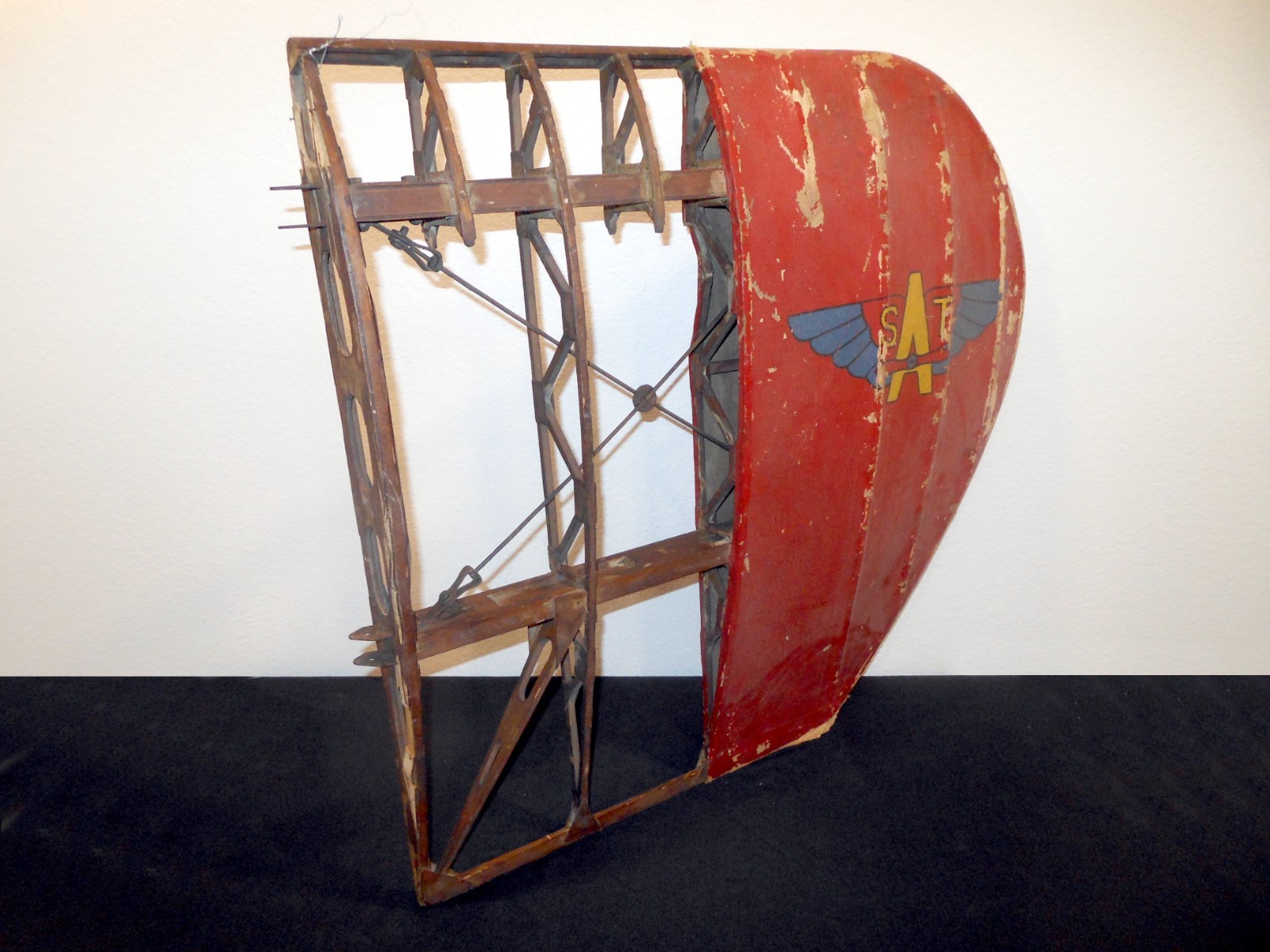
You are offerding on a VERY RARE and 100% ORIGINAL WWI or early post-WWI American Aircraft Airfoil Section! Dating from approximately the late 1910s through the 1920s, it is most likely from a Curtiss N-9, Curtiss JN-4 "Jenny", Standard J-1 or similar aircraft.
Early military and civilian aircraft of the WWI and immediate postwar period were generally constructed around lightweight wooden frameworks strengthened with steel wire, cable and metal fittings, then covered with doped fabric. Aircraft such as the Curtiss JN-4 Jenny and numerous similar American trainers used this type of construction extensively. Wings and horizontal tail surfaces were built around shaped wooden ribs that produced the characteristic aerodynamic airfoil profile, with a rounded leading edge tapering toward a much thinner trailing edge. After WWI, enormous numbers of surplus military aircraft entered civilian service and were used by flying schools, barnstormers, aviation companies and training organizations throughout the 1920s, and complete aircraft were frequently dismantled or repurposed as their service lives ended.Constructed from an original wooden aircraft framework with steel cabling and metal bracketry...and covered in original fabric, this example is in EXCELLENT used condition. It measures approximately 26" x 28" and retains its pronounced aerodynamic airfoil profile, with the rounded leading edge and tapered trailing edge characteristic of an aircraft flying surface. One end remains completely enclosed while the opposite end is open, exposing the original internal wooden structure, cabling and fittings. The original fabric remains extremely well preserved with no major tears or damage and retains strong red coloration. A large winged "SAT"(Southern Aircraft Training School"?) emblem has been hand painted onto the exterior fabric. Because the piece was apparently designed to sit horizontally, the emblem may have been added after the aircraft component was removed, possibly for period display, advertising or aviation-school use. The exact meaning of the SAT initials remains uncertain. The well-known Southern Aviation Training School operated during WWII, considerably later than the apparent construction date of this airframe component...however...it could have been ssimply removed from an earlier aircraft and used for display during the war. Several pencil markings are visible internally, including what appears to be a partially legible name or inscription possibly reading “Aveenberg, Les.” The metal components show only normal oxidation and age, with no major corrosion or structural damage. The precise aircraft model and original location of the section remain unidentified, although its construction is entirely consistent with early American wood-and-fabric aircraft such as the Curtiss JN-4 Jenny and similar WWI/postwar types. An EXTREMELY interesting early aviation survivor, PERFECT for any WWI, 1920s aviation, aircraft relic, or early flight collection or display!