When you click on links to various merchants on this site and make a purchase, this can result in this site earning a commission. Affiliate programs and affiliations include, but are not limited to, the eBay Partner Network.
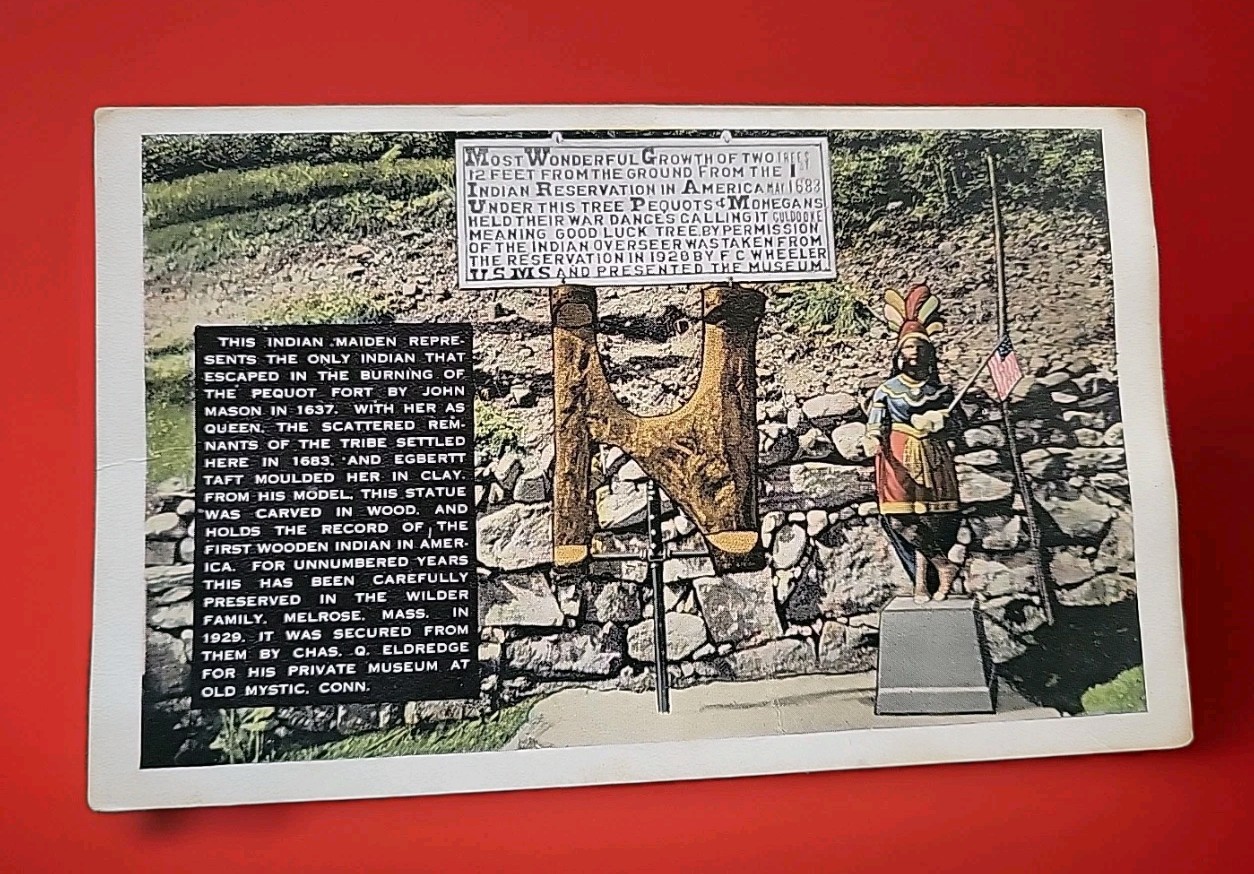
postcard highlights a specific historical moment depicting a wooden statue of a Pequot maiden, rumored to be the first wooden Indian statue in America.
- The statue was originally carved based on a clay model of the maiden who allegedly survived the burning of the Pequot Fort in 1637.
- It was carved in wood in 1683 and was used as a representation of the tribe's remnant settling in the area.
- The statue was secured by Chas. Q. Eldredge in 1929 for his private museum located in Old Mystic, Connecticut.
Translation
- LOST WONDERFUL GROWTH OF TWO 12 FEET FROM THE GROUND FROM THE INDIAN RESERVATION IN AMERICAN 1683 UNDER THIS TREE PEQUOTS MOHEGANS THE MEANING RESERV R DAN CALLING IT ICK TREE BY PERMISSION OVERSEER WAS TAKEN ION IN 1920 B ISMS AND PRES
- THIS INDIAN MAIDEN REPRESENTS THE ONLY INDIAN THAT ESCAPED IN THE BURNING OF THE PEQUOT FORT BY JOHN MASON IN 1637. WITH HER AS QUEEN, THE SCATTERED REMNANTS OF THE TRIBE SETTLED HERE IN 1683. AND EGBERTT TAFT MOULDED HER IN CLAY. FROM HIS MODEL THIS STATUE WAS CARVED IN WOOD. AND HOLDS THE RECORD OF THE FIRST WOODEN INDIAN IN AMERICA. FOR UNNUMBERED YEARS THIS HAS BEEN CAREFULLY PRESERVED IN THE WILDER FAMILY, MELROSE. MASS. IN 1929. IT WAS SECURED FROM THEM BY CHAS. Q. ELDREDGE FOR HIS
More Info:
American history with this vintage Tichnor Quality Views postcard. The front features the "Most Wonderful Growth of Two Trees," a unique natural formation from the Indian Reservation in America, dating back to 1638, where Pequot and Mohegan tribes held their war dances. This significant tree growth, known as Guddukne or "Good Luck Tree," was acquired in 1928 and presented to a museum, highlighting its historical and cultural importance.
Prominently displayed is a carved wooden statue of an Indian Maiden, representing the sole survivor of the 1637 Pequot Fort burning by John Mason. This maiden, who became queen, led the scattered remnants of her tribe to settle in 1683. The statue, originally molded in clay by Egbertt Taft and carved in wood, holds the distinction of being the first wooden Indian in America. Carefully preserved by the Wilder family in Melrose, Massachusetts, it was secured in 1929 for a private museum in Old Mystic, Connecticut. This postcard beautifully captures an intriguing narrative of Native American heritage and early colonial events, making it a valuable collectible for enthusiasts of historical artifacts and regional Americana.
This standard-sized postcard, produced by Tichnor Quality Views, showcases a vivid colored lithographic print, characteristic of the Golden Age of postcards. The front's detailed imagery and extensive historical text provide a rich visual and informational experience. The reverse features a classic postcard design with a stamp box indicating domestic one-cent and foreign two-cent postage.
Buyer pays shipping. See photos for more details. Red coloring transfer on back of postcard.